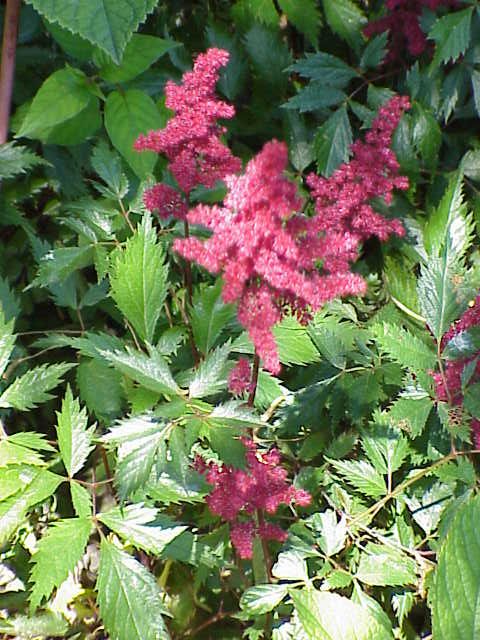
Astilbe, Genus, ×, Hybrid, arendsii, Species, 'Fanal', Cultivar,
- Genus & species
- Hybrid
- Cultivar
fanal astilbe
Garden hybrid bred by Georg Arends in Germany; the {Astilbe × arendsii} group has complex parentage involving Asian {Astilbe} species; 'Fanal' was introduced in 1933 and remains in commercial production after more than 90 years, ranking among the more widely grown red astilbe cultivars in the trade
Overview
Astilbe × arendsii 'Fanal' is among the older red astilbe cultivars in the trade, introduced by Georg Arends in 1933. Plants reach 18-24 inches (45-60 cm) tall and wide, forming a compact mound of dark green glossy ternately compound foliage with a pronounced bronze-red tint, especially in new growth. Narrow dense panicles of dark crimson-red florets appear in June and July, with a deeper red color than the color range of any other widely available astilbe cultivar. The red color darkens to garnet as the plumes age. Bronze-red spring foliage gives early-season interest before the flower stems emerge. Like all A. × arendsii hybrids, 'Fanal' requires consistently moist soil; even brief dry periods cause leaf browning from the margins inward. In full sun without constant irrigation, scorch is severe and bloom quality declines. The dark flower and foliage colors hold their saturation in partially shaded settings where they are not bleached by direct sun. Dried plumes darken to brown-red and hold form through winter. Clumps expand slowly and benefit from division every 3-4 years as the center becomes woody. Deer avoid the foliage.
Native Range
Astilbe × arendsii cultivars are garden hybrids of complex Asian parentage bred by Georg Arends in Germany. 'Fanal' was introduced in 1933 and remains in production after more than 90 years.Suggested Uses
Planted in shade borders where the dark red plumes and bronze foliage contrast with lighter-colored companions. Works along stream margins, in woodland gardens, and in mass plantings of 5-7. Container culture works in pots of 5 gallons (19 L) or more with moisture-retentive media and reliable watering. The dark color pairs with white astilbes and blue hostas.How to Identify
Appearance
Size & Dimensions
Height1'6" - 2'
Width/Spread1'6" - 2'
Colors
Bloom Information
Flowering occurs in June and July, among the earliest astilbe cultivars to bloom. Dark crimson-red panicles open over approximately 3 weeks and deepen to garnet as they age. The bloom period is shorter than Chinese astilbe cultivars. Dried plumes persist through winter.
Detailed Descriptions
Flower Description
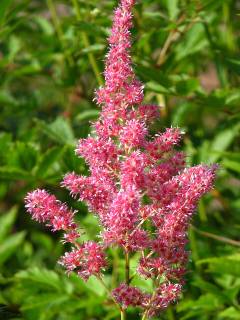
Dark crimson-red florets densely packed in narrow upright panicles; the deep crimson-red color is darker than the color range of any other widely available astilbe cultivar, deepening to garnet as the panicles ageFoliage Description
Dark green with bronze-red tint, glossy ternately compound foliage; the bronze-red tint is most pronounced in new spring growthGrowing Conditions
Sun Requirements
Requires 2-6 hours of direct sunlight daily
• Full Sun: 6+ hours of direct sunlight
• Partial Shade: 3-6 hours of direct sunlight
• Full Shade: Less than 3 hours of direct sunlight
Care & Maintenance
Care Guide
Plant in partial to full shade with 2-6 hours of filtered light. Humus-rich consistently moist soil is critical; this cultivar cannot tolerate any drought without leaf damage. Water regularly and deeply throughout the growing season. Mulch with 2-3 inches (5-8 cm) of organic material. Divide clumps every 3-4 years in spring, discarding the woody center. No fertilization beyond annual mulch renewal is typically needed. Partial shade preserves the dark red color; full sun bleaches the plumes.Pruning
Leave dried flower plumes for winter interest. Cut all growth to ground level in early spring before new shoots emerge. No other seasonal pruning is needed.Pruning Schedule
Prune: March
early spring
Container Growing
Suitable for container growing
Minimum container size: 5 gallons
Toxicity
Non-toxicRelated Astilbe species
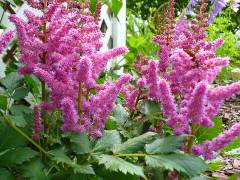 Vision in pink Chinese astilbeAstilbe chinensis 'Vision in Pink'
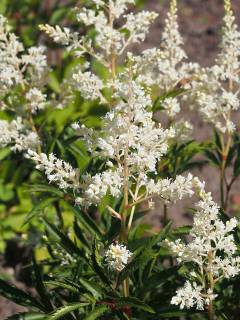 Vision in white Chinese astilbeAstilbe chinensis 'Vision in White'
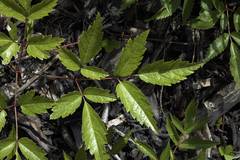 Deutschland astilbeAstilbe × japonica 'Deutschland'
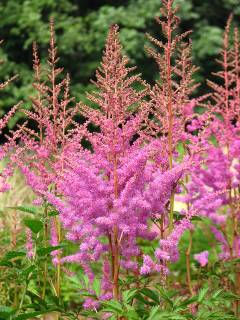
 Rheinland astilbeAstilbe × japonica 'Rheinland'
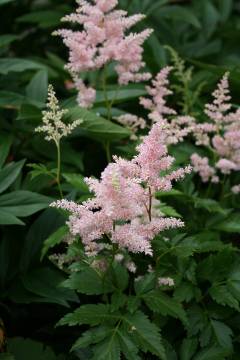
 Amethyst astilbeAstilbe 'Amethyst'
 Japanese astilbeAstilbe japonica 'Europa'