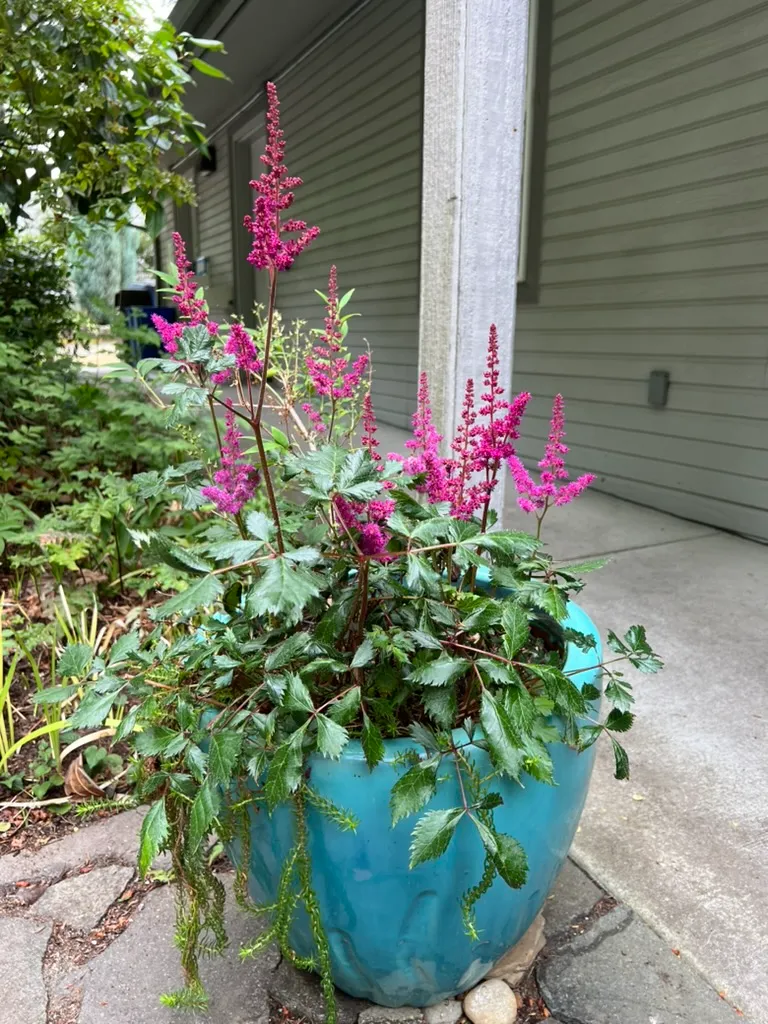
Image 1 of 19
1 / 19
Plant Reference
Astilbe, Genus, spp., Multiple species,
- Genus
- Multiple species
astilbe
Overview
Astilbe is a genus of clump-forming herbaceous perennials grown for feathery plumes of tiny flowers held above ferny foliage. Across the genus, plants reach 6 inches to 5 feet (15-150 cm) tall and 1-3 feet (30-90 cm) wide. The divided, often glossy leaves are dark green and bronze-tinted as they emerge, giving a fern-like texture. Branched, upright flower panicles open from late spring into summer in white, cream, pink, red, and purple, lasting several weeks before drying to tan seed heads that hold through autumn. Astilbes grow in part shade in consistently moist, humus-rich, slightly acid soil; their main limitation is sensitivity to drought, which scorches the leaf edges and shortens bloom. They spread slowly into broad clumps that benefit from division every few years. The genus ranges across eastern Asia and eastern North America. Hardy in cool and temperate zones, astilbes are grown in shade borders, beside ponds and streams, and in woodland gardens.
Native Range
The genus Astilbe is native to eastern Asia, including China, Japan, and the Himalayas, with a few species in eastern North America. In the wild, astilbes grow in damp woodland, ravines, and along streams.Suggested Uses
Astilbes are grown in shade and woodland borders, along pond and stream margins, and in damp mixed plantings, spaced 18-24 inches (45-60 cm) apart. Lower species suit shaded groundcover and edging, and the plumes are used fresh or dried in arrangements.How to Identify
Appearance
Size & Dimensions
Height6" - 5'
Width/Spread1' - 3'
Bloom Information
Flowering runs from late spring into summer, generally June through July, with timing varying by species and cultivar from early to late season. The plumes hold color for several weeks, then dry to tan and persist into autumn. Bloom is fullest where soil stays moist.
Detailed Descriptions
Flower Description
White, cream, pink, red, purpleFoliage Description
Dark green, bronze-tinted when emerging, fern-likeGrowing Conditions
Sun Requirements
Requires 2-6 hours of direct sunlight daily
• Full Sun: 6+ hours of direct sunlight
• Partial Shade: 3-6 hours of direct sunlight
• Full Shade: Less than 3 hours of direct sunlight
Care & Maintenance
Care Guide
Grow in part shade in consistently moist, fertile, humus-rich soil that is neutral to slightly acid, around pH 5.5-6.5. Steady moisture is the key need, since drought scorches the foliage and cuts flowering short; plants beside water or in moisture-holding soil grow most strongly. Full sun is tolerated only where the soil never dries. Mulch conserves moisture and an annual feed supports the heavy bloom. Divide congested clumps every three to four years in spring. Hardy in USDA zones 3-8.Pruning
Spent plumes may be left standing for autumn and winter form or cut back after flowering for a tidier look. Cut all foliage to the ground in late autumn or early spring once it has died down. Lift and divide clumps in spring to maintain vigor.Pruning Schedule
Prune: March & November
fallearly spring
Container Growing
Suitable for container growing
Minimum container size: 3 gallons
Toxicity
Non-toxicRelated Astilbe species
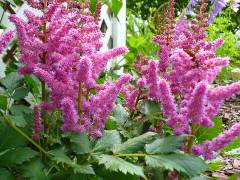 Vision in pink Chinese astilbeAstilbe chinensis 'Vision in Pink'
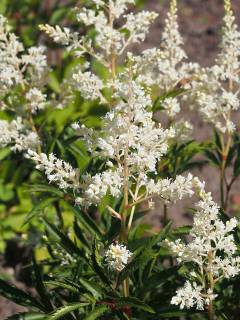 Vision in white Chinese astilbeAstilbe chinensis 'Vision in White'
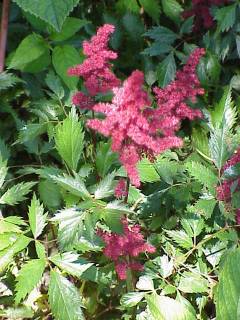 Fanal astilbeAstilbe × arendsii 'Fanal'
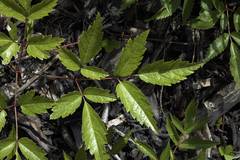 Deutschland astilbeAstilbe × japonica 'Deutschland'
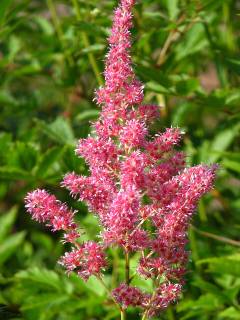 Rheinland astilbeAstilbe × japonica 'Rheinland'
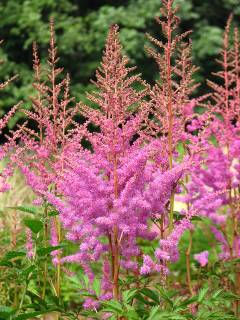 Amethyst astilbeAstilbe 'Amethyst'