Asparagus, Genus, scandens, Species,
- Genus & species
climbing asparagus
Overview
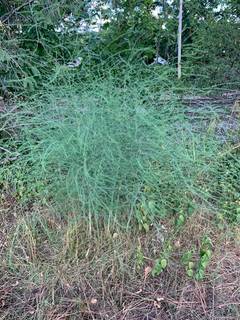
Asparagus scandens is an evergreen twining climber with wiry, branching stems that scramble and twist over other plants to 6-10 feet (2-3 m) high, growing from a cluster of fleshy underground tubers. What look like soft leaves are flattened, leaf-like stems (cladodes) 0.2-0.6 inch (5-15 mm) long, arranged in threes and bright green, giving a lacy, fern-like appearance. Small white to greenish flowers about 0.2 inch (4 mm) across hang singly along the stems in spring, followed by round berries 0.2-0.3 inch (5-8 mm) wide that ripen orange to red, each holding a single black seed. Birds eat the berries and spread the seed widely. Native to southern Africa, Asparagus scandens has become an environmental weed in southeastern Australia, New Zealand, and other mild regions, where it smothers groundcovers and forest understorey in shaded, moist sites. It tolerates deep shade, drought once established, and a range of soils, and resprouts from its tubers after cutting. Because of its weediness it is grown rarely and is restricted or banned in several areas.
Native Range
Asparagus scandens is native to southern Africa, from the Cape region of South Africa. It has naturalised in southeastern Australia, New Zealand, and other mild, moist regions, where it grows as a weed in shaded forest, gullies, and gardens.Suggested Uses
Asparagus scandens has been grown as a shade-tolerant foliage and hanging-basket plant for its lacy, fern-like stems. Its weediness now outweighs that use, and it is listed as an invasive plant in several regions with restrictions on sale and planting. Where present it is generally targeted for removal rather than cultivation.How to Identify
Appearance
Size & Dimensions
Height6' - 10'
Width/Spread3' - 6'
Bloom Information
Small white to greenish bell-shaped flowers open in spring, mainly September to November, hanging singly along the stems. The flowers are small and lightly scented. Round berries follow through summer, ripening orange to red and drawing fruit-eating birds that spread the seed.
Detailed Descriptions
Flower Description
White to greenishFoliage Description
Bright greenGrowing Conditions
Sun Requirements
Tolerates up to 4 hours of direct sunlight daily
• Full Sun: 6+ hours of direct sunlight
• Partial Shade: 3-6 hours of direct sunlight
• Full Shade: Less than 3 hours of direct sunlight
Care & Maintenance
Care Guide
Asparagus scandens grows in full shade to part sun on a wide range of moist, free-draining soils and tolerates drought once its tubers are established. It is killed back by hard frost but resprouts from the tubers and suits mild climates, roughly USDA zones 9-11. The plant spreads by bird-sown seed and creeping tubers and is invasive in many regions, so it is contained or removed rather than encouraged. Digging out the whole tuber cluster is needed to kill a plant, as stems regrow from any tubers left behind. It is listed as a noxious or environmental weed in parts of Australia and New Zealand, where sale and planting are restricted.Pruning
Cutting the stems of A. scandens back to the ground slows it but does not kill it, as it resprouts from the underground tubers. Removing flowering and fruiting stems before berries ripen limits bird-spread seed. Full control needs the tuber cluster dug out.Pruning Schedule
Prune: November–December
springsummer
Container Growing
Suitable for container growing
Minimum container size: 3 gallons