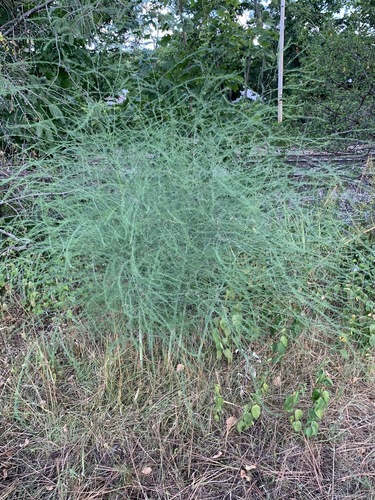
Asparagus, Genus, officinalis, Species,
- Genus & species
wild asparagus
Europe, North Africa, and western Asia
Overview
Asparagus officinalis is a herbaceous perennial growing 3-5 feet (0.9-1.5 m) tall from a crown of fleshy roots, sending up thick young shoots (spears) in spring that are harvested as a vegetable. Unharvested spears expand into upright, branched stems clothed in needle-like green cladophylls 0.4-1.2 inches (1-3 cm) long that take the place of true leaves and give the plant a feathery look. The species is usually dioecious, with male and female flowers on separate plants; small bell-shaped greenish-yellow flowers hang singly or in pairs from the branches in late spring. Female plants form round red berries about 0.25 inch (6 mm) wide in late summer, each holding a few black seeds. The top growth yellows and dies back after frost, and the crown resprouts each spring. Established plantings produce for 15-20 years. Self-sown seedlings appear around female plants.
Native Range
Native to Europe, North Africa, and western Asia, on coastal sands, riverbanks, and grassland. Long cultivated and naturalized across North America and other temperate regions, where it persists along fences, ditches, and roadsides.Suggested Uses
Grown chiefly as a perennial vegetable in dedicated beds, with crowns spaced 12-18 inches (30-45 cm) apart in rows. The tall ferny summer growth also serves as a light screen or background in borders. Female plants self-seed, so male-dominant cultivars are used where volunteers are unwanted.How to Identify
Appearance
Size & Dimensions
Height3' - 5'
Width/Spread2' - 4'
Bloom Information
Flowers in late spring to early summer, mainly May to June, with small greenish-yellow bells that are easy to overlook. Female plants set red berries that ripen in late summer and persist into autumn. The flowers are minor compared with the ferny summer growth.
Detailed Descriptions
Foliage Description
greenGrowing Conditions
Sun Requirements
Requires 6-12 hours of direct sunlight daily
• Full Sun: 6+ hours of direct sunlight
• Partial Shade: 3-6 hours of direct sunlight
• Full Shade: Less than 3 hours of direct sunlight
Care & Maintenance
Care Guide
Grows in full sun on deep, well-drained, fertile soil with a near-neutral pH and tolerates sandy and saline ground. Water through dry spells in the first two years while the crown develops. Spears are cut for harvest in spring over a 6-8 week window once a bed is two to three years old, after which the stems are left to grow and feed the roots. The ferny top growth is cut down after it yellows in autumn. Asparagus beetle feeds on spears and foliage, and crown and root rots develop in wet, heavy soils. Beds stay productive for 15-20 years.Pruning
Cut the dead ferny stems to the ground in late autumn or winter after they yellow, which removes overwintering asparagus beetle eggs. Leave spring and summer growth uncut so the roots can rebuild for the next season. Remove self-sown seedlings to keep rows clear.Pruning Schedule
Prune: November–December
fallwinter


