Asparagus, Genus, aethiopicus, Species,
- Genus & species
African asparagus
Overview
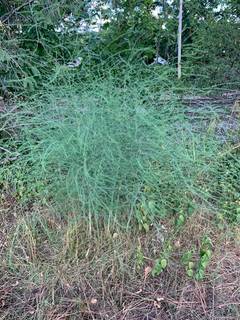
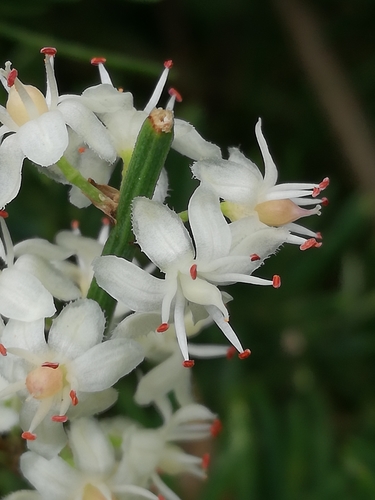
Asparagus aethiopicus is an evergreen perennial with wiry, arching to trailing stems 0.5-2 m (1.6-6.5 ft) long that grow from a dense mass of fleshy underground tubers. What appear to be leaves are flattened green cladodes 1-3 cm (0.4-1.2 in) long, arranged along the stems, while the true leaves are reduced to small spines. Small white, fragrant flowers appear in spring and summer, followed by round berries 6-8 mm (0.2-0.3 in) across that ripen from green to bright red, each containing a hard black seed. Native to southern Africa, it is widely naturalised along the eastern and southern coasts of Australia, where it is listed as an environmental weed and is regulated in New South Wales, Queensland, and several other states because birds spread the seeds into bushland and the tuber mats smother native groundcovers. The tubers store water and make established plants drought-hardy but also difficult to remove once established.
Native Range
Native to the coastal regions of southern Africa. It is naturalised and treated as an invasive environmental weed in eastern Australia, New Zealand, and other warm regions.Suggested Uses
Sometimes grown as a foliage groundcover, hanging-basket, or container plant for its arching stems. In regions where it is a declared weed, contained plantings and removal of berries are used to prevent escape into bushland. The arching cladode stems are also used as filler in cut foliage.How to Identify
Appearance
Size & Dimensions
Height1'8" - 6'7"
Width/Spread2' - 4'
Bloom Information
Detailed Descriptions
Foliage Description
greenGrowing Conditions
Sun Requirements
Requires 2-8 hours of direct sunlight daily
• Full Sun: 6+ hours of direct sunlight
• Partial Shade: 3-6 hours of direct sunlight
• Full Shade: Less than 3 hours of direct sunlight
Care & Maintenance
Care Guide
It grows in sun or shade on a wide range of soils with a pH of about 5.5-7.5, tolerating coastal exposure, dry shade, and neglect. The water-storing tubers make established plants highly drought-hardy and able to resprout after the top growth is removed. In frost-free and mild climates it spreads readily by seed and tuber, which is why it is regulated as an environmental weed across much of eastern Australia. Containment in a pot and removal of berries before they ripen limit its spread. It is frost-tender, with top growth cut back by hard cold. Full tuber removal is needed to stop regrowth.Pruning
Old or untidy stems can be cut back at any time, and the plant reshoots from the tubers. Removing flower and berry stems before the fruit ripens reduces seeding into surrounding areas. Cutting top growth alone does not kill the plant, as it regrows from the tuber mass.Container Growing
Suitable for container growing
Minimum container size: 3 gallons