Arisaema, Genus, triphyllum, Species,
- Genus & species
Jack-in-the-pulpit
Eastern North America (Nova Scotia to Manitoba, south to Florida and Texas)
Overview
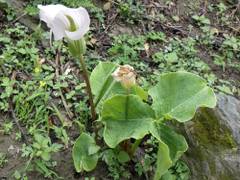
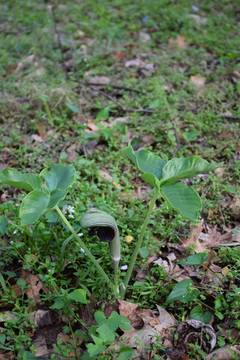
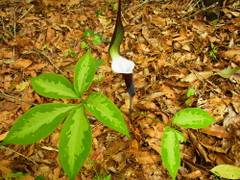
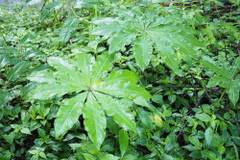
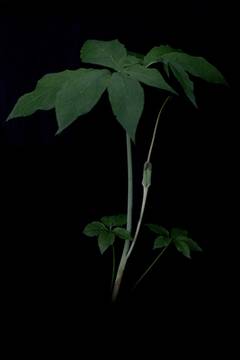
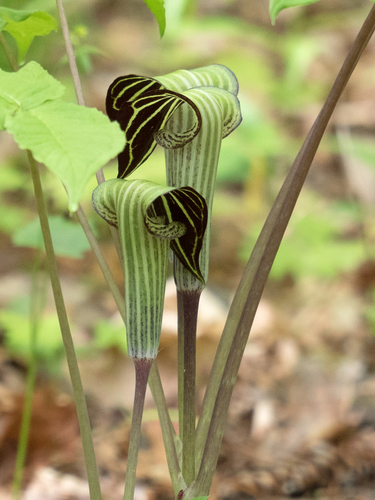
Arisaema triphyllum is a tuberous perennial reaching 12–24 inches (30–60 cm) tall with a spread of 12–18 inches (30–45 cm). One or two leaves emerge on mottled green-to-purple pseudostems, each leaf trifoliate with ovate leaflets 3–6 inches (8–15 cm) long. The spathe is 3–6 inches (8–15 cm) long, green to purple-brown, often with white or pale green longitudinal striping, forming a hooded tube that arches over a club-shaped spadix. Spathe color varies widely across populations, from solid green through deep maroon. Clusters of bright red berries, each 0.3 inch (8 mm) in diameter, develop on female plants by late summer, forming a dense, corn-like cluster on the stalk after the spathe and foliage have withered. Plants are sequentially hermaphroditic; smaller tubers typically produce male flowers, transitioning to female as the tuber gains mass over several years. Foliage senesces by mid to late summer, often disappearing entirely by August in warmer zones. The corm contains calcium oxalate crystals that cause intense oral irritation if any plant part is chewed raw. Slugs and deer both feed on emerging foliage in spring.
Native Range
Arisaema triphyllum is native to eastern North America, ranging from Nova Scotia west to Manitoba and south to Florida and Texas. It occurs in moist deciduous forests, wooded floodplains, swamp edges, and shaded ravines from near sea level to 4,500 feet (1,370 m) elevation.Suggested Uses
Planted in woodland gardens, rain gardens, and shaded borders at 12–18 inch (30–45 cm) spacing. Tolerates wetter soil conditions than most shade perennials, making it suitable for streamside plantings and low areas where standing water occurs briefly in spring. Grown in containers of at least 3 gallons (11 L) in a humus-rich mix kept consistently moist.How to Identify
Appearance
Size & Dimensions
Height1' - 2'
Width/Spread1' - 1'6"
Bloom Information
Flowers appear in April–May in zones 6–8 and May–June in zones 3–5. The spathe persists for 3–4 weeks. Fruit clusters ripen to bright red by August–September and remain on the stalk after foliage has senesced. Berry clusters persist until consumed by birds or rodents, typically by late fall.
Detailed Descriptions
Flower Description
Green to purple-brown with white stripingFoliage Description
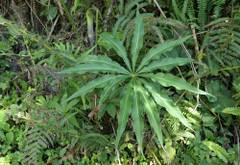
Medium green to dark greenGrowing Conditions
Sun Requirements
Requires 2-5 hours of direct sunlight daily
• Full Sun: 6+ hours of direct sunlight
• Partial Shade: 3-6 hours of direct sunlight
• Full Shade: Less than 3 hours of direct sunlight
Care & Maintenance
Care Guide
Plant corms 3–4 inches (8–10 cm) deep in humus-rich, consistently moist soil in fall. This species tolerates wetter conditions than most cultivated Arisaema, including seasonal flooding and heavy clay soils. Summer drought causes premature dormancy and reduced tuber growth. Deer browse emerging foliage in spring in areas with high deer populations. Slugs feed on shoots and spathes. Calcium oxalate crystals in all plant parts cause intense irritation of the mouth and throat if tissue is chewed. Plants self-sow readily from dropped berries; seedlings appear 1–2 feet (30–60 cm) from the parent plant.Pruning
No pruning required. Foliage yellows and collapses by mid to late summer; spent leaves can be removed once fully brown. Berry clusters can be left to feed wildlife or removed after ripening. The bare fruiting stalk persists through fall and can be cut at ground level in late fall or left to decompose.Pruning Schedule
Prune: August–September
summerfall
Container Growing
Suitable for container growing
Minimum container size: 3 gallons