Arisaema, Genus,
- Genus
jack-in-the-pulpits and cobra lilies
Temperate and subtropical Asia, eastern North America, eastern Africa
Overview
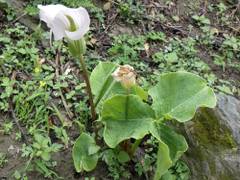
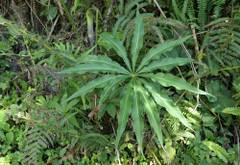
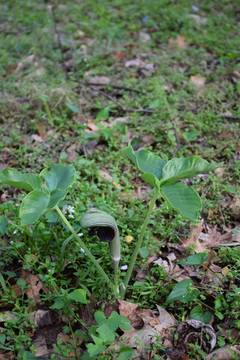
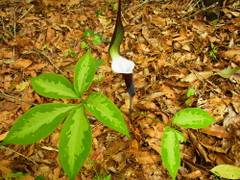
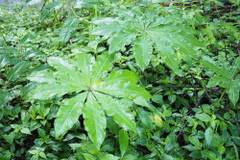
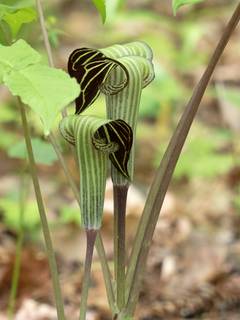
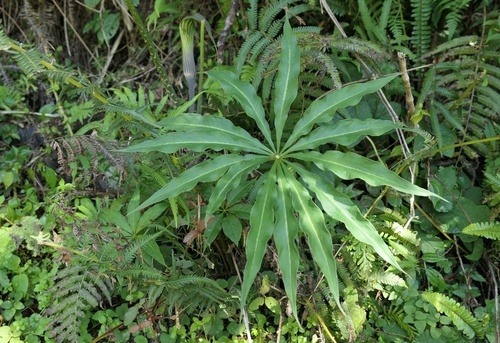
Arisaema is a genus of about 150 to 180 tuberous and rhizomatous perennials in the arum family (Araceae), found in the woodlands of temperate and subtropical Asia, eastern North America, and parts of eastern Africa. Each plant produces one or two long-stalked leaves that are divided into three or many radiating leaflets, held above an inflorescence that gives the genus its character. That inflorescence is a hooded spathe, often striped in green, purple, white, or brown, which wraps around a finger-like spadix; the shape gives rise to the names jack-in-the-pulpit and cobra lily. Plants stand 8–48 inches (20–120 cm) tall depending on the species. In late summer the spathe withers to reveal a tight cluster of berries that ripen bright red. Many species can change sex from year to year, flowering as male when small and as female when larger and better fed. All parts contain needle-like calcium oxalate crystals that burn the mouth and skin and are toxic if eaten raw. Arisaema grows from a dormant tuber, emerging in spring and dying back by autumn, and needs cool, moist, shaded woodland soil.
Native Range
Arisaema is native to the woodlands of temperate and subtropical Asia, with the greatest diversity in China, the Himalayas, and Japan, and with additional species in eastern North America and eastern Africa. Plants grow on shaded, humus-rich forest floors and slopes.Suggested Uses
Arisaema is grown in woodland and shade gardens, native-plant collections, and damp, shaded borders. It is planted among ferns, hostas, and other woodland perennials that share its need for shade and moisture. Collectors grow the more elaborate Asian species in pots and cold frames.How to Identify
Appearance
Size & Dimensions
Height8" - 4'
Width/Spread8" - 2'
Bloom Information
The spathe opens in spring or early summer, depending on species and climate, and lasts for several weeks. Tiny true flowers sit at the base of the spadix and are pollinated mainly by small flies and fungus gnats drawn into the hood. Berries follow and ripen red by late summer.
Detailed Descriptions
Flower Description
Green, purple, white, or brown, often stripedFoliage Description
GreenGrowing Conditions
Sun Requirements
Requires 2-6 hours of direct sunlight daily
• Full Sun: 6+ hours of direct sunlight
• Partial Shade: 3-6 hours of direct sunlight
• Full Shade: Less than 3 hours of direct sunlight