Arisaema, Genus, candidissimum, Species,
- Genus & species
white jack-in-the-pulpit
Overview
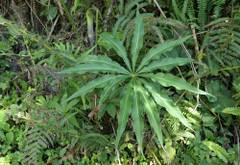
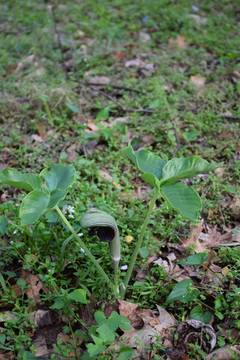
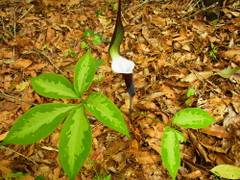
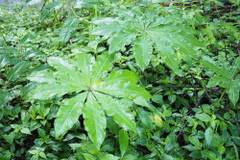
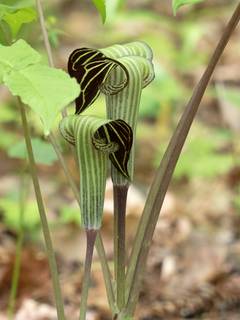
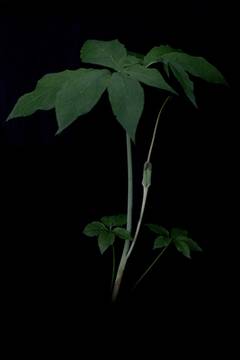
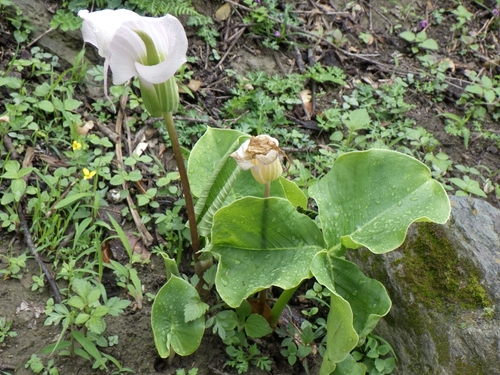
Arisaema candidissimum is a tuberous perennial reaching 12–18 inches (30–45 cm) tall with a spread of 12–15 inches (30–38 cm). A single leaf, occasionally two, emerges after flowering and is trifoliate with broadly ovate leaflets 4–8 inches (10–20 cm) long. The spathe is 4–6 inches (10–15 cm) long, white with pink to rose striping on the exterior, enclosing an upright white spadix. The spathe has a broad, forward-arching hood that opens wider than most Arisaema species. A cluster of red-orange berries, each 0.3 inch (8 mm) in diameter, develops on female plants by late summer and ripens in fall. Growth emerges late, typically not appearing above ground until late May or June, well after most spring ephemerals. Plants are slow to establish, often taking 3–4 years to reach flowering size from seed. Tubers are susceptible to rot in waterlogged winter soils, and slugs feed on emerging growth in spring. Foliage goes dormant and disappears entirely by early fall, leaving bare ground.
Native Range
Arisaema candidissimum is native to western China, primarily in the provinces of Sichuan and Yunnan. It grows in montane forests and forest margins at elevations of 7,200–10,800 feet (2,200–3,300 m) in humus-rich soils under deciduous tree canopy.Suggested Uses
Planted in woodland gardens and shaded borders at 12–18 inch (30–38 cm) spacing among later-emerging companions that fill the space during dormancy. Grown in containers of at least 3 gallons (11 L) with a humus-rich, well-drained mix; container culture allows better control of winter moisture. Suitable for underplanting beneath deciduous trees and large shrubs.How to Identify
Appearance
Size & Dimensions
Height1' - 1'6"
Width/Spread1' - 1'3"
Bloom Information
Flowers appear in June–July in zones 5–7, emerging before or simultaneously with the foliage. The spathe lasts 2–3 weeks before collapsing. A light, sweet fragrance is detectable near the open spathe during the first week of bloom. Fruit clusters ripen to red-orange by September–October on female plants.
Detailed Descriptions
Flower Description
White with pink to rose stripingFoliage Description
Medium greenGrowing Conditions
Sun Requirements
Requires 2-5 hours of direct sunlight daily
• Full Sun: 6+ hours of direct sunlight
• Partial Shade: 3-6 hours of direct sunlight
• Full Shade: Less than 3 hours of direct sunlight
Care & Maintenance
Care Guide
Plant tubers 4–6 inches (10–15 cm) deep in fall in humus-rich, well-drained soil. Water regularly during the growing season from emergence through leaf senescence; reduce watering after foliage dies back. Winter drainage is critical—tubers rot in saturated soils during dormancy. Slugs and snails damage emerging shoots in spring; damage is most severe in wet conditions. Plants are slow to colonize, typically producing only one or two offsets over 5 years. Mark planting locations to avoid accidental disturbance during the long dormant period from October through May.Pruning
No pruning required. Spent spathes collapse naturally and decompose. Foliage yellows and senesces by early fall; spent leaves can be removed once fully brown or left to decompose in place. Berry clusters can be left for seed collection or removed after ripening if self-sowing is not desired.Pruning Schedule
Prune: September–October
fall
Container Growing
Suitable for container growing
Minimum container size: 3 gallons