Arisaema, Genus, consanguineum, Species,
- Genus & species
cobra lily
Eastern and southeastern Asia (Himalayas, China, Thailand, Taiwan)
Overview
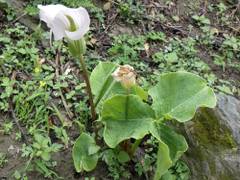
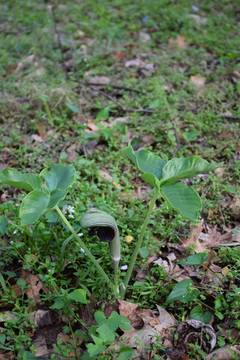
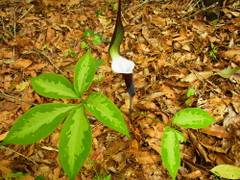
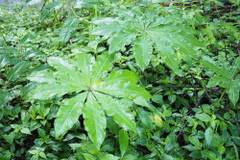
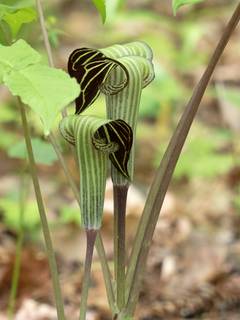
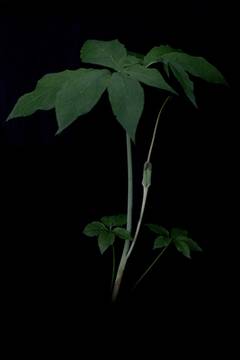
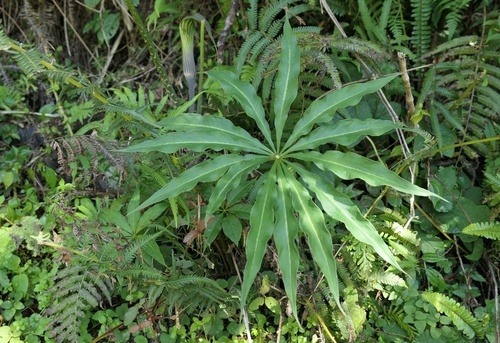
Arisaema consanguineum is a tuberous perennial reaching 24–36 inches (60–90 cm) tall with a spread of 18–24 inches (45–60 cm). A single pseudostem supports one large palmate leaf divided into 11–20 narrow, lance-shaped leaflets radiating from a central point, each leaflet 4–8 inches (10–20 cm) long with elongated drip tips that extend 2–4 inches (5–10 cm) beyond the blade. The spathe is 4–6 inches (10–15 cm) long, green to purple-brown with white longitudinal striping, narrowing to a long, tail-like extension at the tip that can trail 8–12 inches (20–30 cm). The spadix extends beyond the spathe as a long, whip-like appendage. Clusters of bright red berries, each 0.3 inch (8 mm) in diameter, develop on female plants in late summer. Growth emerges in mid to late spring. Tubers increase in size annually and may eventually produce offsets, though colonization is slow. Foliage senesces and disappears by mid-fall, leaving no above-ground presence through winter. Tubers are vulnerable to rot in poorly drained winter soils.
Native Range
Arisaema consanguineum is native to a broad range across eastern and southeastern Asia, from the eastern Himalayas through China, Thailand, and into Taiwan. It occurs in montane forests, forest margins, and scrubby hillsides at elevations of 3,300–10,500 feet (1,000–3,200 m) in humus-rich, well-drained soils.Suggested Uses
Planted in woodland gardens and shaded borders at 18–24 inch (45–60 cm) spacing, often paired with ferns, hostas, and other shade perennials that fill the space during winter dormancy. Grown in containers of at least 5 gallons (19 L) in a humus-rich, freely draining mix. The tall pseudostem and radiating leaflets create a canopy effect in shaded understory plantings.How to Identify
Appearance
Size & Dimensions
Height2' - 3'
Width/Spread1'6" - 2'
Bloom Information
Flowers appear in May–June in zones 7–9 and June–July in zones 5–6. The spathe persists for 2–3 weeks before withering. Fruit clusters develop on female plants and ripen to bright red by August–September, persisting until foliage senescence in October.
Detailed Descriptions
Flower Description
Green to purple-brown with white stripingFoliage Description
Medium to dark greenGrowing Conditions
Sun Requirements
Requires 2-5 hours of direct sunlight daily
• Full Sun: 6+ hours of direct sunlight
• Partial Shade: 3-6 hours of direct sunlight
• Full Shade: Less than 3 hours of direct sunlight
Care & Maintenance
Care Guide
Plant tubers 4–6 inches (10–15 cm) deep in humus-rich, well-drained soil in fall or early spring. Consistent moisture during the growing season supports foliage and fruit development; drought causes premature leaf senescence. Winter drainage is essential—tubers rot in waterlogged soils during the dormant period. Slugs feed on emerging shoots in spring, especially in wet conditions. Plants may take 2–3 years to flower from newly planted tubers. Mark planting locations to prevent accidental digging during the long dormancy from November through April.Pruning
No pruning required. Spent spathes wither and decompose naturally. Foliage yellows and collapses in fall; brown leaves can be removed or left in place. Berry clusters can be left for seed collection or removed to prevent self-sowing.Pruning Schedule
Prune: October–November
fall
Container Growing
Suitable for container growing
Minimum container size: 5 gallons