Arctostaphylos, Genus, edmundsii, Species,
- Genus & species
Pacific mist manzanita
Coastal central California (Monterey and San Luis Obispo counties)
Overview
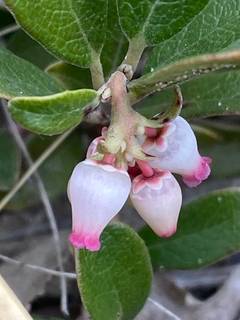
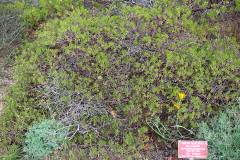
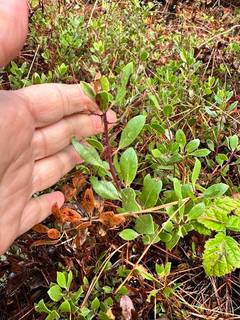
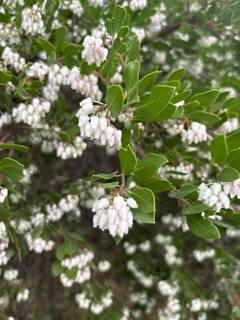
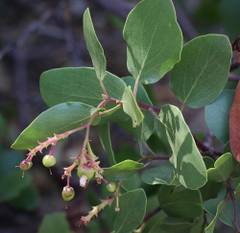
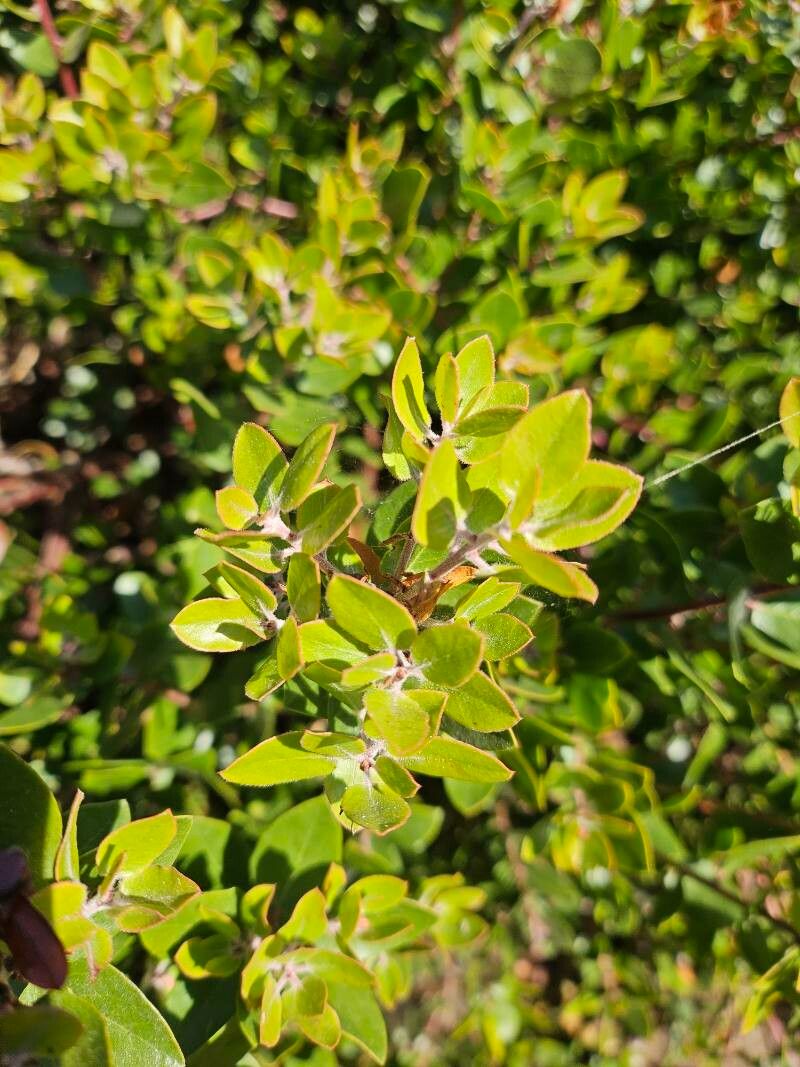
Arctostaphylos edmundsii is an evergreen prostrate to low-mounding shrub native to coastal central California, reaching 12-24 inches (30-60 cm) tall and spreading 4-8 feet (1.2-2.4 m) wide. Stems are dark red-brown to mahogany, smooth, and exfoliating, with dense branching that forms a flat to slightly mounded habit. Leaves are elliptic to obovate, 0.5-1 inch (1.3-2.5 cm) long, leathery, dull green to gray-green, with new growth tinged red or bronze. Urn-shaped flowers are white to pale pink, 0.2-0.3 inch (5-8 mm) long, borne in short pendant clusters of 5-15 from January through March. Fruit is a reddish-brown to dark red drupe 0.2-0.3 inch (5-8 mm) across, ripening through summer and persisting into fall. Growth rate is slow to moderate; plants reach 2-3 feet (60-90 cm) of spread within 3 years from a 1-gallon (3.8 L) container. Cool coastal climates support consistent foliage and bloom; inland plantings often decline under prolonged summer heat above 95°F (35°C). Root rot in poorly drained or summer-irrigated clay soils is the principal cause of failure in cultivation.
Native Range
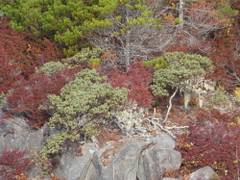
Endemic to coastal Monterey and northern San Luis Obispo counties of central California. Grows on coastal bluffs, sandy headlands, and rocky outcrops within 1 mile (1.6 km) of the Pacific Ocean, at elevations from sea level to 500 feet (150 m). Found in plant communities dominated by coastal sage scrub and Monterey pine forest.Suggested Uses
Used as an evergreen ground cover on coastal bluffs, dry banks, and slope plantings spaced 5-7 feet (1.5-2.1 m) apart. Plantings in mixed California native gardens combine with Ceanothus, Salvia species, and Eriogonum on sandy or rocky soils. Containers of at least 7 gallons (26 L) hold sufficient root volume; smaller pots typically lead to summer water stress and shortened lifespan.How to Identify
Appearance
Size & Dimensions
Height1' - 2'
Width/Spread4' - 8'
Colors
Bloom Information
Blooms January through March in coastal California, with peak bloom in February. Individual flower clusters last 2-3 weeks; total bloom period extends 6-8 weeks. In zones 9-10, occasional secondary blooms occur in October-November after fall rains begin. Drought stress can reduce flowering by 50% or more in inland plantings.
Detailed Descriptions
Flower Description
white to pale pinkFoliage Description
gray-green to dull green; new growth tinged red or bronzeGrowing Conditions
Sun Requirements
Requires 6-8 hours of direct sunlight daily
• Full Sun: 6+ hours of direct sunlight
• Partial Shade: 3-6 hours of direct sunlight
• Full Shade: Less than 3 hours of direct sunlight
Care & Maintenance
Care Guide
Water deeply every 7-10 days during the first growing season to establish a deep root system. Established plants in coastal climates require no supplemental irrigation; inland plantings in zones 9-10 tolerate one deep soak per month from May through September. Crown rot develops when irrigation water collects at the base of stems. Root rot from Phytophthora and Armillaria is the principal cause of decline, particularly in clay soils with summer irrigation. Branch dieback from leaf gall aphid Tamalia coweni appears as red leaf swellings; cosmetic only. Fertilization is not required; nutrient additions in coastal soils typically increase pest susceptibility.Pruning
Light tip pruning to remove dead or broken branches is done from late spring through early fall after the bloom period. Pruning into old wood does not regenerate new growth; cut stems thicker than 0.5 inch (1.3 cm) typically die back to the next branch junction. Crossing or rubbing stems are commonly removed annually to maintain the prostrate habit and reduce bark damage.Pruning Schedule
Prune: May–June
late springsummer
Container Growing
Suitable for container growing
Minimum container size: 7 gallons