Image 1 of 9
1 / 9
Plant Reference
Arctostaphylos, Genus, columbiana, Species,
- Genus & species
hairy manzanita
Pacific Coast (British Columbia south through Washington and Oregon to northern California)
Overview
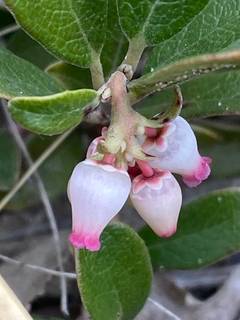
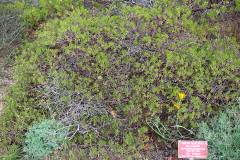
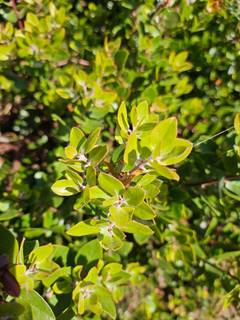
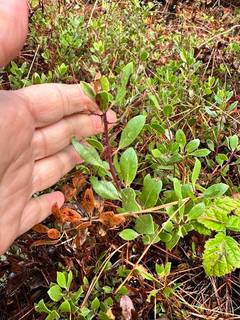
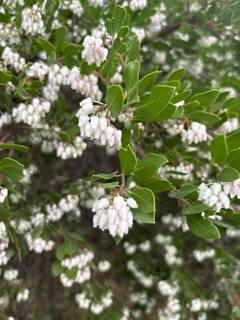
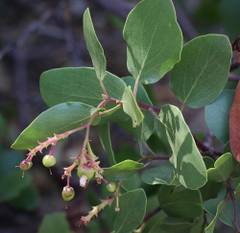
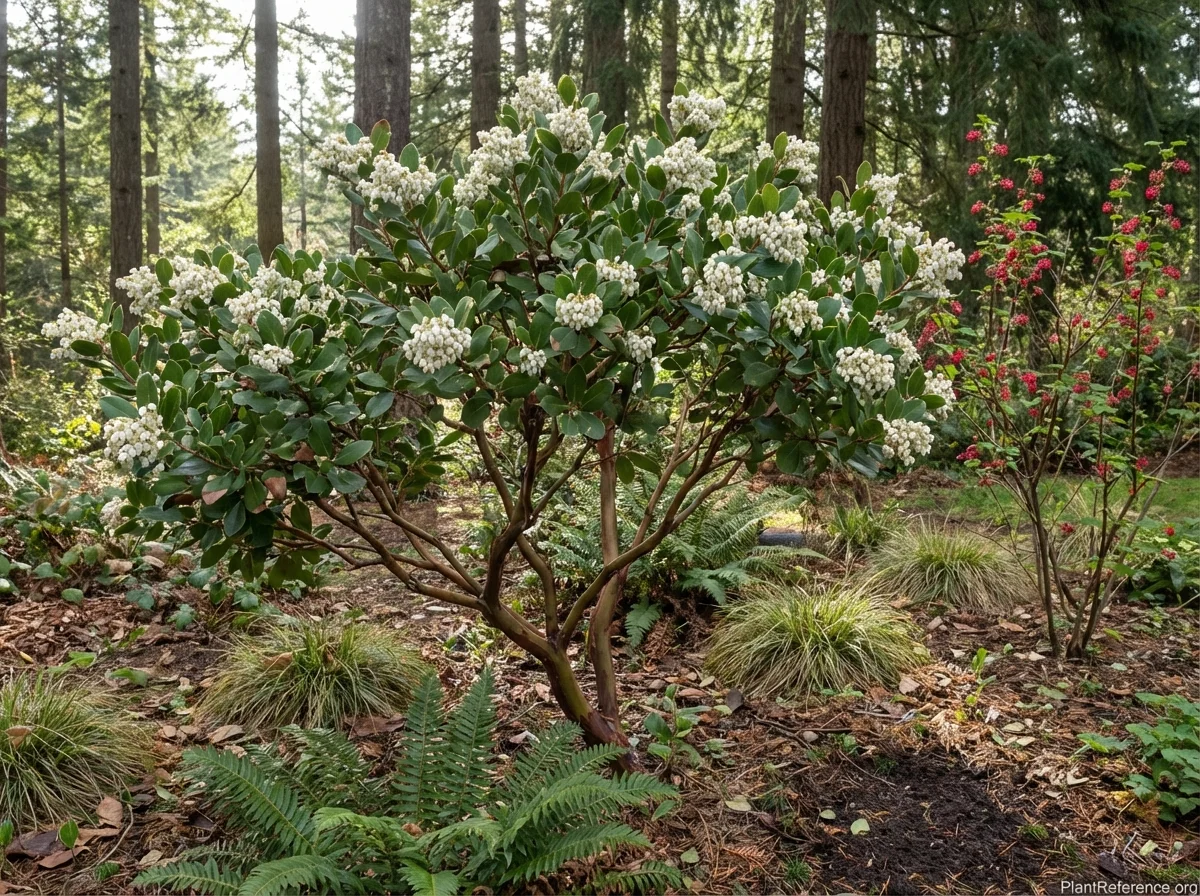
Arctostaphylos columbiana is hairy manzanita (woolly manzanita), growing 48–120 inches (120–300 cm) tall and 48–96 inches (120–240 cm) wide. Smooth red-brown bark on older stems — the bark is the year-round identification trait shared with other Arctostaphylos species. Gray-green oval evergreen leaves 1–2 inches (2.5–5 cm) densely hairy (pubescent) on young growth — the species name refers to the woolly pubescence that distinguishes A. columbiana from the smooth-leaved A. manzanita and A. patula. White to pale pink urn-shaped flowers 0.25 inch (6 mm) in pendant clusters in late winter to early spring (February–April) — an early nectar source for hummingbirds, bumblebees, and native mason bees. Red berry-like fruit 0.3 inch (8 mm) in summer. In the heath family (Ericaceae). The species name 'columbiana' references the Columbia River region. Obligate seeder: unlike burl-forming manzanitas that resprout after fire, A. columbiana is killed by fire and regenerates only from fire-stimulated seed germination. Summer irrigation causes Phytophthora root rot — do not water established plants in summer. Native to the Pacific Coast from British Columbia south through Washington and Oregon to northern California, growing on dry rocky slopes and in open coniferous forest. Non-toxic — berries edible (mealy). Deer-resistant. Full sun. Zones 7–9. Growth rate is moderate.
Native Range
Native to the Pacific Coast from British Columbia south through Washington and Oregon to northern California, growing on dry rocky slopes, bluffs, and open coniferous forest edges.Suggested Uses
Grown in native plant gardens and dry slopes in zones 7–9. No summer irrigation. The smooth red-brown bark and the late-winter flowers are the year-round and seasonal features. Early nectar source. Non-toxic. Deer-resistant. Native.How to Identify
Appearance
Size & Dimensions
Height4' - 10'
Width/Spread4' - 8'
Bloom Information
Detailed Descriptions
Flower Description
White to pale pink, urn-shaped, 0.25 inch (6 mm), in pendant clustersFoliage Description
Gray-green, oval, 1-2 inches (2.5-5 cm), densely hairy (pubescent) on young growthGrowing Conditions
Sun Requirements
Requires 6-10 hours of direct sunlight daily
• Full Sun: 6+ hours of direct sunlight
• Partial Shade: 3-6 hours of direct sunlight
• Full Shade: Less than 3 hours of direct sunlight