Arctostaphylos, Genus, viscida, Species,
- Genus & species
whiteleaf manzanita
Overview
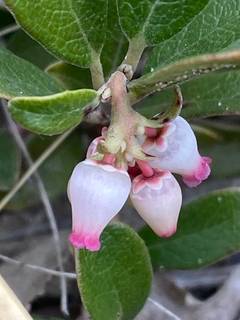
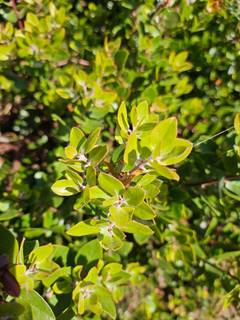
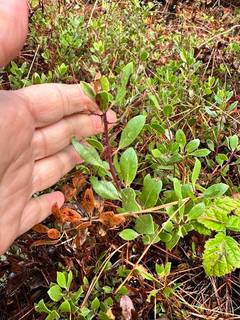
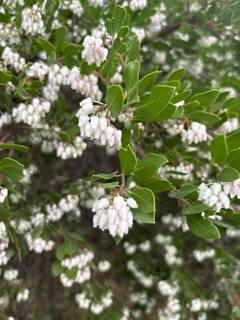
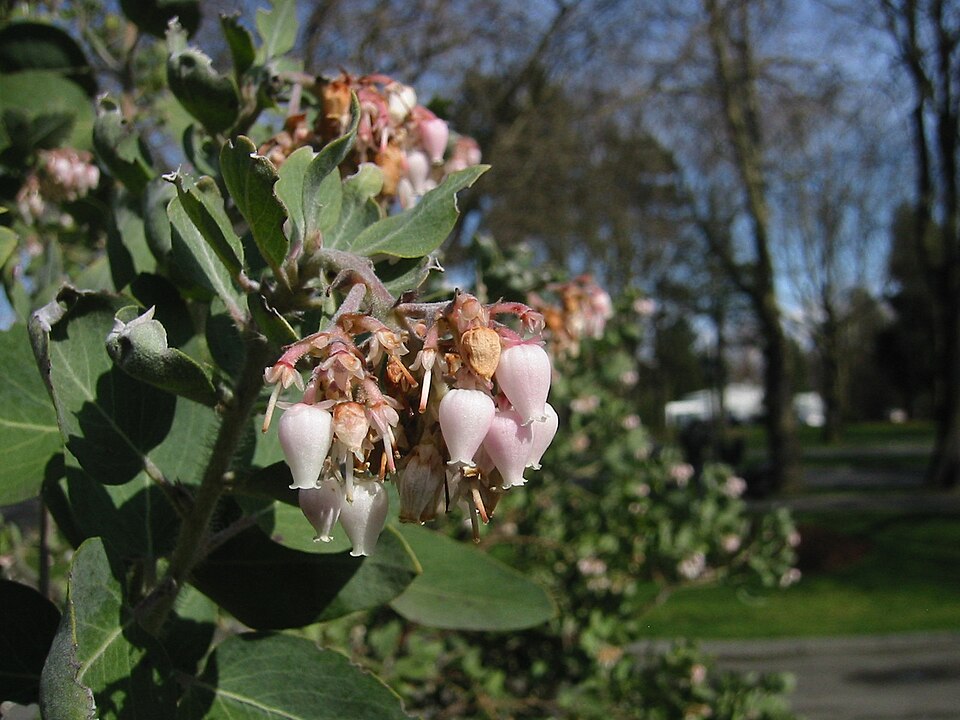
Arctostaphylos viscida is an evergreen shrub reaching 6-13 feet (1.8-4 m) tall and 6-10 feet (1.8-3 m) wide, with a rounded to upright form and rigid, spreading branches. The bark is smooth and deep red-brown, peeling in thin flakes on older stems. Leaves are pale gray-green to whitish, broadly oval, 1-1.6 inches (2.5-4 cm) long, held upright and coated with a waxy bloom that reduces water loss. Urn-shaped flowers, white to pale pink and 0.25 inch (6 mm) long, hang in branched clusters from December through March. Flowers are followed by round, sticky, reddish-brown fruits 0.2-0.3 inch (5-8 mm) across that ripen in summer. The species does not resprout after fire and regenerates from seed, which germinates after heat or smoke exposure. Growth is slow to moderate, adding 6-12 inches (15-30 cm) per year once established. Roots require sharp drainage; plants decline in irrigated or heavy clay soils and are short-lived where summer water is frequent.
Native Range
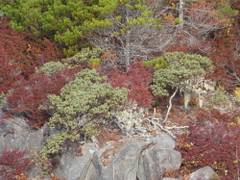
Native to California and southwestern Oregon, from the Sierra Nevada foothills and Cascade Range to the inner North Coast Ranges. Grows in chaparral, oak woodland, and coniferous forest openings on dry, rocky or gravelly slopes at 300-4,500 feet (90-1,400 m) elevation.Suggested Uses
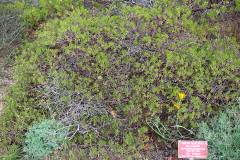
Planted in dry gardens, native and habitat plantings, and on unirrigated slopes for erosion control, spaced 6-8 feet (1.8-2.4 m) apart. Suited to Mediterranean climates with winter rain and dry summers; not suited to humid regions or irrigated beds. The smooth bark and evergreen foliage hold form year-round.How to Identify
Appearance
Size & Dimensions
Height6' - 13'
Width/Spread6' - 10'
Bloom Information
Flowers open from December through March, with peak bloom in January and February. Individual clusters last 3-4 weeks; the flowering period spans 8-12 weeks. Warm spells in midwinter accelerate opening, while cold snaps can damage exposed flowers.
Detailed Descriptions
Flower Description
white to pale pinkFoliage Description
gray-green to whitishGrowing Conditions
Sun Requirements
Requires 6-12 hours of direct sunlight daily
• Full Sun: 6+ hours of direct sunlight
• Partial Shade: 3-6 hours of direct sunlight
• Full Shade: Less than 3 hours of direct sunlight
Care & Maintenance
Care Guide
Grows in full sun in fast-draining, low-fertility soil. Water deeply but infrequently during the first one to two years to establish roots, then withhold summer irrigation, as established plants rely on winter rainfall. Frequent summer water in heavy soil promotes root and crown rot, a common cause of decline. No fertilizer is needed, and rich soil produces weak growth. Branch dieback follows extended drought stress in shallow soil. Plants live 30-100 years in well-drained native sites but often fewer than 10 years in irrigated gardens.Pruning
Prune lightly after flowering to shape and to remove dead or crossing branches. Manzanitas tolerate little hard pruning; cutting into old leafless wood rarely produces new shoots because the species does not resprout. Pinching young growth encourages denser branching.Pruning Schedule
Prune: April
early spring