Arctostaphylos, Genus, manzanita, Species,
- Genus & species
Dr. Hurd manzanita
California foothills and Coast Ranges; northern Baja California
Overview
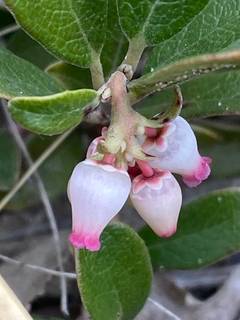
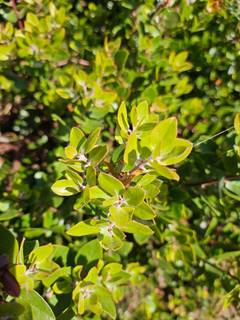
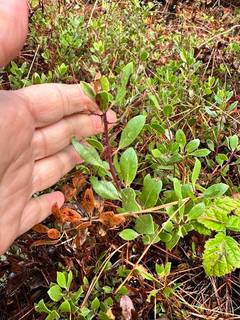
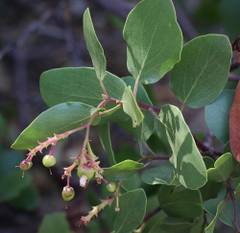
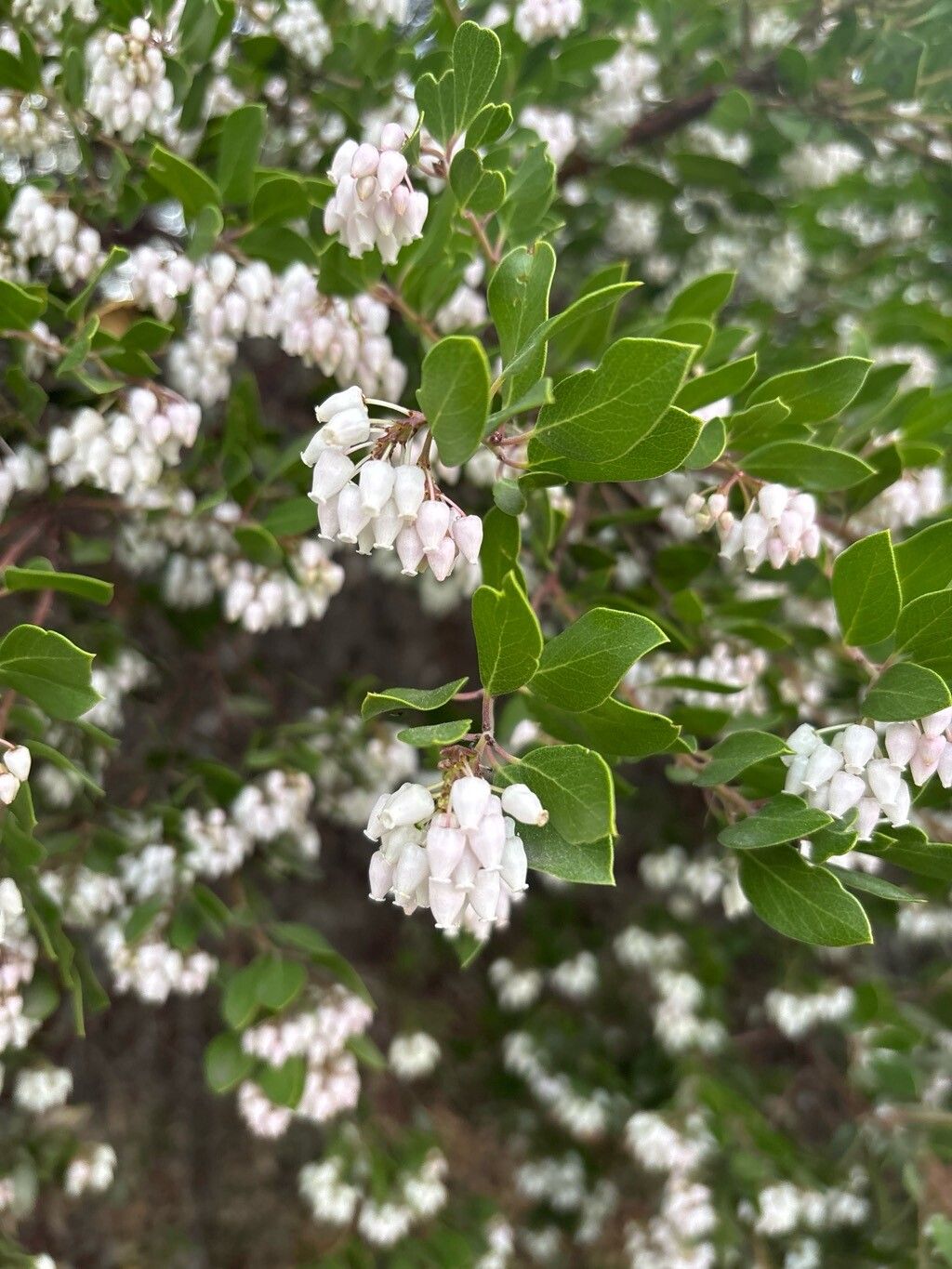
Arctostaphylos manzanita is an evergreen large shrub or small tree reaching 6-20 feet (1.8-6 m) tall and 6-15 feet (1.8-4.5 m) wide, with twisting trunks and a sculptural branching pattern. Bark is smooth and polished, dark red-mahogany to chestnut, peeling in thin curls in late summer to reveal lighter underbark. Leaves are bright green, ovate to elliptic, 1-1.5 inches (2.5-4 cm) long, leathery, with short petioles and slightly pointed tips. Urn-shaped flowers are white to pink, 0.3 inch (8 mm) long, borne in pendant panicles of 10-30 from December through March. Fruit is a red-brown to mahogany drupe, 0.4-0.5 inch (10-13 mm) across, ripening in summer and persisting into fall. Growth rate is slow to moderate; plants reach 6-8 feet (1.8-2.4 m) tall within 7-10 years from a 1-gallon (3.8 L) container. Drought-deciduous behavior occurs only under extreme stress; foliage typically holds year-round. Branch dieback from Phytophthora cinnamomi occurs in clay soils with summer irrigation, the principal cause of decline in cultivated specimens.
Native Range
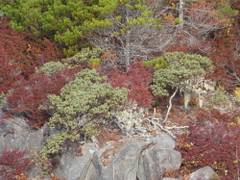
Native to the foothills and inland mountain ranges of California from the southern Cascade Range through the Sierra Nevada foothills, Coast Ranges, and Transverse Ranges, extending into northern Baja California. Grows in chaparral, oak woodland, and pine-oak transition zones at elevations from 200 to 5,000 feet (60-1,500 m) on rocky or sandy well-drained soils.Suggested Uses
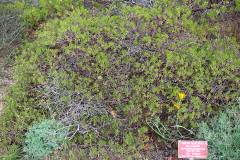
Used as a sculptural specimen or small specimen tree in California native gardens, spaced 12-15 feet (3.7-4.6 m) from adjacent plants to display the trunk and branching pattern. Plantings on dry slopes combine with Quercus agrifolia, Heteromeles arbutifolia, and Salvia species. Containers of at least 15 gallons (57 L) accommodate young plants for 3-5 years; larger root volumes are needed long-term.How to Identify
Appearance
Size & Dimensions
Height6' - 20'
Width/Spread6' - 15'
Bloom Information
Blooms December through March in California, with peak bloom January through February. Individual flower clusters last 2-4 weeks; total bloom period extends 10-14 weeks. Cool, wet winters extend bloom by 2-3 weeks; drought years compress bloom into a 4-6 week window. Bloom heaviness alternates moderately between years.
Detailed Descriptions
Flower Description
white to pinkFoliage Description
bright greenGrowing Conditions
Sun Requirements
Requires 6-9 hours of direct sunlight daily
• Full Sun: 6+ hours of direct sunlight
• Partial Shade: 3-6 hours of direct sunlight
• Full Shade: Less than 3 hours of direct sunlight
Care & Maintenance
Care Guide
Water deeply every 14-21 days during the first growing season to establish a deep root system. Established plants in well-drained soils require no summer water; inland plantings receive at most one deep soak per month from May through September. Summer overhead watering and clay soil are the principal causes of root rot from Phytophthora cinnamomi. Leaf gall aphid Tamalia coweni forms red galls on new leaves; cosmetic only. Branch dieback from canker-causing fungi can occur in older specimens and is removed by pruning back to live wood. Fertilization is not required.Pruning
Structural pruning to expose the trunk and reveal the bark is done in late summer or early fall, after the plant has finished annual growth. Cuts heal slowly; pruning wounds larger than 1 inch (2.5 cm) often develop dieback or canker entry points. Crossing branches and basal sprouts are removed annually to maintain the small-tree form.Pruning Schedule
Prune: August–September
summerfall
Container Growing
Suitable for container growing
Minimum container size: 15 gallons