Arctostaphylos, Genus,
- Genus
bearberries and manzanitas
Western North America; A. uva-ursi circumboreal
SunFull Sun – Part Shade
Overview
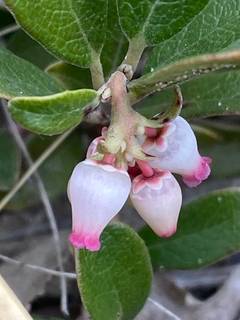
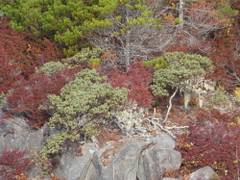
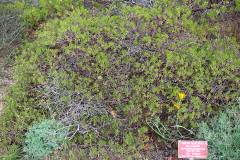
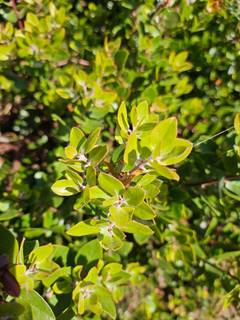
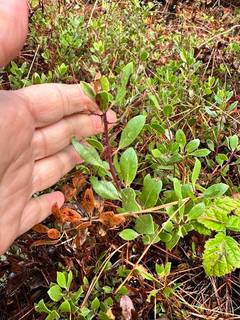
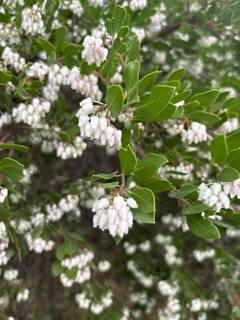
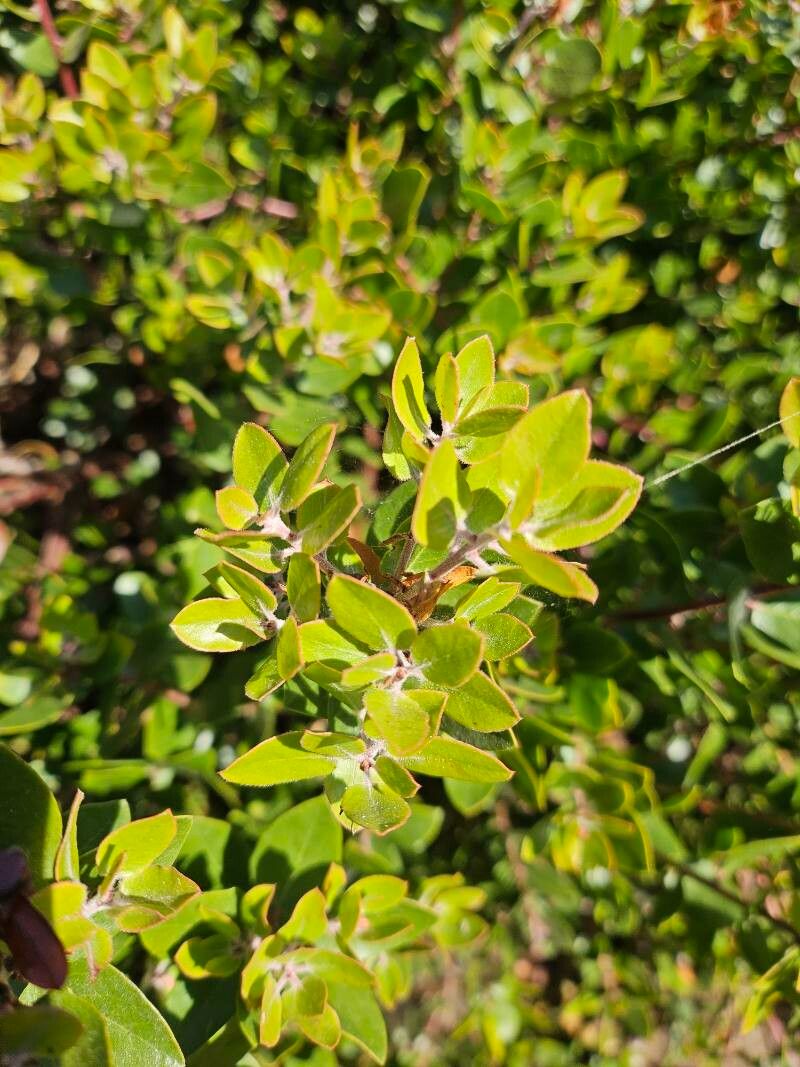
Arctostaphylos is a genus of about 60 species of evergreen shrubs and small trees in the family Ericaceae, the majority native to western North America, especially California, with A. uva-ursi circling the cooler Northern Hemisphere. The genus spans prostrate, mat-forming bearberries a few inches high to upright manzanitas 20 feet (6 m) tall, most with smooth, dark red to mahogany bark that peels in thin flakes. The small leathery leaves are usually oval and held more or less upright to limit water loss. Clusters of urn-shaped flowers, white to pink and 0.2 to 0.3 inch (5 to 8 mm) long, hang at the branch tips in late winter and spring. They ripen into small round fruits resembling tiny apples, green then red to brown, which give the Spanish name manzanita, little apple. A. uva-ursi is grown as a hardy evergreen ground cover, while shrubby manzanitas are planted in dry gardens for their bark and form. Most need acidic, sharply drained soil and little summer water once established, and many decline in rich soil and with overwatering.
Native Range
Native mainly to western North America, with the center of diversity in the California Floristic Province. A. uva-ursi has a circumboreal range across North America, Europe, and Asia, reaching far north.Suggested Uses
Grown as evergreen ground cover, in rock, gravel, and dry gardens, on banks for erosion control, and as feature shrubs for their bark. A. uva-ursi is used in cold-climate and coastal plantings. The early flowers support bees and hummingbirds, and the fruit feeds birds and mammals.How to Identify
Appearance
Size & Dimensions
Height4" - 20'
Width/Spread2' - 8'
Colors
Bloom Information
Detailed Descriptions
Flower Description
white to pinkFoliage Description
green to grey-greenGrowing Conditions
Sun Requirements
Requires 6-12 hours of direct sunlight daily
• Full Sun: 6+ hours of direct sunlight
• Partial Shade: 3-6 hours of direct sunlight
• Full Shade: Less than 3 hours of direct sunlight
Water & Climate
Water Needs
Drought Tolerance
Drought tolerant when established
Care & Maintenance
Care Guide
Arctostaphylos species grow in full sun to light shade on acidic, gritty, sharply drained soil and tolerate poor, rocky ground. They are adapted to dry summers and decline with rich soil, summer irrigation, or poor drainage, which bring on root diseases. Soil pH from 4.5 to 6.5 suits the genus. A. uva-ursi tolerates cold and coastal exposure and spreads to form a dense mat, while many Californian manzanitas are frost-tender. Established plants need little or no summer water in their native climate.Pruning
Pruning is light, removing dead or crossing stems and shaping young plants after flowering. Manzanitas are trained over years to show their bark and branch structure. Cutting into old leafless wood is avoided, as regrowth from bare stems is sparse.Container Growing
Suitable for container growing
Minimum container size: 3 gallons