Amelanchier, Genus, lamarckii, Species,
- Genus & species
Snowy mespilus
Naturalized in northwestern Europe; origin traced to eastern North America
Overview
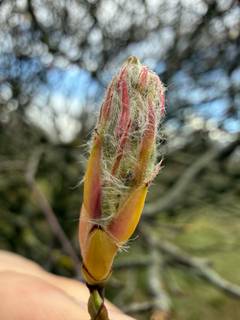
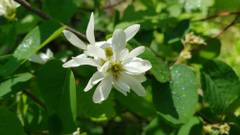
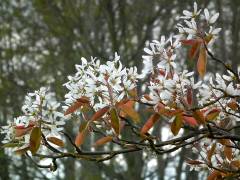
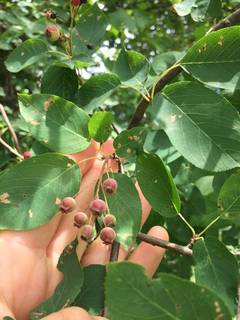
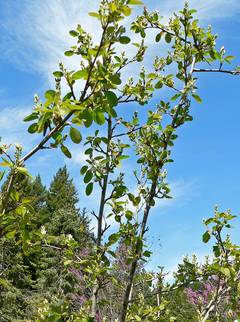
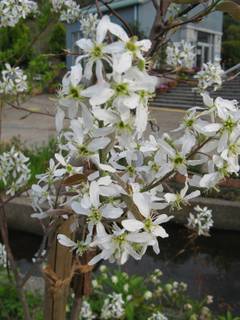
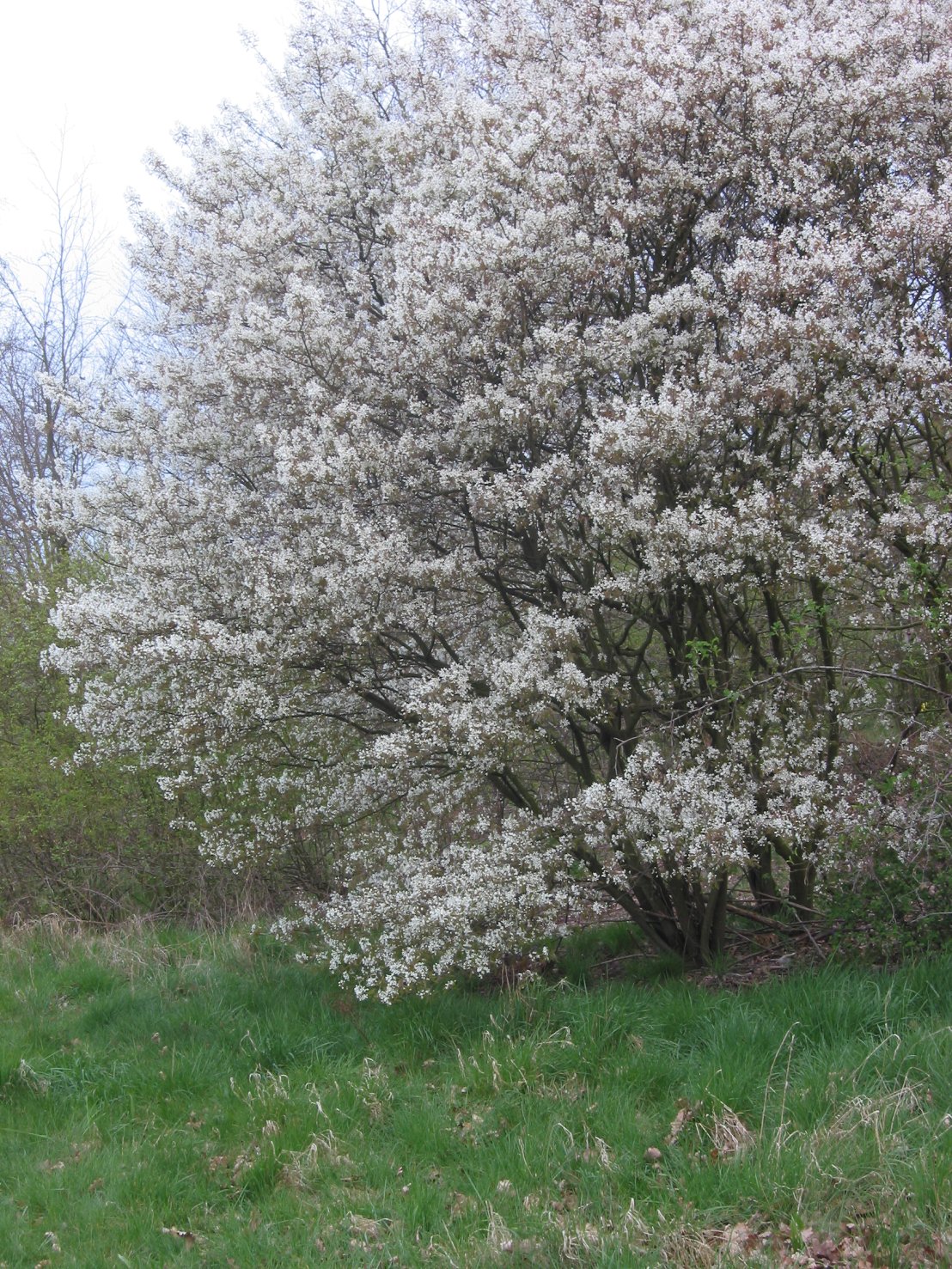
Amelanchier lamarckii is a deciduous multi-stemmed shrub or small tree reaching 20-30 feet (6-9 m) tall and 20-25 feet (6-7.5 m) wide, with an open upward-spreading crown and smooth gray bark marked by pale vertical striations. Leaves emerge coppery-bronze under a coat of silky hairs, expand to 1.5-3 inches (4-8 cm) long, oval with finely toothed margins, and harden to mid-green by late May before turning orange to red over 2-3 weeks in October. Flowers open with the young foliage in April, each carrying five narrow white petals and spanning 1-1.5 inches (2.5-4 cm), in loose drooping racemes of 6-10. Bloom lasts 7-14 days and shortens to 5-7 days under wind or temperatures above 68F (20C). Fruit is a rounded pome 0.3-0.4 inch (8-10 mm) across, ripening red then purple-black in late June and July, sweet and edible; birds commonly strip a crop within 3-7 days of ripening. Suckers rise from the base at 4-8 per year on established plants. Fireblight, caused by Erwinia amylovora, kills shoot tips and whole branches in warm wet springs.
Native Range
Of uncertain wild origin, long naturalized across northwestern Europe in the Netherlands, Belgium, Germany, Denmark, and Britain, where it grows in sandy woodland, heath margins, and hedgerows. Populations are held to derive from eastern North American stock brought into European gardens before 1800. It seeds into acid sandy soils and is recorded as spreading in Dutch and German woodland.Suggested Uses
Planted as a specimen or in groups at 15-20 foot (4.5-6 m) spacing, in mixed hedgerows, and along woodland edges where the April bloom and October color stand against darker evergreens. Fruit is picked for preserves and eaten fresh, though yields drop where birds reach the crop first. Root suckering rules it out of narrow beds beside paving, since new shoots rise 3-6 feet (0.9-1.8 m) from the trunk.How to Identify
Appearance
Size & Dimensions
Height20' - 30'
Width/Spread20' - 25'
Bloom Information
Flowers for 7-14 days in April in zones 6-8 and from late April into early May in zones 4-5, opening alongside the bronze young foliage. Wind, rain, or daytime temperatures above 68F (20C) shorten bloom to 5-7 days. Frost below 28F (-2C) during flowering removes that season's fruit crop without harming the plant. Flowers form on wood grown the previous season.
Detailed Descriptions
Foliage Description
Coppery-bronze when young, mid-green in summerGrowing Conditions
Sun Requirements
Requires 4-8 hours of direct sunlight daily
• Full Sun: 6+ hours of direct sunlight
• Partial Shade: 3-6 hours of direct sunlight
• Full Shade: Less than 3 hours of direct sunlight
Care & Maintenance
Care Guide
Water weekly through the first two seasons, after which plants hold through 3-4 weeks without rain on loam and 2 weeks on sand. Growth is strongest on acid to neutral soil at pH 5.0-7.0; leaves yellow between the veins on shallow chalk above pH 7.5. A 2-3 inch (5-8 cm) mulch of composted bark holds moisture and limits competition at the base. Suckers appear at 4-8 per year and are cut below ground level where a single-stemmed form is wanted. Fireblight enters through the flowers in warm wet springs and blackens shoot tips, which are cut back 12 inches (30 cm) into healthy wood. Rust caused by Gymnosporangium species spots leaves orange where junipers grow nearby, without lasting harm to the tree.Pruning
Cutting is limited to crossing, dead, and damaged stems in late winter while the plant is dormant. Multi-stemmed plants are thinned by taking one or two of the oldest stems to ground level every 3-4 years, which holds the crown open. Cuts made during spring flowering or in wet summer weather raise the risk of fireblight infection.Pruning Schedule
Prune: February–March
winterearly spring