Amelanchier, Genus, canadensis, Species,
- Genus & species
Shadblow serviceberry
Atlantic coastal plain of eastern North America
Overview
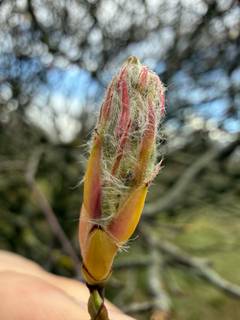
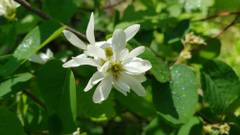
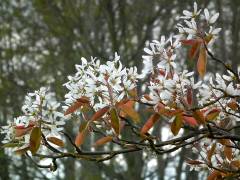
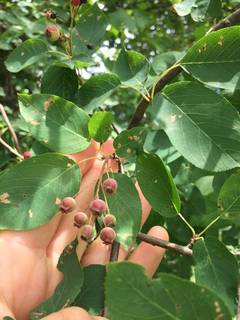
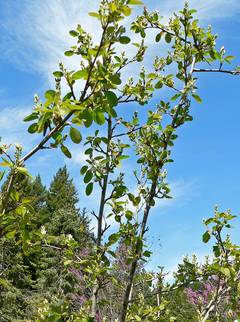
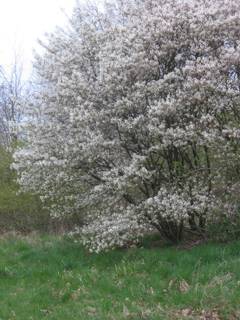
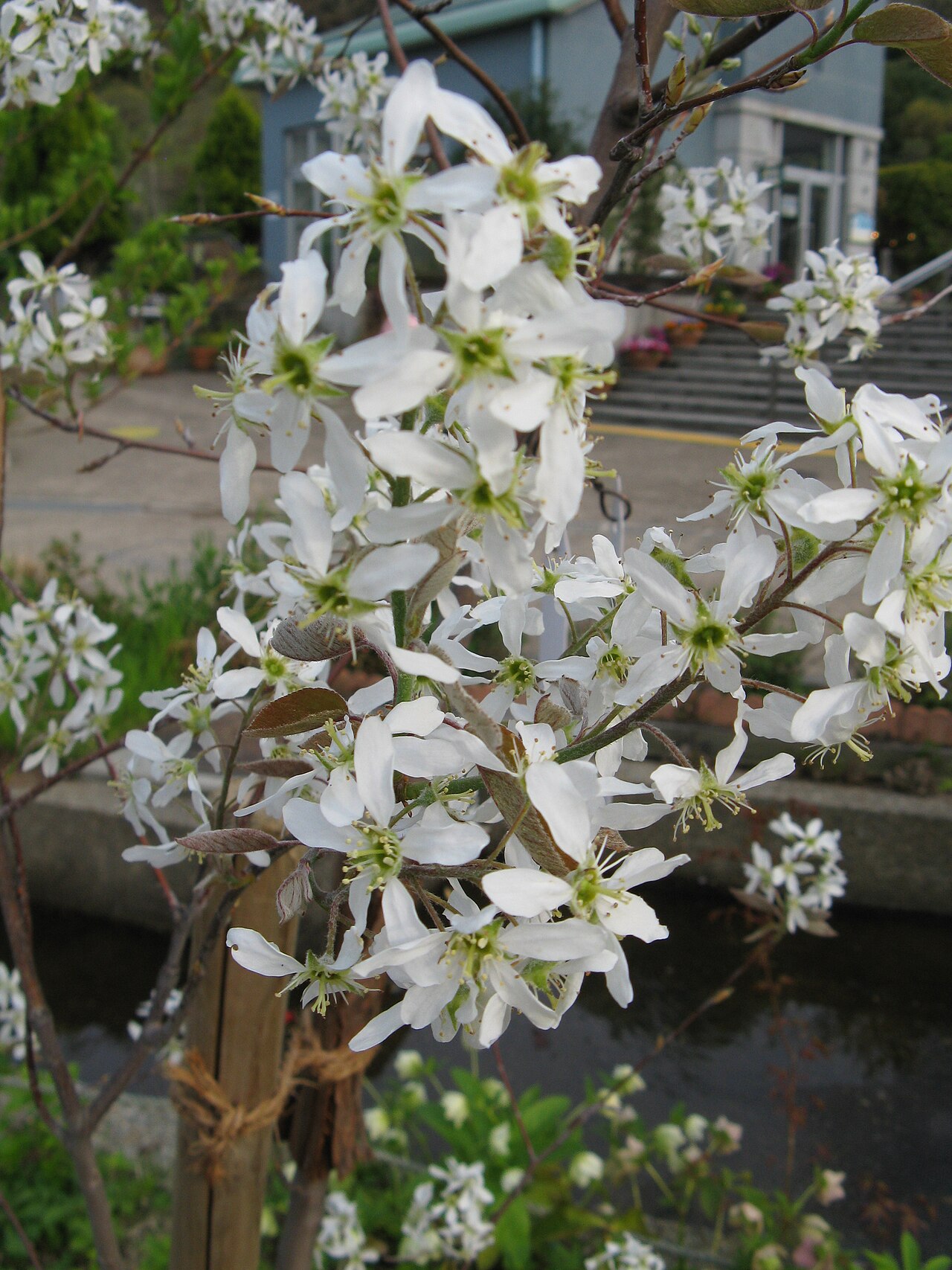
Amelanchier canadensis is a deciduous suckering shrub or small tree reaching 15-25 feet (4.5-7.5 m) tall and 10-15 feet (3-4.5 m) wide, building a multi-stemmed colony from root suckers rather than a single trunk. Leaves are oblong to obovate, 1-3 inches (2.5-7.5 cm) long, toothed along the upper two-thirds, and coated with white hairs beneath as they open in spring, the coating shed by June. Autumn color runs yellow through orange to red over 2-3 weeks in October. Flowers open white in erect crowded racemes 1.5-2.5 inches (4-6 cm) long, each flower carrying five petals 0.3-0.5 inch (8-12 mm) long, in April as the leaves unfold, with bloom lasting 7-10 days. Fruit is a purple-black pome 0.25-0.4 inch (6-10 mm) across, sweet, ripening in June. Roots withstand soil saturated for 2-4 weeks in spring, and plants grow in bogs and on swamp margins across the native range. Suckers extend the colony 12-24 inches (30-60 cm) per year, so a single plant becomes a thicket 10-15 feet (3-4.5 m) wide within 8-10 years. Cedar-apple rust and fireblight both occur in warm wet springs.
Native Range
Native to the Atlantic coastal plain of eastern North America from Newfoundland and Nova Scotia south to South Carolina, and inland to Pennsylvania. Grows in bogs, on swamp margins, in wet thickets, and in low woodland from sea level to 1,000 feet (300 m), typically on acid peaty or sandy soils.Suggested Uses
Planted in groups at 8-12 foot (2.4-3.7 m) spacing along woodland edges, in rain gardens, and on pond and stream margins that flood seasonally. Suckering growth forms a screen 10-15 feet (3-4.5 m) wide within 8-10 years and is used for informal hedging. Fruit is picked in June for preserves and eaten fresh where birds have not reached it first.How to Identify
Appearance
Size & Dimensions
Height15' - 25'
Width/Spread10' - 15'
Bloom Information
Flowers for 7-10 days in April in zones 6-8 and from late April into early May in zones 4-5, opening as the leaves unfold. Warm spells above 70F (21C) shorten bloom to 5 days. Frost below 28F (-2C) during flowering removes the June fruit crop. Flower buds form on wood grown the previous season.
Detailed Descriptions
Foliage Description
Mid-green, gray-hairy beneath when youngGrowing Conditions
Sun Requirements
Requires 4-8 hours of direct sunlight daily
• Full Sun: 6+ hours of direct sunlight
• Partial Shade: 3-6 hours of direct sunlight
• Full Shade: Less than 3 hours of direct sunlight
Care & Maintenance
Care Guide
Water weekly through the first two seasons; established plants hold through 2-3 weeks without rain and grow in soil saturated for 2-4 weeks in spring. Acid soil from pH 4.5 to 6.5 matches the native range, and leaves yellow between the veins above pH 7.0. Suckers extend the clump 12-24 inches (30-60 cm) per year and are cut below ground level in spring where a defined outline is held. Cedar-apple rust spots the leaves orange where junipers grow within 1-2 miles (1.6-3.2 km), and fireblight blackens shoot tips in warm wet springs, with affected wood cut back 12 inches (30 cm) into healthy tissue. Birds strip ripe fruit within 3-7 days in late June. Leaf spot and powdery mildew mark foliage in humid summers without carrying over into the following year.Pruning
Dead, damaged, and crossing stems are cut in late winter while the plant is dormant. One or two of the oldest stems are taken to ground level every 3-4 years on established clumps, and suckers are removed in the same operation where the colony is confined. Cuts made during bloom or in wet summer weather raise the risk of fireblight entry.Pruning Schedule
Prune: February–March
winterearly spring