Tropical Plants
Alocasia, Genus, macrorrhizos, Species,
- Genus & species
Giant taro
Tropical Asia and the western Pacific
Overview
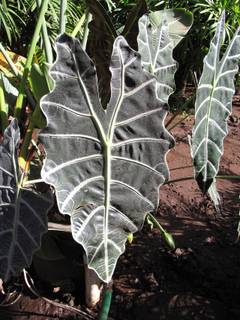
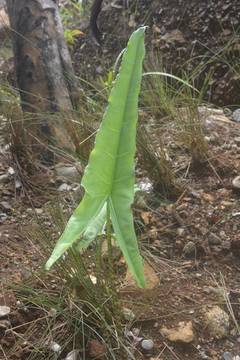
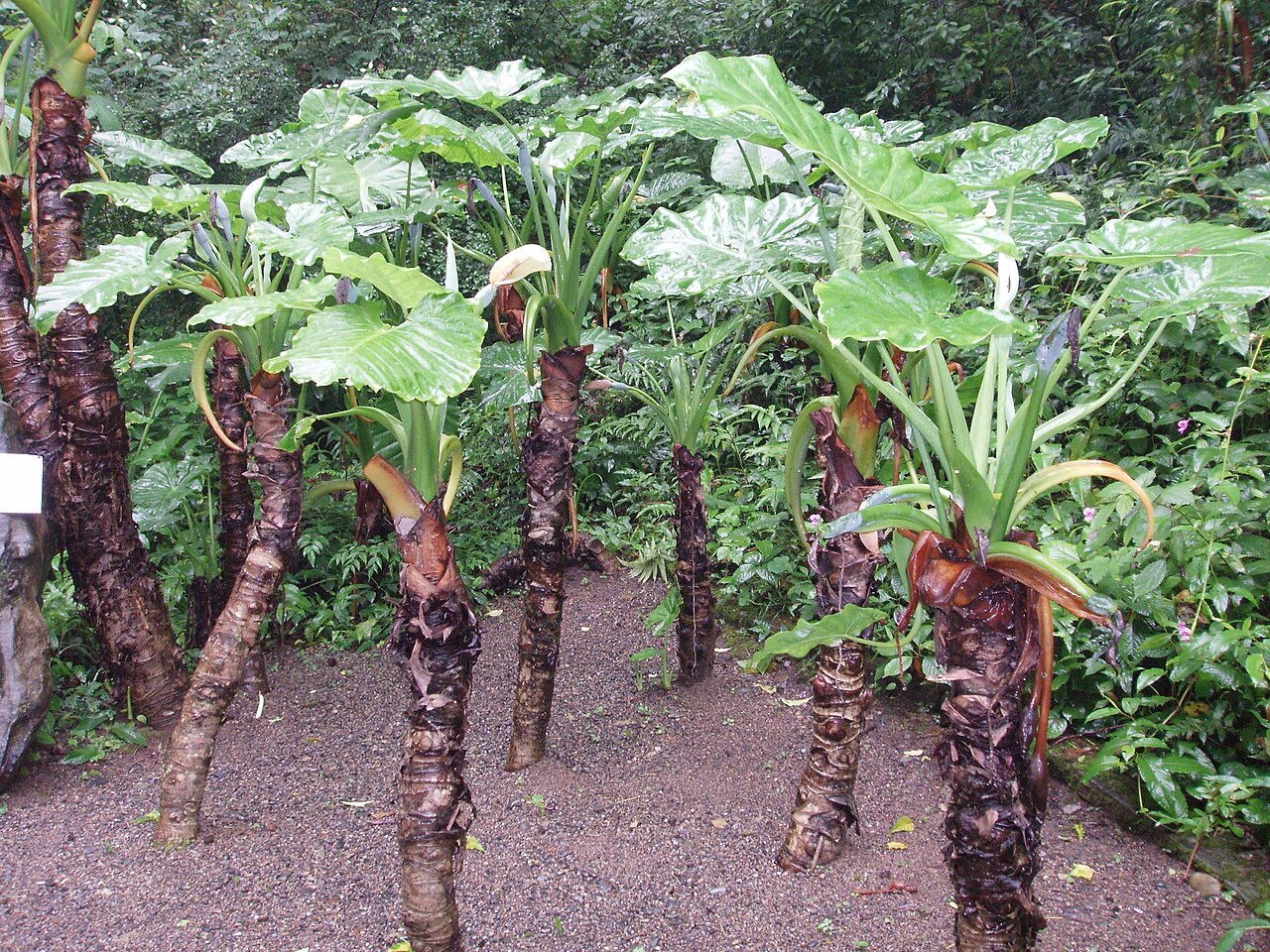
Alocasia macrorrhizos is a large, evergreen, clump-forming perennial with an erect, thick, fleshy stem that reaches 6–15 feet (1.8–4.6 m) tall and 4–8 feet (1.2–2.4 m) wide. Leaves are held upright on stout petioles 3–5 feet (0.9–1.5 m) long, and blades are arrow-shaped to broadly ovate, 2–4 feet (60–120 cm) long and 1.5–3 feet (45–90 cm) wide, glossy green with prominent veins and wavy margins. The inflorescence is a spadix enclosed by a pale green to yellow spathe 8–16 inches (20–40 cm) long, followed by clusters of red-orange berries. Growth is fast in warm, humid conditions, at 3–6 feet (0.9–1.8 m) per year. All parts contain calcium oxalate crystals, and sap causes irritation of the mouth and skin. Foliage is damaged below about 40°F (4°C), and plants collapse to the base in frost. The species has naturalized in tropical regions outside its native range.
Native Range
Native to tropical Asia and the western Pacific, from the Philippines and Malaysia to New Guinea and northern Queensland, and cultivated throughout the tropics; growing in moist forest margins and disturbed ground.Suggested Uses
Used as a tropical foliage accent in shaded borders, pond margins, and courtyards, spaced 4–6 feet (1.2–1.8 m) apart. Grown in large containers as a foliage plant in conservatories and heated interiors.How to Identify
Appearance
Size & Dimensions
Height6' - 15'
Width/Spread4' - 8'
Bloom Information
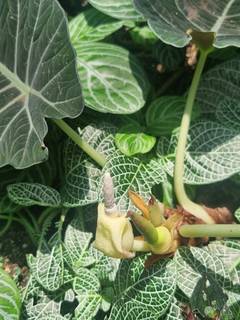
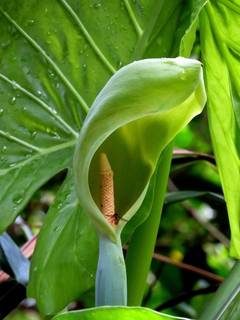
Flowers open at irregular intervals during warm months, mostly from spring to autumn, and each spathe lasts 2–4 days. Spathes are 8–16 inches (20–40 cm) long and are borne on stalks at leaf level. Berries ripen over 2–3 months in red-orange clusters.
Detailed Descriptions
Flower Description
Pale green to yellow spatheFoliage Description
Glossy greenGrowing Conditions
Sun Requirements
Requires 3-8 hours of direct sunlight daily
• Full Sun: 6+ hours of direct sunlight
• Partial Shade: 3-6 hours of direct sunlight
• Full Shade: Less than 3 hours of direct sunlight
Care & Maintenance
Care Guide
Grows in part shade to full sun in humid climates (3–8 hours of direct sun) and rich, moist, well-drained soil with a pH of 5.5–7.0. Hardy in USDA zones 10–12 outdoors, with foliage damage below 40°F (4°C). Plants receive 1–2 inches (2.5–5 cm) of water per week and are fertilized monthly during the growing season. Leaf edges brown in dry air and at low humidity. Outdoors, plants spread by suckers and stolons and can reach beyond their intended area. Indoor plants require a pot 18 inches (45 cm) wide and bright light.Pruning
Old, yellowed, and damaged leaves are cut at the base of the petiole. Suckers are separated from the parent stem with a sharp knife to control spread. Sap is irritating, and cutting is done with gloves.Pruning Schedule
Prune: March–April
early spring
Container Growing
Suitable for container growing
Minimum container size: 15 gallons