Alocasia, Genus, brisbanensis, Species,
- Genus & species
cunjevoi
Overview
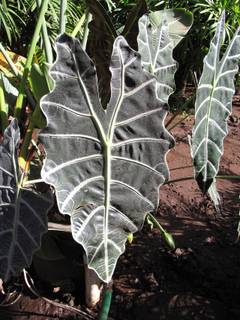
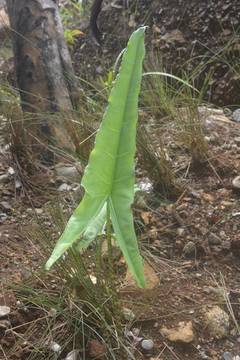
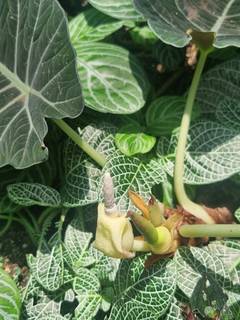
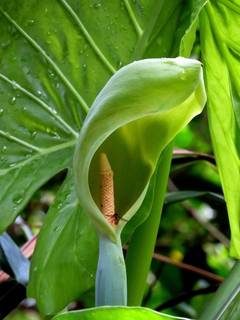
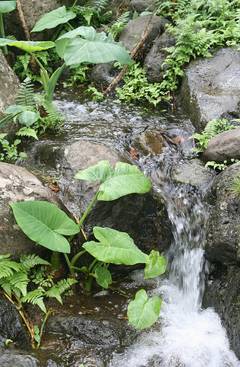
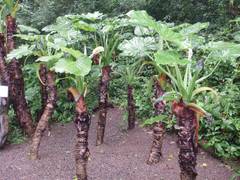
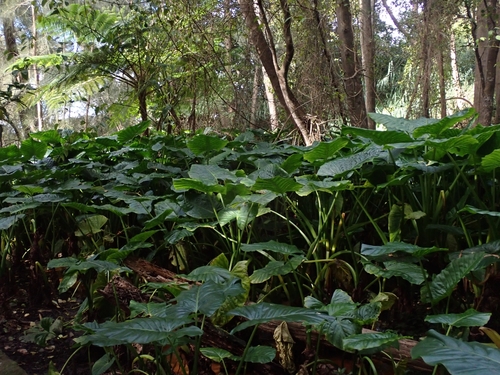
Alocasia brisbanensis is a large evergreen rhizomatous herb reaching 3-6 feet (1-1.8 m) tall and 3-5 feet (1-1.5 m) wide, growing from a thick fleshy rhizome that sits at or above the soil surface. Glossy dark green leaves are broadly arrow-shaped, 12-32 inches (30-80 cm) long, held on long succulent stalks. The inflorescence is an arum-type structure with a pale green to yellowish spathe 4-8 inches (10-20 cm) long partly enclosing a central spadix, followed by a dense cluster of red to orange-red berries. Flowering occurs mainly in the warmer months. All parts contain calcium oxalate crystals and are toxic if eaten, causing intense burning and swelling of the mouth and throat, and the sap irritates skin. Growth is moderate, with clumps spreading slowly from the rhizome. Leaves are damaged by frost and by strong wind in exposed sites.
Native Range
Native to eastern Australia, from north Queensland to southern New South Wales. Grows in the moist, shaded understorey of subtropical and warm-temperate rainforest, along creek banks and gullies in rich, damp soils.Suggested Uses
Grown as a foliage feature in shaded subtropical and rainforest-style gardens, spaced 3-5 feet (1-1.5 m) apart. Used beside ponds and in damp, sheltered courtyards. The toxic sap and berries make it unsuited to gardens used by young children.How to Identify
Appearance
Size & Dimensions
Height3' - 6'
Width/Spread3' - 5'
Bloom Information
Flowers mainly in the warmer months (spring to summer, October to February in its native range). The green to yellowish spathe is short-lived, followed by red to orange-red berries that persist for several weeks. Flowering is irregular and depends on plant size and growing conditions.
Detailed Descriptions
Flower Description
pale green to yellowishFoliage Description
glossy dark greenGrowing Conditions
Sun Requirements
Requires 2-5 hours of direct sunlight daily
• Full Sun: 6+ hours of direct sunlight
• Partial Shade: 3-6 hours of direct sunlight
• Full Shade: Less than 3 hours of direct sunlight
Care & Maintenance
Care Guide
Grows in part to full shade in moist, well-drained soils high in organic matter. Water regularly to keep the soil damp, as the large leaves wilt quickly in dry conditions. Frost and strong wind tear and blacken the foliage, limiting it to sheltered positions in cooler zones. All parts contain calcium oxalate crystals that cause burning and swelling if eaten, and the sap irritates skin. Few pests occur, though spider mites appear on plants grown in dry air. Remove damaged leaves at the base to maintain appearance.Pruning
Remove old, damaged, or frost-affected leaves at the base of the stalk as they decline. Cut spent flower stalks once the berries fade. No structural pruning is needed, as the plant renews leaves from the rhizome.Container Growing
Suitable for container growing
Minimum container size: 10 gallons