Alocasia, Genus, spp., Multiple species,
- Genus
- Multiple species
elephant's-ears
Tropical and subtropical Asia and eastern Australia
Overview
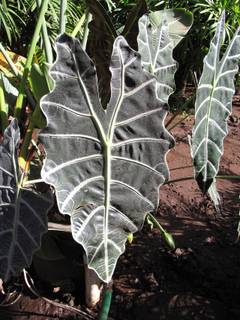
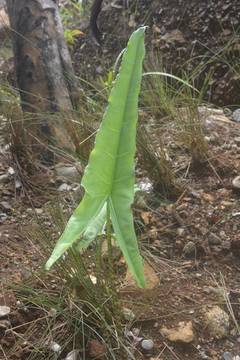
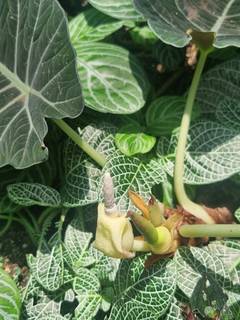
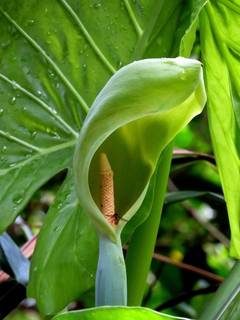
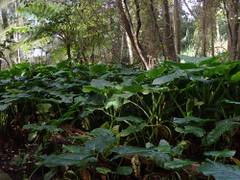
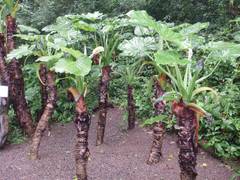
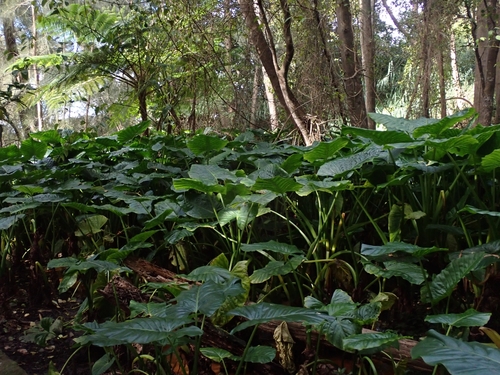
Alocasia is a genus of about 80 species of evergreen, rhizomatous or tuberous perennials in the arum family (Araceae), known as elephant's ears, native to the tropical and subtropical forests of Asia and eastern Australia. Plants are grown chiefly for their large, arrow- or heart-shaped leaves, which are held upright on long stalks and range from a few inches to more than 3 feet (90 cm) long. The leaves are often glossy and dark, with prominent pale or contrasting veins, and some species show metallic silver, bronze, or near-black coloring. Plant size varies from compact species under 1 foot (30 cm) tall to giant taro (A. macrorrhizos) reaching 12-15 feet (3.6-4.5 m). The flowers are typical arum structures, a narrow spadix wrapped in a greenish spathe, and are inconspicuous compared with the foliage. The genus needs warmth, humidity, and bright, indirect light, and grows outdoors only in frost-free USDA zones 9-11; in cooler regions it is grown as a houseplant or lifted for winter. All parts contain calcium oxalate crystals that are poisonous to people and pets if chewed.
Native Range
The genus is native to the tropical and subtropical regions of Asia and eastern Australia, from India and Sri Lanka through Southeast Asia to southern China, the Philippines, New Guinea, and Queensland. Plants grow on the humid floor and clearings of rainforest and along streams.Suggested Uses
Elephant's ears are grown as bold foliage plants in tropical and shaded gardens, around ponds and water features, and in large containers on patios, spaced 2-4 feet (0.6-1.2 m) apart depending on species. In cool climates they are grown as houseplants and as summer container and bedding plants lifted before frost. The dark and silver-veined species are used as structural foliage among other shade and tropical plants.How to Identify
Appearance
Size & Dimensions
Height1' - 15'
Width/Spread1' - 8'
Bloom Information
Flowering is occasional and not the reason the plants are grown. When it occurs, mainly in the warm months, a slim, pale-green spathe opens around a short spadix at the leaf bases. The bloom is followed at times by clusters of small red or orange berries, though many cultivated plants never flower.
Detailed Descriptions
Foliage Description
green to dark green with pale veins; some silver, bronze, or near-blackGrowing Conditions
Sun Requirements
Requires 2-5 hours of direct sunlight daily
• Full Sun: 6+ hours of direct sunlight
• Partial Shade: 3-6 hours of direct sunlight
• Full Shade: Less than 3 hours of direct sunlight
Care & Maintenance
Care Guide
Alocasia species grow in part shade to bright, indirect light in rich, moist, well-drained soil or potting mix with a pH of 5.5-6.5, and need warmth above 60F (16C) and high humidity. Steady moisture suits them through the growing season, while cool, soggy soil brings on root and tuber rot. Many species slow or drop their leaves and rest over winter, regrowing from the rhizome or tuber in spring. They are frost-tender, surviving outdoors only in USDA zones 9-11, and are grown as houseplants or lifted and stored elsewhere. Spider mites, mealybugs, and aphids are common indoors, especially in dry air. All parts are poisonous if eaten, and the sap can irritate skin and eyes.Pruning
Yellowed or damaged leaves are cut off at the base as they age, which keeps the plant tidy and limits pests. Spent flower stalks are removed where bloom occurs. No structural pruning is needed, since the leaves arise directly from the rhizome.Container Growing
Suitable for container growing
Minimum container size: 5 gallons