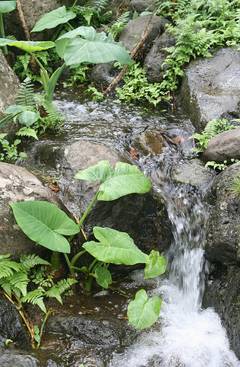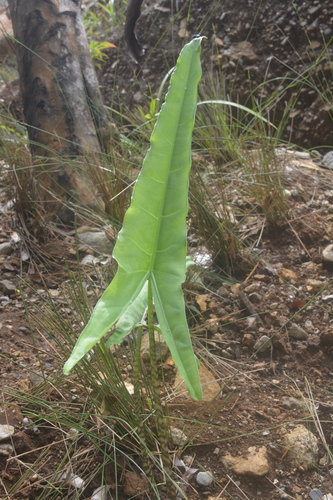
Alocasia, Genus, zebrina, Species,
- Genus & species
zebra alocasia
Philippine endemic on the islands of Luzon and Mindoro, on shaded volcanic-soil slopes in lowland rainforest; classified as endangered under the IUCN Red List
Overview
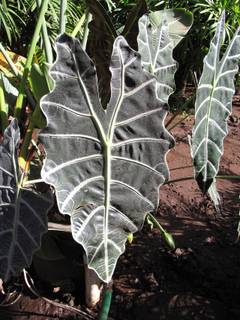
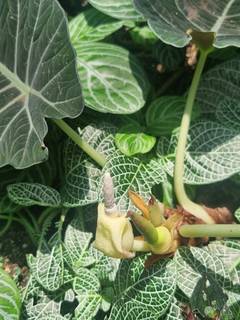
Alocasia zebrina is the zebra alocasia — a Philippine endemic with patterned petioles grown almost exclusively as an indoor specimen, reaching 24–48 inches (60–120 cm) tall and 18–30 inches (45–75 cm) wide as a clumping crown. The species was first described from the Philippines in 1863 and is endemic to the islands of Luzon and Mindoro, where it grows on shaded volcanic-soil slopes in lowland rainforest. The cultivar character that gives the species its common name is the petiole pattern: each leaf rises on a slender petiole 18–30 inches (45–75 cm) long that is banded longitudinally with alternating dark green-to-black and pale yellow-green stripes that run from the soil to the leaf base, resembling zebra markings. Each leaf is arrowhead-shaped, 8–14 inches (20–35 cm) long and 6–10 inches (15–25 cm) wide, and is solid medium green on both surfaces — the petiole stripes carry the visual interest, not the leaf blade. The plant grows from a thick rhizomatous corm and produces 3–6 leaves at any one time on a mature specimen. The wild population is classified as endangered under the IUCN Red List due to habitat loss and over-collection for the houseplant trade; only legally propagated tissue-culture or seed-grown plants should be sourced. Cultural failure modes are well-documented: leaf drop from temperature swings (the species is intolerant of temperatures below 60°F / 16°C), spider mite infestations (dry indoor air below 40 percent humidity), and root rot from soil that stays wet at the base of the pot. All parts contain insoluble calcium oxalate crystals toxic to dogs, cats, and humans on ingestion.
Native Range
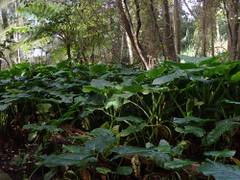
Alocasia zebrina is a Philippine endemic, native only to the islands of Luzon and Mindoro, where it grows on shaded volcanic-soil slopes in lowland rainforest. The wild population is classified as endangered under the IUCN Red List due to habitat loss and over-collection for the houseplant trade.Suggested Uses
Used as a small-to-medium indoor specimen for warm humid sunrooms, kitchens, and bathrooms in containers of 2–3 gallons (8–11 liters). The patterned petioles read as a graphic visual element from across a room. Combines with smaller foliage houseplants such as Calathea cultivars and Anthurium hybrids for layered tropical indoor plantings. Less suited to households with cats and dogs that browse foliage due to calcium oxalate toxicity, and the plant requires more humidity and warmth than most indoor specimens.How to Identify
Appearance
Size & Dimensions
Height2' - 4'
Width/Spread1'6" - 2'6"
Colors
Bloom Information
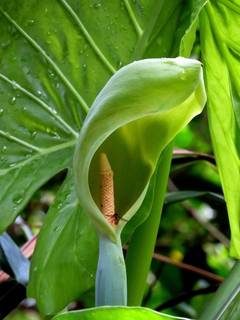
Flowers occasionally in container culture, producing a 4–6 inch (10–15 cm) greenish-yellow spathe surrounding a pale spadix; the inflorescence is small and inconspicuous compared with the foliage. Indoor plants are grown for the patterned petioles, which carry the year-round display.
Detailed Descriptions
Flower Description
Greenish-yellow spathe 4-6 inches (10-15 cm) with pale spadix (occasional in container culture)Foliage Description
Solid medium green arrowhead-shaped leaves 8-14 inches (20-35 cm) long on slender petioles 18-30 inches (45-75 cm) long banded longitudinally with alternating dark green-to-black and pale yellow-green zebra stripesGrowing Conditions
Sun Requirements
Requires 4-6 hours of direct sunlight daily
• Full Sun: 6+ hours of direct sunlight
• Partial Shade: 3-6 hours of direct sunlight
• Full Shade: Less than 3 hours of direct sunlight
Care & Maintenance
Care Guide
Place in bright indirect light at 200–500 foot-candles; direct sun above 4 hours scorches the foliage. Water when the top one-third of the soil volume has dried; the plant prefers consistently moist soil through the active growing season and tolerates drier conditions during winter dormancy. Soil mix should be free-draining and chunky (peat-based potting mix amended with orchid bark and perlite at roughly 50–25–25 percent ratios). Maintain temperatures above 60°F (16°C) at all times and indoor humidity above 50 percent. Feed at half the label rate with a balanced liquid fertilizer monthly during active growth (spring through early autumn) and skip feeding in winter. The slender petioles can lean or break under their own weight on tall specimens — staking with a thin bamboo cane keeps the leaves upright.Pruning
Cut spent yellowing leaves at the base of the petiole with clean scissors. Lift and divide the rhizomatous corm during spring repotting; mature plants produce offset corms that establish quickly in fresh potting mix. Source new plants from legally propagated tissue-culture or seed-grown stock to avoid wild-collected material.Container Growing
Suitable for container growing
Minimum container size: 2 gallons