Image 1 of 6
Plant Reference
1 / 6
Allium, Genus, 'Mount Everest', Cultivar,
- Genus
- Cultivar
mount everest allium
Garden hybrid of Central Asian parentage
Overview
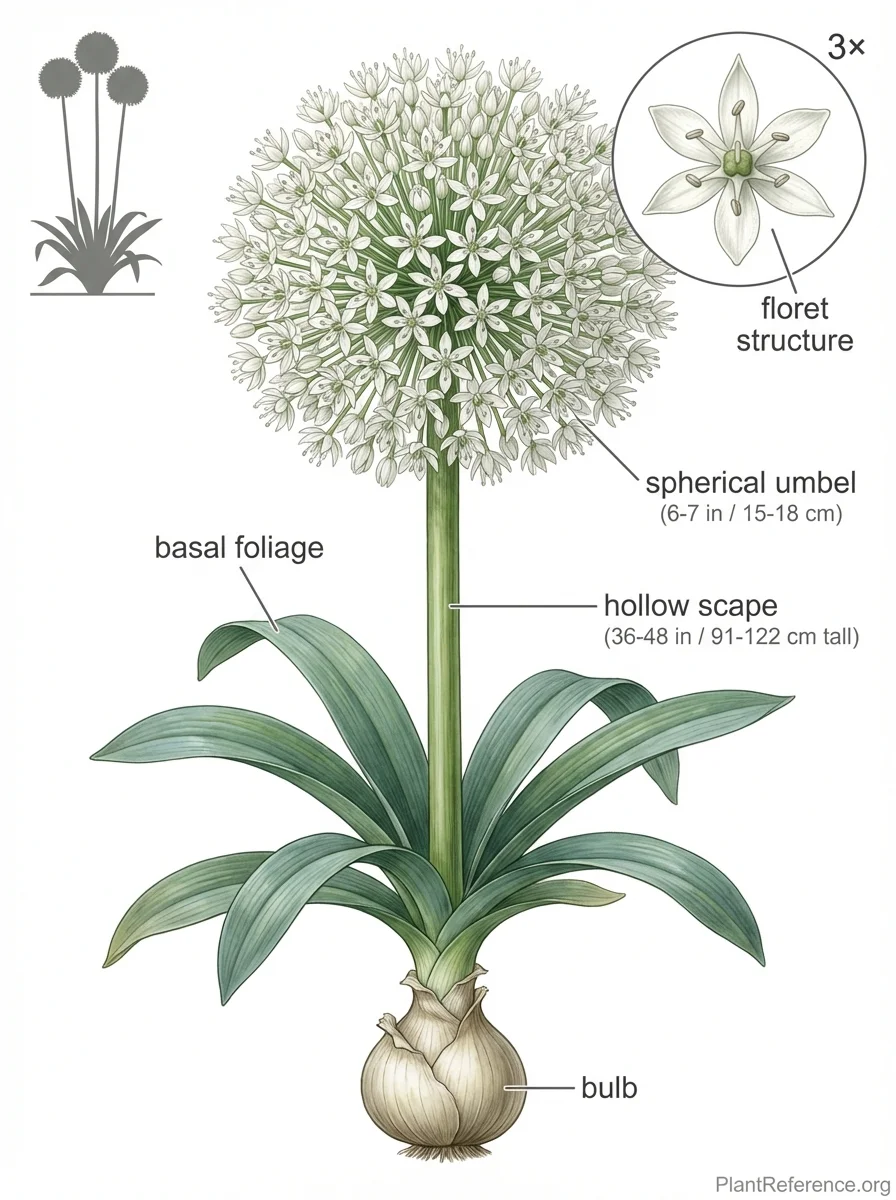
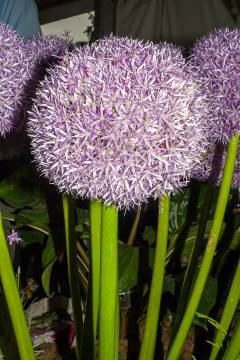
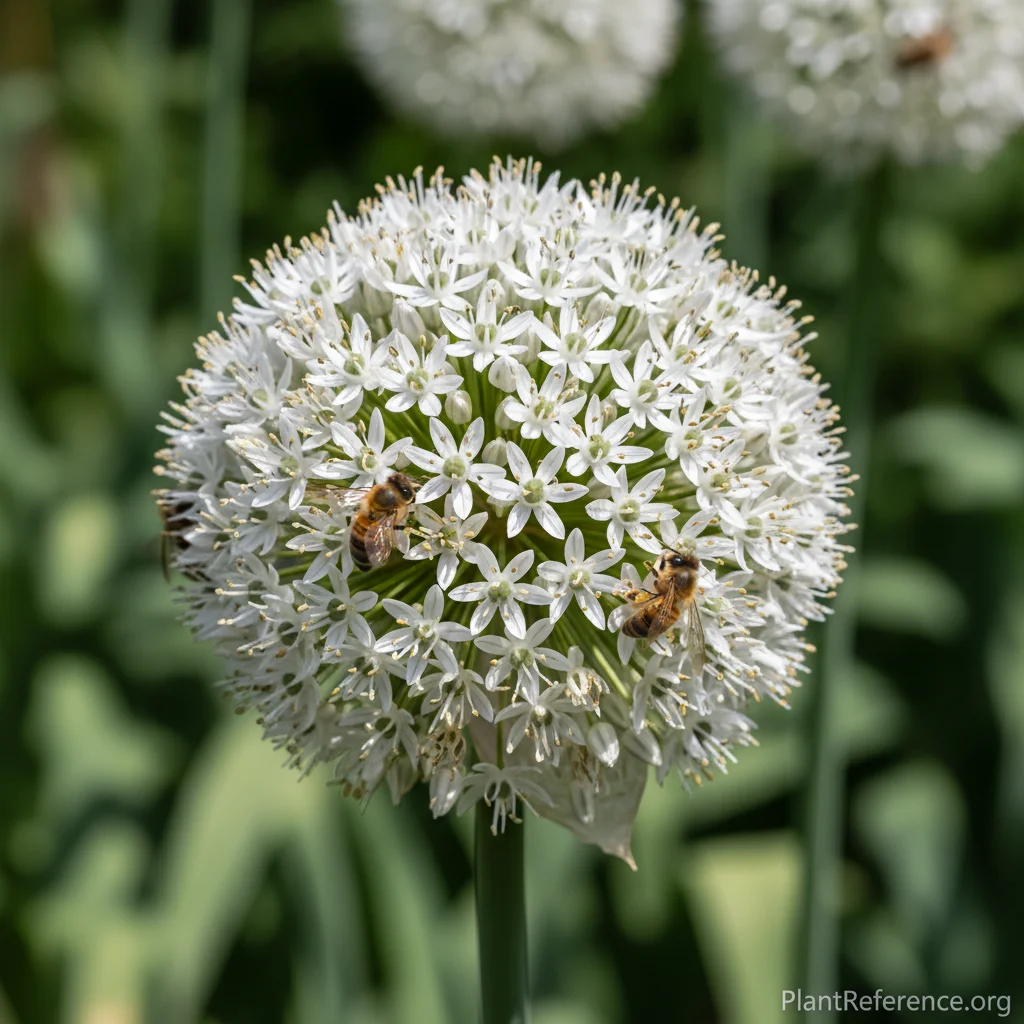
Allium 'Mount Everest' is a tall bulbous perennial reaching 36–48 inches (90–120 cm) tall and 12–18 inches (30–45 cm) wide, growing from a large bulb 2–3 inches (5–8 cm) in diameter. Basal leaves are strap-shaped, 12–18 inches (30–45 cm) long and 1.5–2.5 inches (4–6 cm) wide, blue-green. Foliage yellows and dies back during or before bloom, typically by late May in zones 6–7. Flower umbels are spherical, 6–7 inches (15–18 cm) in diameter, composed of several hundred small, white, star-shaped flowers on a sturdy, erect, hollow stalk. Individual flowers are 0.25–0.3 inch (6–8 mm) across with six pointed tepals and visible stamens. Bloom occurs May through July depending on zone, with individual umbels lasting 3–4 weeks. This cultivar is largely sterile, producing few viable seeds. Dried flower heads retain their spherical form for several months after petals drop. Bulbs multiply slowly by offsets, forming small clusters over 5–8 years. Bulb rot develops in heavy clay or soils that remain wet during summer dormancy. Foliage die-back during bloom leaves a gap that requires companion plantings. Flower stalks may lean in exposed, windy sites. All parts contain sulfur compounds; ingestion causes gastrointestinal distress in dogs and cats.
Native Range
'Mount Everest' is a garden hybrid, likely derived from large-flowered white Allium species native to mountain regions of Central Asia, Turkey, and Iran. Exact parentage is undocumented.Suggested Uses
Commonly planted in perennial borders and mixed borders at 10–12 inch (25–30 cm) spacing in groups of 3–7 bulbs. Interplant with later-emerging perennials such as Perovskia, Aster, or ornamental grasses to mask yellowing foliage. Container culture in 5-gallon (19 L) or larger pots is feasible. Not suited to heavy clay soils, irrigated summer beds, or exposed windy sites where stalks may lean.How to Identify
Appearance
Size & Dimensions
Height3' - 4'
Width/Spread1' - 1'6"
Bloom Information
Flowers May through July in zones 4–9. In zones 8–9, bloom begins in early May and finishes by mid-June. Individual umbels last 3–4 weeks; sterile flowers persist longer than seed-producing allium species. Cool conditions during bloom extend flower display by several days.
Detailed Descriptions
Foliage Description
Blue-green, strap-shaped, basal, dying back during or before bloomGrowing Conditions
Sun Requirements
Requires 6-12 hours of direct sunlight daily
• Full Sun: 6+ hours of direct sunlight
• Partial Shade: 3-6 hours of direct sunlight
• Full Shade: Less than 3 hours of direct sunlight
Care & Maintenance
Care Guide
Plant bulbs 6–8 inches (15–20 cm) deep in fall (September–November) in well-drained soil. Bulbs rot in heavy clay or areas with standing water during winter and summer dormancy. Water regularly during active spring growth, providing 1 inch (2.5 cm) weekly in the absence of rain. Reduce watering after foliage begins to yellow; bulbs require dry conditions during summer dormancy (July–September). No regular fertilization is needed. Bulbs rarely require division; only divide every 8–10 years when clumps become congested. Foliage die-back during bloom is normal and characteristic of the genus.Pruning
Allow foliage to die back naturally; do not remove green leaves even when they appear withered during bloom, as they are supplying energy to the bulb. Cut dead foliage at the base once fully brown, typically in late June to July. Dried flower heads can be left standing through summer and fall or removed in July–August.Pruning Schedule
Prune: July–August
summer
Container Growing
Suitable for container growing
Minimum container size: 5 gallons
Toxicity Warning
Toxic to petsPlanting Guide
Planting Methods & Timing
Planting Method
transplant
Botanical Flashcard