Aesculus, Genus, indica, Species,
- Genus & species
Indian horse chestnut
Northwestern Himalaya (India, Nepal, Pakistan)
Overview
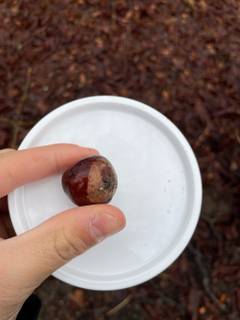
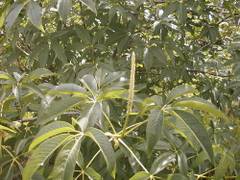
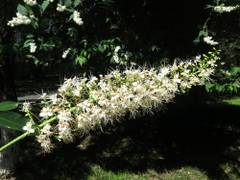
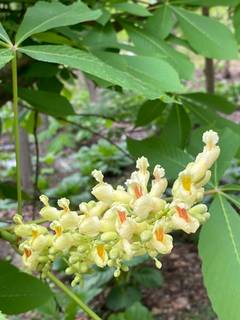
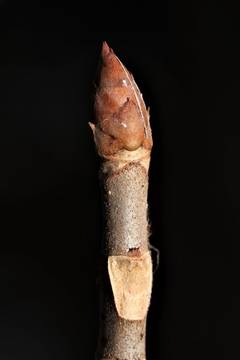
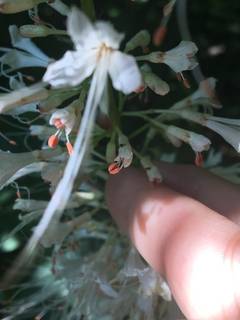
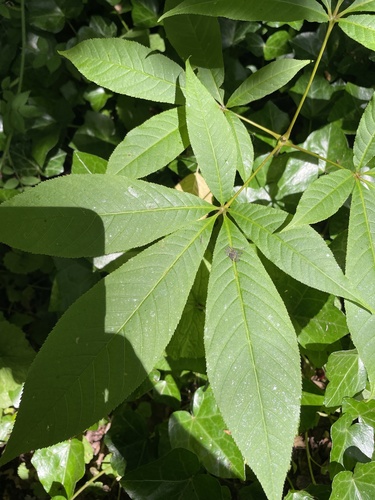
Aesculus indica is a broadly columnar to rounded deciduous tree reaching 40–60 feet (12–18 m) tall and 30–50 feet (9–15 m) wide at maturity. Leaves are palmately compound with 5–7 leaflets, each 6–10 inches (15–25 cm) long, lance-shaped, glossy dark green with finely serrated margins. New foliage emerges bronze to pink-tinted in spring before maturing to dark green. Foliage turns orange-yellow in fall, typically in October–November in zones 7–8. Flower panicles are erect, conical, 10–16 inches (25–40 cm) long, appearing in June–July — approximately 4–6 weeks later than A. hippocastanum. Individual flowers are white with pink and yellow basal markings. Fruit capsules are round to pear-shaped, 2–3 inches (5–8 cm), rough-textured but largely spineless, containing 1–2 dark brown seeds. Growth rate is moderate at 12–18 inches (30–45 cm) annually; trees reach 25–30 feet (7.5–9 m) in 15 years. Bark is gray-brown, smooth when young, developing shallow fissures with age. Leaf blotch (Guignardia aesculi) is less frequent on this species than on A. hippocastanum. New growth is susceptible to late spring frost damage in zone 7. All parts contain saponins and are toxic if ingested.
Native Range
Native to the northwestern Himalaya, found in India (Himachal Pradesh, Uttarakhand, Jammu and Kashmir), northern Pakistan, and Nepal. Grows in mixed temperate forests at 5,000–10,000 feet (1,500–3,000 m) elevation on moist, well-drained mountain slopes.Suggested Uses
Planted as a shade tree in parks, large gardens, and campuses at 30–40 foot (9–12 m) spacing. Late bloom period extends the flowering season in collections with other Aesculus species. Not suited to zones below 7 without sheltered microclimates, dry sites, or areas with poor drainage.How to Identify
Appearance
Size & Dimensions
Height40' - 60'
Width/Spread30' - 50'
Bloom Information
Flowers June through July in zones 7–9, approximately 4–6 weeks later than A. hippocastanum. Individual panicles persist for 2–3 weeks; total bloom period extends about 3 weeks. In mild zone 9 locations, bloom may begin in late May. Cool, wet springs delay bloom onset by 1–2 weeks.
Detailed Descriptions
Flower Description
White with pink and yellow markingsFoliage Description
Dark green palmately compound leaves with 5-7 leaflets, glossy, turning orange-yellow in fallGrowing Conditions
Sun Requirements
Requires 6-10 hours of direct sunlight daily
• Full Sun: 6+ hours of direct sunlight
• Partial Shade: 3-6 hours of direct sunlight
• Full Shade: Less than 3 hours of direct sunlight
Care & Maintenance
Care Guide
Water deeply every 1–2 weeks during the first 3 growing seasons. Established trees require consistent moisture through the growing season and do not tolerate prolonged summer drought. Leaf scorch develops on dry, exposed sites during hot summers, particularly in zone 9. Leaf blotch (Guignardia aesculi) occurs in humid climates but is typically less severe than on A. hippocastanum. Late spring frosts damage new growth in zone 7, especially in low-lying frost pockets. No regular fertilization is needed for established trees. Trees are intolerant of waterlogged soils and decline where drainage is poor.Pruning
Prune during winter dormancy (November–February) to establish a central leader and remove dead or crossing branches. Structural pruning in the first 10–15 years develops a balanced scaffold framework. Mature trees require only periodic dead wood removal. Lower branches can be removed to raise the canopy for pedestrian clearance.Pruning Schedule
Prune: November–February
winter