Actaea, Genus, simplex, Species,
- Genus & species
Bugbane
Russian Far East, Japan, Korea, and northeastern China
Overview
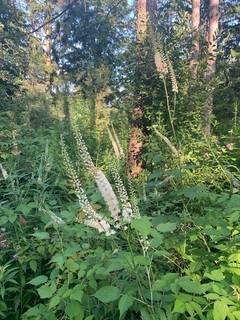
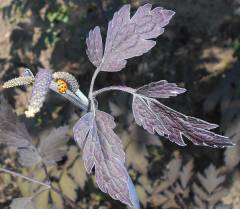
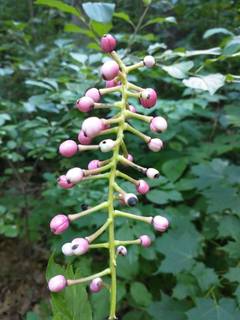
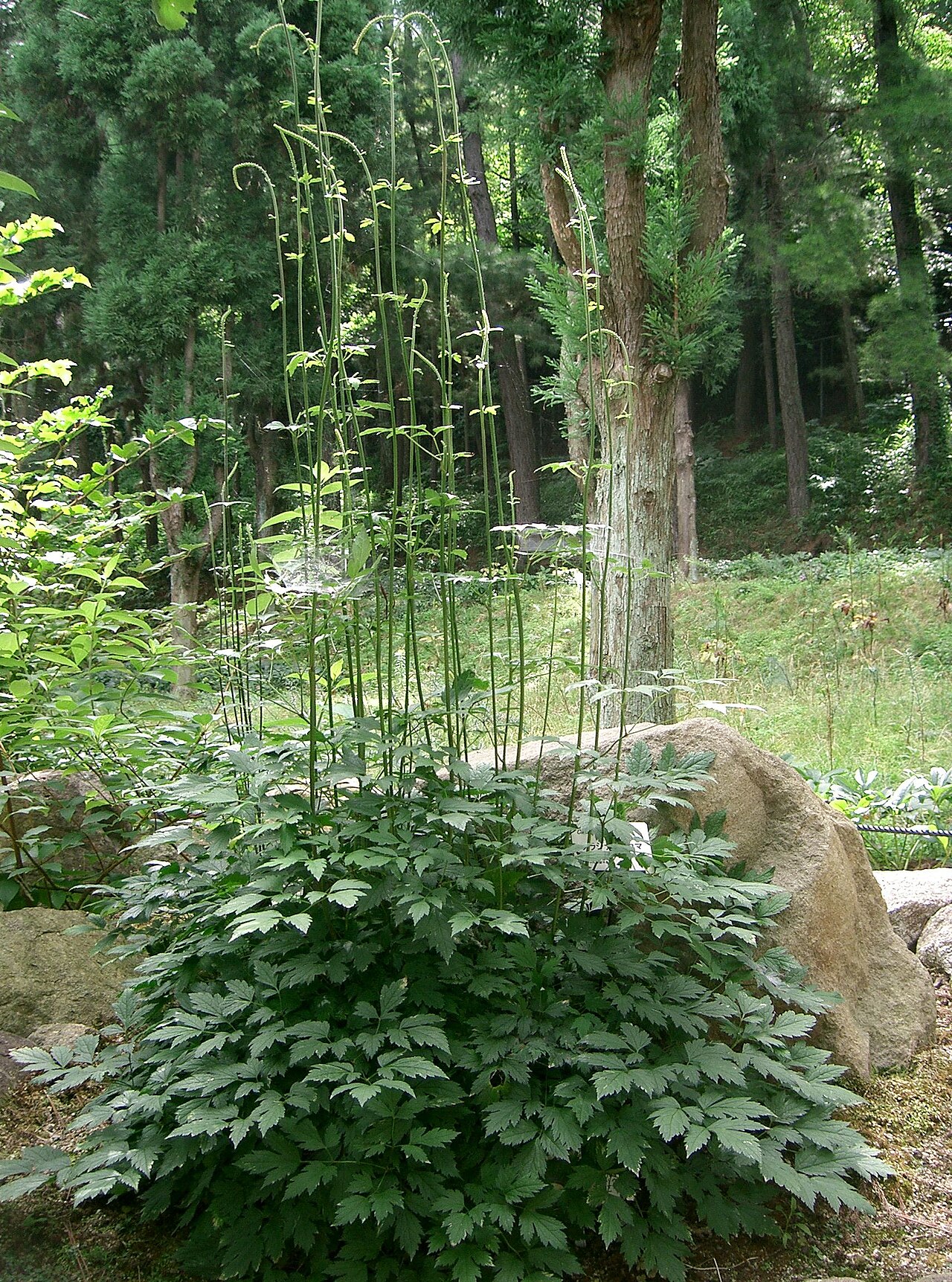
Actaea simplex is a herbaceous perennial forming a clump 36-60 inches (90-150 cm) tall in flower and 24-30 inches (60-75 cm) wide. Leaves are twice or three times divided into ovate leaflets 2-4 inches (5-10 cm) long with coarse marginal teeth, dark green in the species and purple-black in named forms such as A. simplex 'Brunette'. Flowering stems rise well above the foliage and carry dense bottlebrush racemes 6-24 inches (15-60 cm) long. The flowers have no petals; the white to pink-flushed colour comes from crowded stamens, and the scent carries 15-25 feet (4.6-7.6 m). Racemes open in September and October, 4-6 weeks later than those of A. racemosa. Stems arch under the weight of the racemes and lean 12-18 inches (30-45 cm) from vertical in exposed positions. Plants take 3-4 years to reach full size and resent root disturbance, with divided clumps giving no flowers for one or two seasons. Foliage scorches at the margins within 7-10 days of dry soil, and plants receiving less than 1 inch (25 mm) of water weekly through summer decline. All parts contain glycosides that cause vomiting and abdominal pain if eaten.
Native Range
Actaea simplex grows in damp woodland, streamside thickets, and mountain meadows across the Russian Far East including Kamchatka, and in Japan, Korea, and northeastern China. It occupies humus-rich soils in light shade at 1,000-6,500 feet (300-2,000 m) elevation. Populations sit on north-facing slopes and in valley bottoms where soil stays moist through summer.Suggested Uses
Planted at woodland edges, in damp shaded borders, and beside ponds at 24-30 inch (60-75 cm) spacing, where the tall racemes rise above surrounding foliage. Grown alongside ferns and Hosta in shade plantings and at the back of borders in zones 3-8. Container culture uses pots of 7 gallons (26 L) or larger in shade with daily watering in summer. All parts contain glycosides that cause vomiting and abdominal pain if eaten.How to Identify
Appearance
Size & Dimensions
Height3' - 5'
Width/Spread2' - 2'6"
Bloom Information
Racemes open from early September through October in zones 4-8, and from late August in zone 3 where the season is short. An individual raceme opens from the base upward over 2-3 weeks, and a clump carries flowers for 4-6 weeks. Purple-leaved forms flower 7-10 days later than the green-leaved species. Frost at 28F (-2C) ends flowering, and racemes still in bud at that point do not open.
Detailed Descriptions
Flower Description
white, sometimes flushed pinkFoliage Description
dark green, purple-black in named formsGrowing Conditions
Sun Requirements
Requires 2-6 hours of direct sunlight daily
• Full Sun: 6+ hours of direct sunlight
• Partial Shade: 3-6 hours of direct sunlight
• Full Shade: Less than 3 hours of direct sunlight
Care & Maintenance
Care Guide
Soil stays moist through the growing season, and leaf margins scorch within 7-10 days of dry conditions. Plants take 1-1.5 inches (25-38 mm) of water weekly through summer and grow in humus-rich ground amended with 2-3 inches (5-8 cm) of leaf mould at planting. More than 6 hours of direct sun bleaches the purple-leaved forms to bronze-green and burns the leaf edges in zones 7-8, while under 2 hours of light the flowering stems lean sharply toward the brightest side. Feeding is limited to a spring mulch, since added nitrogen produces stems too weak to hold the racemes upright. Plants take 3-4 years to reach full size and give no flowers for one or two seasons after division, so clumps are left undisturbed. Slugs shred the emerging shoots in April and May, and no significant diseases occur.Pruning
Spent racemes are cut at the base of the flowering stem in November, or left standing into winter, since the seed heads hold their shape on the stem until February. Dead foliage is cleared to the crown in March before new shoots emerge. Cutting the plant back in early summer is not carried out, since the flowering stems form from June onward and removing them ends the season. Leaves damaged by drought are taken off individually at the petiole base.Pruning Schedule
Prune: March & November
early springfall
Container Growing
Suitable for container growing
Minimum container size: 7 gallons