Actaea, Genus, pachypoda, Species,
- Genus & species
white baneberry
Eastern North America (Nova Scotia to Manitoba, south to Georgia and Louisiana)
Overview
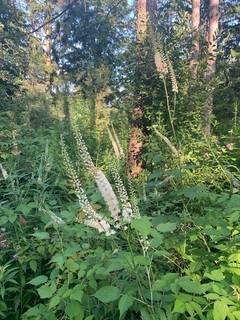
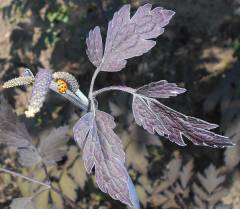
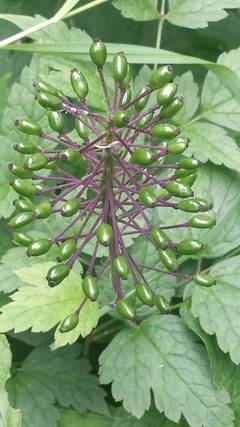
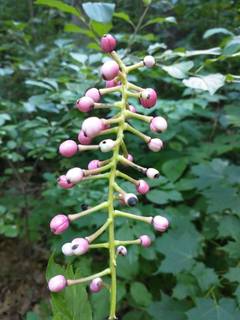
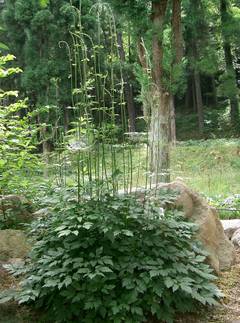
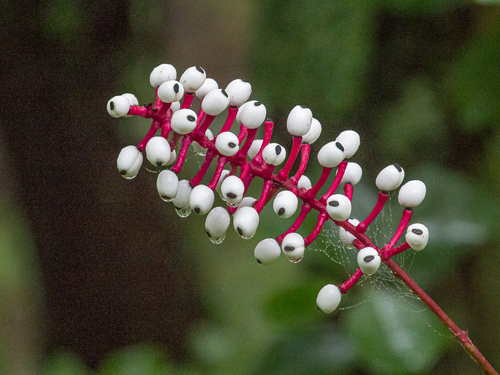
Actaea pachypoda is an upright clump-forming herbaceous perennial reaching 18–30 inches (45–75 cm) tall with a spread of 18–24 inches (45–60 cm). Leaves are large, two to three times ternately compound, 12–20 inches (30–50 cm) wide overall, with sharply toothed leaflets, medium green. Small white flowers with numerous stamens are produced in dense cylindrical racemes 1–2 inches (2.5–5 cm) long from April through June. By August–September the flowers are replaced by the species' most recognizable feature: porcelain-white berries 0.3–0.5 inch (8–13 mm) wide, each with a prominent black dot at the tip (the persistent stigma), borne on thickened fleshy red pedicels. The red pedicels and white berries with black-dotted tips give the plant the common name doll's eyes. Each fruiting raceme holds 10–30 berries on upright stalks. Growth is from a rhizomatous rootstock; clumps spread slowly and persist for many years. All parts are highly toxic, particularly the berries, which contain cardiogenic toxins — consumption of a small number of berries can cause cardiac arrest in humans. The plant does not tolerate drought, full sun, or alkaline soils.
Native Range
Actaea pachypoda is native to eastern North America, ranging from Nova Scotia and Manitoba south to Georgia, Alabama, and Louisiana, occurring in moist, humus-rich deciduous and mixed forests, often under maples, oaks, and beeches. It is a forest understory species, rarely occurring in open or disturbed habitats.Suggested Uses
Planted in shaded woodland gardens, native plant borders, and naturalized areas at 18–24 inch (45–60 cm) spacing. The white berry clusters on red pedicels from August through October are the primary seasonal feature. Suited to moist, shaded sites in zones 3–8; particularly appropriate for native woodland gardens in eastern North America. All parts are highly toxic, especially the berries. Not suited to dry soils, full sun, or alkaline conditions.How to Identify
Appearance
Size & Dimensions
Height1'6" - 2'6"
Width/Spread1'6" - 2'
Bloom Information
Dense cylindrical racemes of small white flowers with numerous stamens are produced from April through June, lasting 3–4 weeks. Racemes are 1–2 inches (2.5–5 cm) long. White berries with black-dotted tips on thick red pedicels develop August through September and persist into October if undisturbed by wildlife.
Detailed Descriptions
Foliage Description
medium greenGrowing Conditions
Sun Requirements
Tolerates up to 4 hours of direct sunlight daily
• Full Sun: 6+ hours of direct sunlight
• Partial Shade: 3-6 hours of direct sunlight
• Full Shade: Less than 3 hours of direct sunlight
Care & Maintenance
Care Guide
Plant in moist, humus-rich, well-drained to average soil with a pH of 5.0–7.0 in partial to full shade. Consistent moisture is needed during establishment and during summer dry periods; the plant does not tolerate prolonged drought. Annual mulching with leaf litter or shredded bark maintains humus content and soil moisture. No fertilization is required in soils with adequate organic matter. Hardy in zones 3–8. Established clumps spread slowly by rhizome and do not require division for many years. All parts are highly toxic; the berries contain cardiogenic toxins, and consumption of a small number can cause cardiac arrest.Pruning
No routine pruning is required. Stems are cut to the ground in late fall after frost, or left standing through winter for wildlife habitat. Spent fruiting stalks are removed in spring. Division in early spring is rarely necessary and may be done every 8–10 years if clumps become overcrowded. All plant parts are toxic; sap contact causes skin irritation in sensitive individuals.Pruning Schedule
Prune: October–November
fall