Actaea, Genus, racemosa, Species,
- Genus & species
black cohosh
Eastern North America from southern Ontario and Massachusetts south to Georgia and Tennessee; moist humus-rich deciduous forest understories
Overview
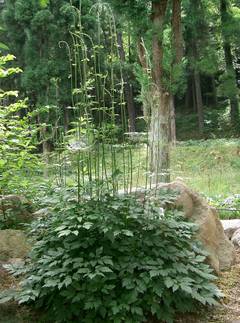
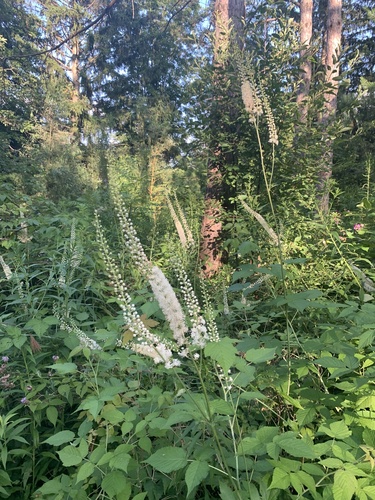
Actaea racemosa is a large upright herbaceous perennial in the family Ranunculaceae native to eastern North America, reaching 4-7 feet (1.2-2.1 m) tall in flower with a spread of 24-36 inches (60-90 cm) and forming a large clump of bold compound foliage. The species is the tallest native Actaea in eastern North America. Leaves are large, two to three times ternately compound, 18-30 inches (45-75 cm) wide overall, with sharply toothed leaflets, medium to dark green. From July through August the plant bears long wand-like racemes 12-24 inches (30-60 cm) long on arching stems carrying tiny white flowers 0.25 inch (6 mm) wide with numerous prominent stamens. The flowers emit a faint musky odor that attracts flies and beetles for pollination. Small black to dark brown capsular fruits develop on the raceme after bloom. Actaea racemosa was formerly classified as Cimicifuga racemosa, and both names appear in horticultural and botanical literature. The roots have a recorded history of use in traditional medicine among Indigenous peoples of eastern North America, and the plant continues to be commercially harvested for botanical supplements. All parts contain glycoside compounds; ingestion of plant material or roots in quantity causes gastrointestinal distress and can be toxic to humans, pets, and livestock.
Native Range
Actaea racemosa is native to eastern North America, ranging from southern Ontario and Massachusetts south to Georgia and Tennessee. It grows in moist, humus-rich deciduous forest understories beneath oaks, maples, and beeches, on slopes and in coves with consistently moist well-drained soils from sea level to 4,500 feet (1,370 m) elevation.Suggested Uses
Planted in shaded woodland gardens, native plant borders, and naturalized areas at 24-36 inch (60-90 cm) spacing. The tall white July-August racemes add vertical structure to the midsummer shade garden, and the bold compound foliage carries textural mass through the growing season. Combined with Hosta, Polygonatum, and Dryopteris in native eastern North American woodland plantings in zones 3-8. Not suited to dry soils, alkaline conditions, hot sunny sites, pasture settings with grazing livestock, or gardens frequented by unsupervised children because all parts are toxic if ingested in quantity.How to Identify
Appearance
Size & Dimensions
Height4' - 7'
Width/Spread2' - 3'
Colors
Bloom Information
Wand-like white racemes 12-24 inches (30-60 cm) long open on arching stems from July through August, averaging 3-4 weeks of bloom. Individual flowers are 0.25 inch (6 mm) wide with numerous prominent stamens and emit a faint musky odor that attracts flies and beetles. Dark capsular fruits develop on the racemes after bloom and persist into fall.
Detailed Descriptions
Flower Description
white; tiny flowers 0.25 inch (6 mm) wide with numerous stamens; borne on wand-like racemes 12-24 inches (30-60 cm) longFoliage Description
medium to dark green; two-to-three-times ternately compound, 18-30 inches (45-75 cm) wide overall, with sharply toothed leafletsGrowing Conditions
Sun Requirements
Tolerates up to 4 hours of direct sunlight daily
• Full Sun: 6+ hours of direct sunlight
• Partial Shade: 3-6 hours of direct sunlight
• Full Shade: Less than 3 hours of direct sunlight
Care & Maintenance
Care Guide
Plant in moist, humus-rich soil with a pH of 4.5-7.0 in part shade to full shade; tolerated soil types include loam and clay. Water weekly through summer dry periods — Actaea racemosa declines rapidly under prolonged drought. Mulching annually with leaf litter or shredded bark maintains humus content and soil moisture. Full shade is tolerated and hot sunny sites cause leaf scorch and dieback. Zone-3 to zone-8 cool moist forest-type conditions suit the species. Established clumps spread slowly and do not call for division for many years. All parts contain glycoside compounds and are toxic to humans, pets, and livestock if ingested in quantity. No routine fertilization is needed in soils with adequate organic matter.Pruning
Stems are cut to the ground in late fall (October-November) after frost, or left standing through winter for structural interest. Spent racemes can be removed after bloom where seed set is unwanted. Division in early spring is seldom needed and can be done every 8-10 years if clumps become overcrowded; the thick woody rhizomes resist easy division.Pruning Schedule
Prune: October–November
fall