Actaea, Genus, simplex, Species, 'Black Negligee', Cultivar,
- Genus & species
- Cultivar
black negligee bugbane
Parent species {Actaea simplex} native to Japan, Korea, northern China, and eastern Russia; 'Black Negligee' is a garden selection
Overview
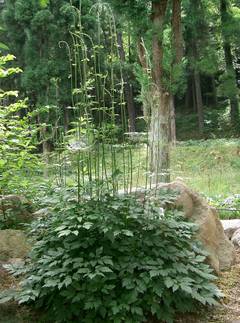
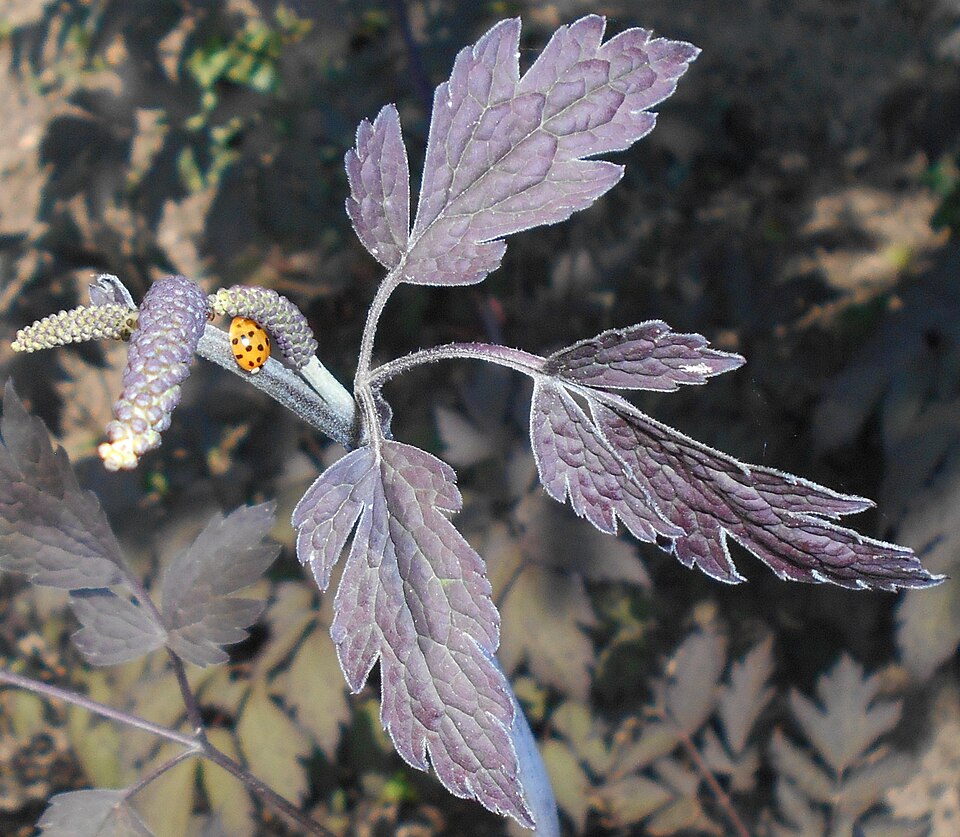
Actaea simplex 'Black Negligee' is an upright herbaceous perennial cultivar in the family Ranunculaceae, reaching 3-5 feet (90-150 cm) tall in flower with a spread of 24-30 inches (60-75 cm) and forming a clump of finely dissected dark foliage. The leaves are two to three times ternately compound with more deeply and finely cut leaflets than the species, producing a lacy texture. Foliage is deep purple-black to near-black through the growing season, holding color better in part shade than in full sun where it lightens toward bronze-green. From September through October the plant bears wand-like racemes 12-18 inches (30-45 cm) long of small white to pale pink-flushed fragrant flowers with numerous prominent stamens; the scent is light and sweet. Actaea simplex was formerly placed in Cimicifuga simplex and both names appear in horticultural literature. All parts contain glycoside compounds and ingestion of plant material in quantity causes gastrointestinal distress and is toxic to humans, pets, and livestock. Foliage color saturation peaks in spring and fall and lightens in midsummer heat.
Native Range
Actaea simplex is native to eastern Asia, including Japan, Korea, northern China, and eastern Russia (Siberia), growing in moist mountain meadows, forest margins, and open woodland clearings at 2,000-8,000 feet (600-2,400 m) elevation. The cultivar 'Black Negligee' was developed in cultivation and does not occur in wild populations.Suggested Uses
Planted in partially shaded borders and woodland garden edges at 24-30 inch (60-75 cm) spacing. The near-black lacy foliage contrasts with lighter-colored adjacent plants through the growing season, and the fragrant white September-October racemes extend the shade border into fall. Combined with chartreuse Hosta cultivars, silver-foliaged Brunnera macrophylla 'Jack Frost', and pale Astilbe in zones 3-7. Not suited to dry soils, full sun in warm climates, alkaline conditions, pasture settings with grazing livestock, or gardens frequented by unsupervised children because all parts are toxic if ingested in quantity.How to Identify
Appearance
Size & Dimensions
Height3' - 5'
Width/Spread2' - 2'6"
Bloom Information
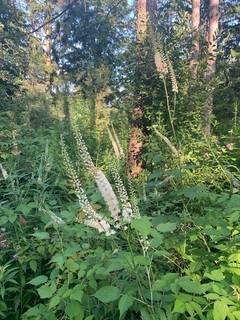
White to pale pink-flushed fragrant racemes 12-18 inches (30-45 cm) long open in September and October, averaging 3-4 weeks of bloom. Individual flowers are small with numerous prominent stamens and a light sweet scent. Racemes open progressively from the base toward the tip.
Detailed Descriptions
Flower Description
white to pale pink-flushed; tiny flowers with numerous stamens; borne on wand-like racemes 12-18 inches (30-45 cm) longFoliage Description
deep purple-black to near-black; two-to-three-times ternately compound with finely and deeply cut leaflets producing a lacy textureGrowing Conditions
Sun Requirements
Requires 2-5 hours of direct sunlight daily
• Full Sun: 6+ hours of direct sunlight
• Partial Shade: 3-6 hours of direct sunlight
• Full Shade: Less than 3 hours of direct sunlight
Care & Maintenance
Care Guide
Plant in moist, humus-rich soil with a pH of 5.0-7.0 in part shade; tolerated soil types include loam and clay. Afternoon shade is required for maintaining dark foliage color because full sun fades the purple-black toward bronze-green in most climates. Water weekly through dry periods — the cultivar declines rapidly if the soil dries out during active growth. Mulch retains soil moisture through summer. Foliage color saturation peaks in spring and fall and lightens in midsummer heat and high light. Zone-3 to zone-7 cool moist conditions suit the plant. All parts contain glycoside compounds and are toxic to humans, pets, and livestock if ingested in quantity. No routine fertilization is needed in soils with adequate organic matter.Pruning
Stems are cut to the ground in late fall (October-November) after frost. Spent racemes can be removed after October bloom where a tidier appearance is wanted. Division in early spring every 6-8 years sustains vigor. Stems are self-supporting in sheltered sites and may need staking at the taller end of the range in exposed positions.Pruning Schedule
Prune: October–November
fall