Achillea, Genus, ×, Hybrid, 'Terracotta', Cultivar,
- Genus
- Hybrid
- Cultivar
Terracotta yarrow
Garden hybrid of European parentage; the parent species (likely including Achillea millefolium) are native across Europe and western Asia where wild yarrow grows in dry meadows, roadsides, and disturbed ground.
Overview
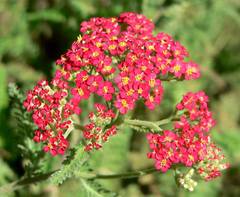
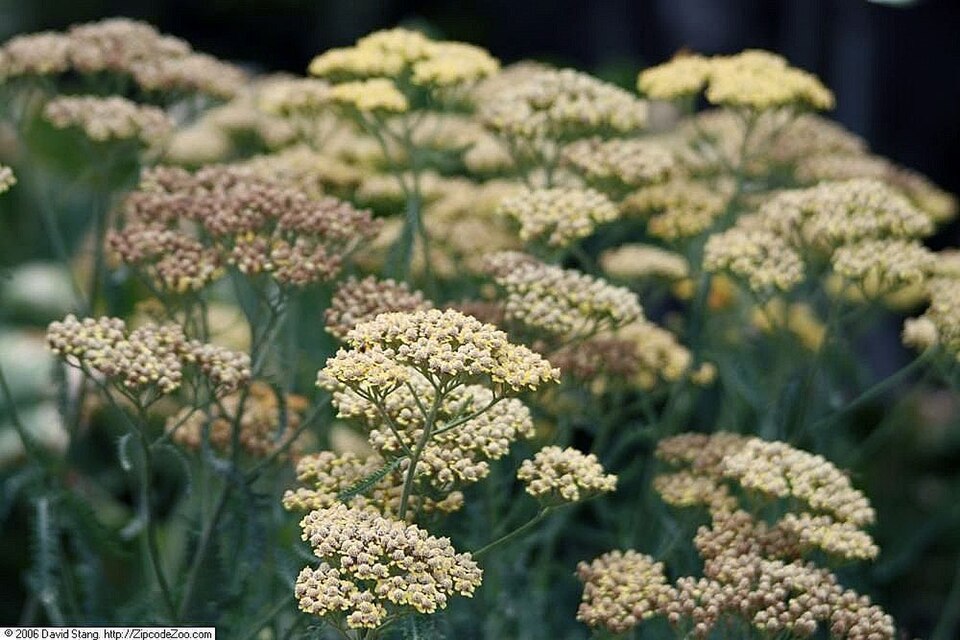
Achillea × Terracotta is a hybrid yarrow in the daisy family (Asteraceae) forming upright clumps 24-36 inches (60-90 cm) tall and 18-24 inches (45-60 cm) wide. Flat-topped corymbs open burnt-orange and shift through peach, salmon, and straw-yellow as individual florets age, so a single corymb shows a multicolor effect at any moment with the most recently-opened florets at one shade and the oldest florets at another. The color-aging trait is shared across the warm-toned Achillea hybrids and reflects pigment degradation in the maturing florets. Gray-green finely pinnate leaves form a dense basal mound below the flowering stems, releasing a mild herbal aroma when crushed from the volatile oils that the genus Achillea is known for. Bloom extends from June into September with regular deadheading. Stem stature at 24-36 inches places this cultivar above the compact yarrow group and creates a flopping risk in rich moist soils or in sites with light below 6 hours per day, where staking or neighboring perennial support handles the lodging tendency. Established plants tolerate extended dry spells in USDA zones 3-9 (-40°F / -40°C) and perform on lean well-drained ground; rich soil and consistent irrigation produce taller looser growth that is more prone to lodging than plants on lean soil. Deer and rabbits avoid the foliage from the same volatile oil chemistry that makes the leaves aromatic. Rhizomes spread at a moderate pace, and division every 2-3 years prevents center die-out and limits lateral spread to the planted footprint. All parts contain sesquiterpene lactones (a class of compounds shared across many Asteraceae genera) that act on the gastrointestinal tract and produce vomiting and diarrhea in dogs and cats following ingestion of the foliage or flowers; contact dermatitis in humans is also possible from the same compound class on prolonged skin exposure to crushed plant tissue.
Native Range
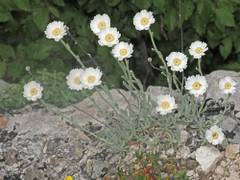
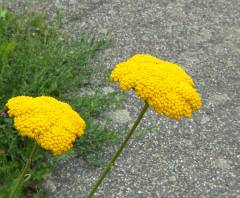
Achillea × Terracotta is a garden hybrid of European parentage, with the parent species likely including Achillea millefolium (common yarrow) and other Mediterranean and central European Achillea species selected for warm-toned flower colors. The parent species are native across Europe and western Asia, where wild yarrow grows in dry meadows, roadsides, calcareous grasslands, and disturbed ground from sea level to alpine elevations. The hybrid was selected for the burnt-orange opening color that distinguishes it from the white and pink color forms of wild Achillea millefolium and from the bright yellow color of Achillea filipendulina hybrids.Suggested Uses
Used in the middle rank of mixed perennial borders where the warm-toned blooms combine with blue, purple, and silver companions including Russian sage (Perovskia atriplicifolia), catmint (Nepeta racemosa), and lamb's ear (Stachys byzantina). The cultivar suits meadow-style plantings, cottage gardens, and dry slopes where the drought tolerance and lean-soil performance match the planting style. Container culture requires pots of 5 gallons (19 liters) or larger with fast-draining media to accommodate the taller habit; smaller pots produce stunted growth and reduced bloom.How to Identify
Appearance
Size & Dimensions
Height2' - 3'
Width/Spread1'6" - 2'
Bloom Information
Flat-topped corymbs of warm-toned florets open in June and continue blooming through September with regular deadheading, with each corymb showing a 2-3 week active bloom window during which the florets shift through the burnt-orange to straw-yellow color sequence. The pollination ecology follows the Asteraceae generalist pattern with bees, butterflies, and beneficial predatory insects working the flat corymb landing platform that gives the inflorescence form its name. Removing spent corymbs after the first heavy flush in July encourages a lighter second round of bloom in August and September.
Detailed Descriptions
Flower Description
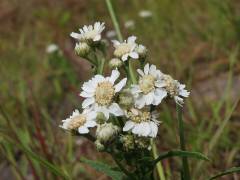
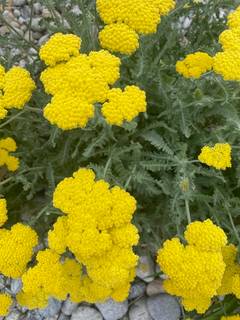
Burnt-orange opening color shifting through peach, salmon, and straw-yellow as individual florets age within the same flat-topped corymb, producing a multicolor effect across the inflorescence at any given momentFoliage Description
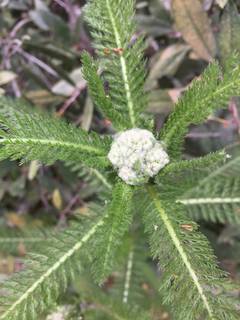
Gray-green; finely pinnate basal foliage with a feathery texture from deep dissection of the leaf blade into thread-narrow segments, releasing a mild herbal aroma when crushedGrowing Conditions
Sun Requirements
Requires 6-10 hours of direct sunlight daily
• Full Sun: 6+ hours of direct sunlight
• Partial Shade: 3-6 hours of direct sunlight
• Full Shade: Less than 3 hours of direct sunlight
Care & Maintenance
Care Guide
Plant in full sun with at least 6 hours of direct light. Well-drained soil is required because wet winter conditions cause crown rot. High-nitrogen fertilizers promote tall weak stems that flop easily, so fertilization is omitted on average garden soil and balanced low-nitrogen amendments are used only in very poor sand or gravel sites. Watering is regular through the first growing season for establishment, then only during extended dry periods once the root system is mature. In rich soils, neighboring perennial support or grow-through rings handle the lodging tendency without staking each individual stem. Division of clumps every 2-3 years in early spring discards the woody center and replants vigorous outer sections, which renews the planting and maintains flowering vigor. All spent growth is cut to the basal rosette after frost or in early spring before new shoots emerge.Pruning
Spent corymbs are deadheaded as they fade by cutting the stem back to a lateral bud or basal leaf. After the bloom season ends, the entire plant is cut to 2-3 inches (5-8 cm) above ground level. Remaining dead foliage is removed in early spring before new shoots emerge from the basal rosette.Pruning Schedule
Prune: March–April
early spring
Container Growing
Suitable for container growing
Minimum container size: 5 gallons