Achillea, Genus, spp., Multiple species,
- Genus
- Multiple species
yarrows
Overview
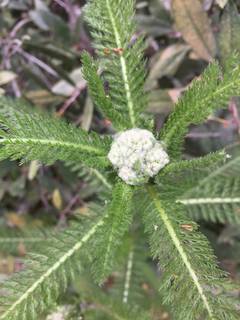
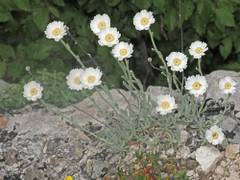
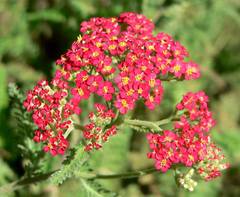
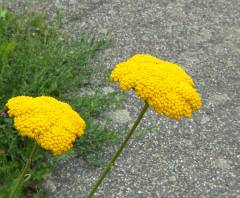
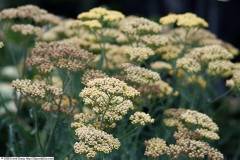
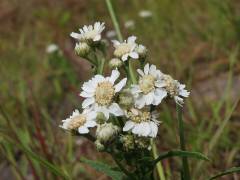
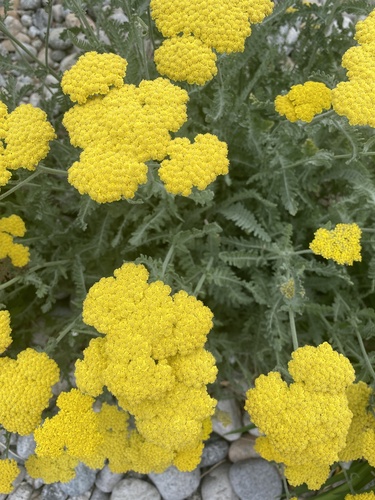
Achillea is a genus of about 85 to 130 species of aromatic perennial herbs in the daisy family, Asteraceae, native across the temperate Northern Hemisphere. Plants form spreading clumps of finely divided, fern-like leaves 2–8 in (5–20 cm) long that release a sharp, herbal scent when crushed. Erect stems 6–48 in (15–120 cm) tall carry flat-topped clusters (corymbs) of many small flower heads, each head combining tiny ray and disc florets. Across the genus the flowers are white, yellow, pink, or red, with common yarrow A. millefolium ranging from white to deep rose and fernleaf yarrow A. filipendulina in flat golden heads. The fruit is a small, dry, one-seeded achene without a pappus. Many species spread by creeping rhizomes to form wide mats, and common yarrow can move into lawns and beds and is treated as a weed in some regions. The flat flower heads are held above the foliage for many weeks in summer. The genus grows in meadows, grassland, roadsides, and open, well-drained ground, and tolerates poor soils and drought.
Native Range
Achillea is distributed across temperate Europe, Asia, and North America, with the richest diversity in Europe and western Asia. Common yarrow A. millefolium is native across the Northern Hemisphere, including much of North America. Several ornamental species and hybrids derive from European and Caucasian stock.Suggested Uses
Achillea species are grown in borders, gravel and prairie plantings, and wildflower meadows, and the flat heads are used as fresh and dried cut flowers. Drought-tolerant species are planted on banks and in low-water gardens. The flowers attract bees, butterflies, hoverflies, and other beneficial insects.How to Identify
Appearance
Size & Dimensions
Height6" - 4'
Width/Spread1' - 3'
Bloom Information
Most Achillea species flower from early summer into autumn, roughly June to September, and rebloom if spent heads are cut back. The flat clusters hold color for several weeks and dry well on or off the plant. Common yarrow flowers over a long season, often from late spring until frost. Flower color spans white, yellow, pink, and red.
Detailed Descriptions
Flower Description
white, yellow, pink, or redFoliage Description
green to grey-greenGrowing Conditions
Sun Requirements
Requires 6-10 hours of direct sunlight daily
• Full Sun: 6+ hours of direct sunlight
• Partial Shade: 3-6 hours of direct sunlight
• Full Shade: Less than 3 hours of direct sunlight
Care & Maintenance
Care Guide
Achillea species grow in full sun and lean, well-drained soil with a pH around 5.5 to 7.5, and they tolerate poor, dry, and rocky ground. Established plants are drought tolerant and decline in rich, moist, or shaded sites, where they grow leggy and flop. They need little or no feeding, and excess nutrients reduce flowering and weaken stems. Many species spread by rhizomes and can become invasive in lawns and borders, so clumps are divided every 2 to 3 years to control spread and renew vigor. Cutting plants back after the first flush prompts repeat bloom. Plants are hardy in USDA zones 3 to 9.Pruning
Spent Achillea flower heads are cut back after each flush to encourage rebloom and limit self-seeding. The whole plant is cut to the basal rosette in late autumn or early spring. Dividing crowded clumps every few years maintains flowering and controls rhizome spread.Container Growing
Suitable for container growing
Minimum container size: 2 gallons