Achillea, Genus, millefolium, Species, 'Paprika', Cultivar,
- Genus & species
- Cultivar
paprika yarrow
Garden origin; species {Achillea millefolium} is native to Europe, western Asia, and North America
Overview
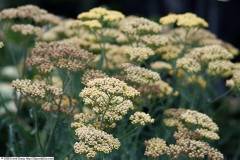
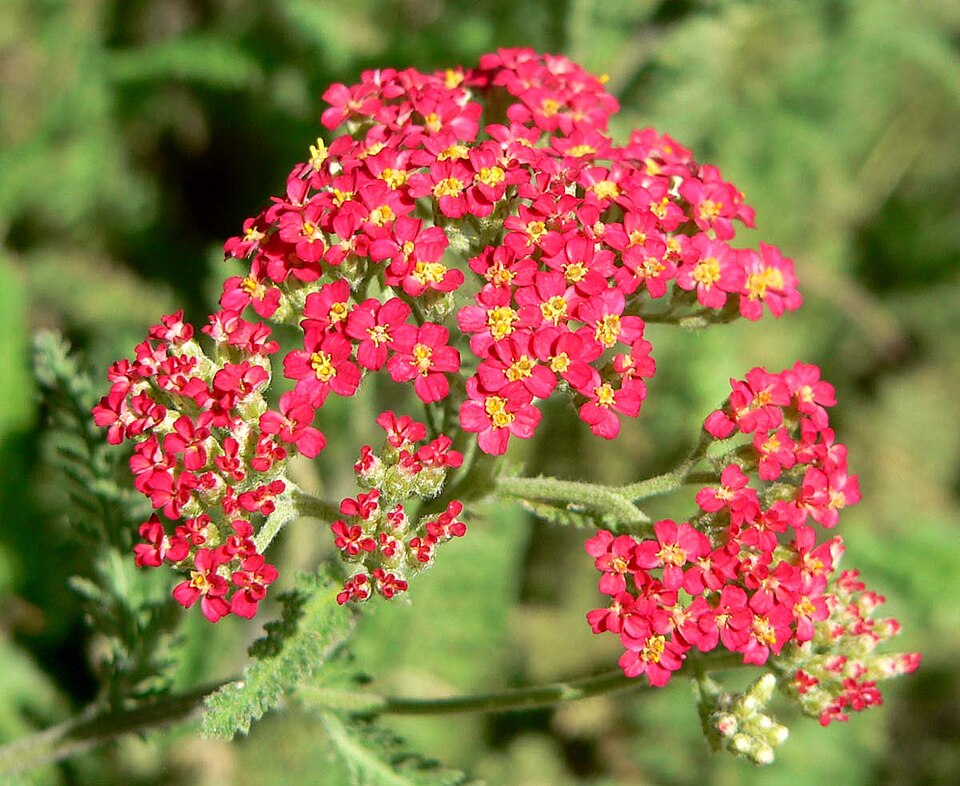
Achillea millefolium 'Paprika' is a clump-forming perennial yarrow that reaches 18–24 inches (45–60 cm) tall and wide. It belongs to the Galaxy series of A. millefolium hybrids developed for intensified flower color. Flat-topped corymbs open cherry-red and transition through salmon, gold, and cream as individual florets age, producing a multicolor effect across each flower head. Finely divided, fern-like green leaves form a dense basal mound below the flowering stems. Bloom begins in June and continues into September when spent heads are removed promptly. The color-shift pattern means that no two corymbs look identical at the same stage, creating an uneven visual when uniformity is desired. Stems are sturdy but may lean in rich, moist soils or where light is less than 6 hours daily. Established clumps tolerate extended dry spells across USDA zones 3–8 and perform on lean, well-drained ground where many perennials falter. Deer generally avoid the aromatic foliage. Rhizomatous roots spread outward steadily; without division every 2–3 years, clumps thin at the center and encroach on neighboring plants. All parts contain sesquiterpene lactones toxic to dogs and cats.
Native Range
The parent species Achillea millefolium occurs natively across Europe, western Asia, and temperate North America. 'Paprika' is a hybrid cultivar of garden origin, selected from the Galaxy series for its red-to-gold color transition.Suggested Uses
Used in mixed perennial borders where the color-shifting blooms contrast with blue and purple companions. Performs on dry slopes, in meadow plantings, and along gravel paths. Suitable for containers of 3 gallons (11 liters) or more with fast-draining media.How to Identify
Appearance
Size & Dimensions
Height1'6" - 2'
Width/Spread1'6" - 2'
Bloom Information
Flowering runs from June through September. Corymbs open cherry-red and age through salmon to gold and cream over 2–3 weeks per head. Deadheading after the first heavy flush in mid-July encourages a lighter second round of bloom in August–September.
Detailed Descriptions
Flower Description
Red fading to gold and creamFoliage Description
Green, finely dissectedGrowing Conditions
Sun Requirements
Requires 6-10 hours of direct sunlight daily
• Full Sun: 6+ hours of direct sunlight
• Partial Shade: 3-6 hours of direct sunlight
• Full Shade: Less than 3 hours of direct sunlight
Care & Maintenance
Care Guide
Site in full sun with a minimum of 6 hours of direct light. Well-drained soil is essential; wet winter soils cause crown rot. Water regularly during establishment, then only during prolonged dry periods. Avoid high-nitrogen fertilizers, which promote lanky stems prone to flopping. Divide clumps every 2–3 years in early spring, discarding the woody center and replanting outer divisions. Cut all top growth to 2–3 inches (5–8 cm) above ground in late fall or early spring.Pruning
Deadhead individual corymbs as colors fade by cutting the stem to a lower lateral bud. After the bloom season ends, cut the entire plant back to the basal rosette. In early spring, remove any remaining dead foliage before new growth emerges.Pruning Schedule
Prune: March–April
early spring
Container Growing
Suitable for container growing
Minimum container size: 3 gallons