Image 1 of 6
1 / 6
Plant Reference
Acer, Genus, palmatum, Species, var., Variety, dissectum, Variety, 'Dissectum Atropurpreum', Cultivar,
- Genus & species
- Variety
- Cultivar
weeping red laceleaf Japanese maple
Cultivar; the species Acer palmatum var. dissectum is native to Japan, Korea, and eastern China
Overview
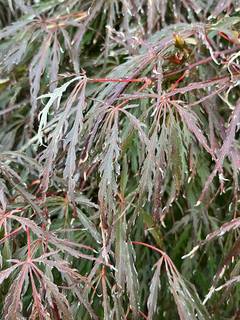
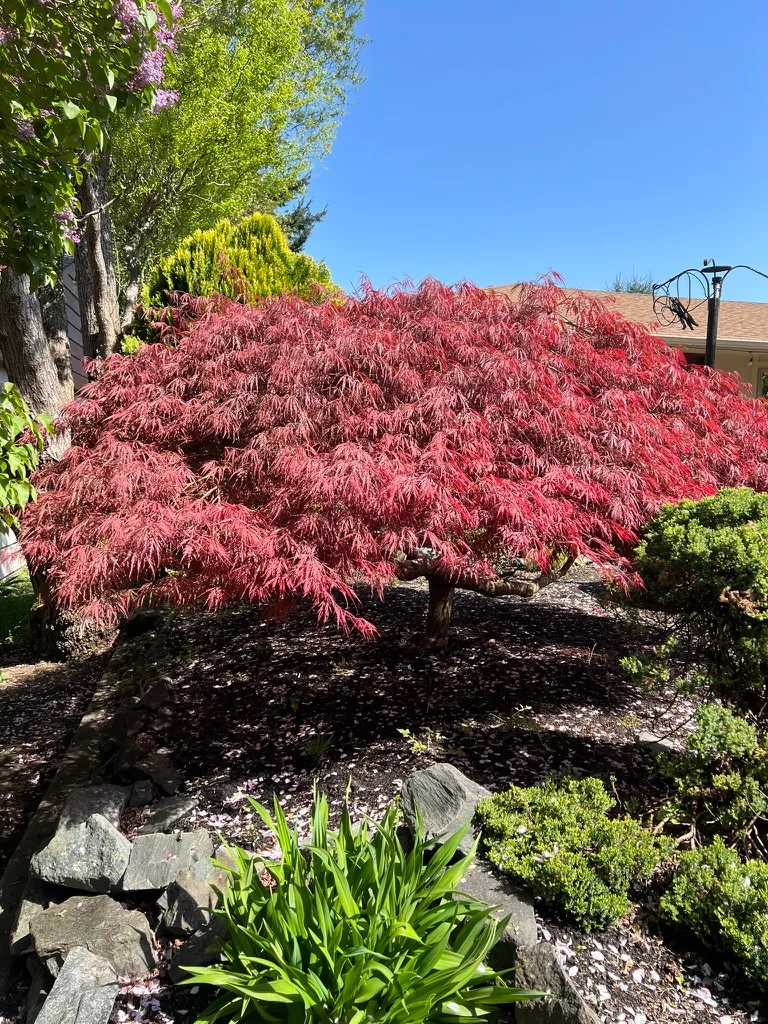
Acer palmatum var. dissectum 'Dissectum Atropurpreum' is weeping red laceleaf Japanese maple (red cutleaf Japanese maple), a mounding cascading deciduous tree growing 4-8 feet (1.2-2.4 m) tall and 6-10 feet (1.8-3 m) wide. Deeply dissected (finely cut into thread-like segments) dark red-purple foliage 2-4 inches (5-10 cm) wide. The cascading dome form is wider than tall. Emerges dark red-purple in spring, holds color through summer, brightens to crimson and red-orange in fall. In Sapindaceae. Variety dissectum has deeply cut thread-like leaf segments vs. the palmate lobes of the species type. 'Dissectum Atropurpreum' is a seed-grown group — seedling variation in color intensity and form is common. Named clones such as 'Crimson Queen', 'Inaba-shidare', and 'Tamukeyama' are clonal selections with more consistent color and form. The dark red-purple color fades to bronze-green in heavy shade or sustained heat above 95°F (35°C). Leaf scorch in hot afternoon sun, wind, or dry soil. Very slow-growing — 15-25 years to full size. This slow growth rate is the primary limitation. Not drought-tolerant. Verticillium wilt (Verticillium dahliae). Deer browse the foliage. Zones 5-8. Part sun. Growth rate is very slow.
Native Range
Cultivar. The species A. palmatum var. dissectum is native to Japan, Korea, and eastern China.Suggested Uses
Grown as a specimen in residential gardens, courtyard gardens, near water features, and in containers of at least 25 gallons (95 L). Cascading dome form. Red-purple dissected foliage. Morning sun with afternoon shade. Very slow-growing. Zones 5-8.How to Identify
Appearance
Size & Dimensions
Height4' - 8'
Width/Spread6' - 10'
Bloom Information
Early to mid spring (March-April). Red-purple flowers 0.25 inch (6 mm) in erect corymbs — largely hidden by the emerging foliage. 3 weeks of bloom. Bee-pollinated.
Detailed Descriptions
Flower Description
Red-purple, small, 0.25 inch (6 mm), in erect terminal corymbs — largely hidden by foliageFoliage Description
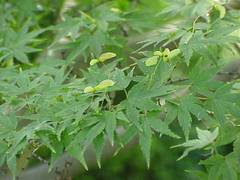
Dark red-purple, deeply dissected (finely cut into thread-like segments), 2-4 inches (5-10 cm) wide; emerges dark red-purple in spring, holds color through summer, brightens to crimson and red-orange in fallGrowing Conditions
Sun Requirements
Requires 4-6 hours of direct sunlight daily
• Full Sun: 6+ hours of direct sunlight
• Partial Shade: 3-6 hours of direct sunlight
• Full Shade: Less than 3 hours of direct sunlight
Care & Maintenance
Care Guide
Part sun — morning sun with afternoon shade (4-6 hours). Well-drained acidic soil pH 5.5-6.5. Requires consistent moisture — not drought-tolerant. Red color fades in heavy shade or heat above 95°F (35°C). Leaf scorch in hot afternoon sun or wind. Very slow-growing. Prune only in summer. Verticillium wilt. Zones 5-8.Pruning
Prune only in summer (July-August) to avoid sap bleeding. The cascading mounding form is natural — do not train upright. Remove crossing or damaged branches. Thin interior branches to allow light penetration into the dome.Pruning Schedule
Prune: July–August
summer
Container Growing
Suitable for container growing
Minimum container size: 25 gallons