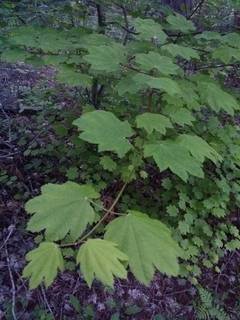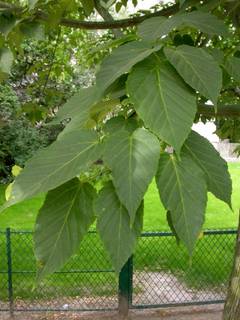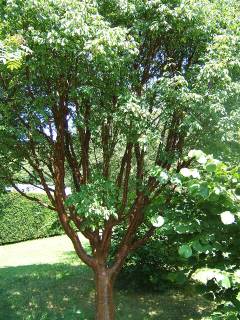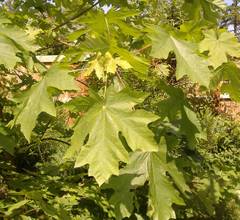
Image 1 of 3
1 / 3
Plant Reference
Acer, Genus, palmatum, Species, 'Atropurpureum', Cultivar,
- Genus & species
- Cultivar
red Japanese maple
Cultivar group; the species Acer palmatum is native to Japan, Korea, and eastern China
Overview
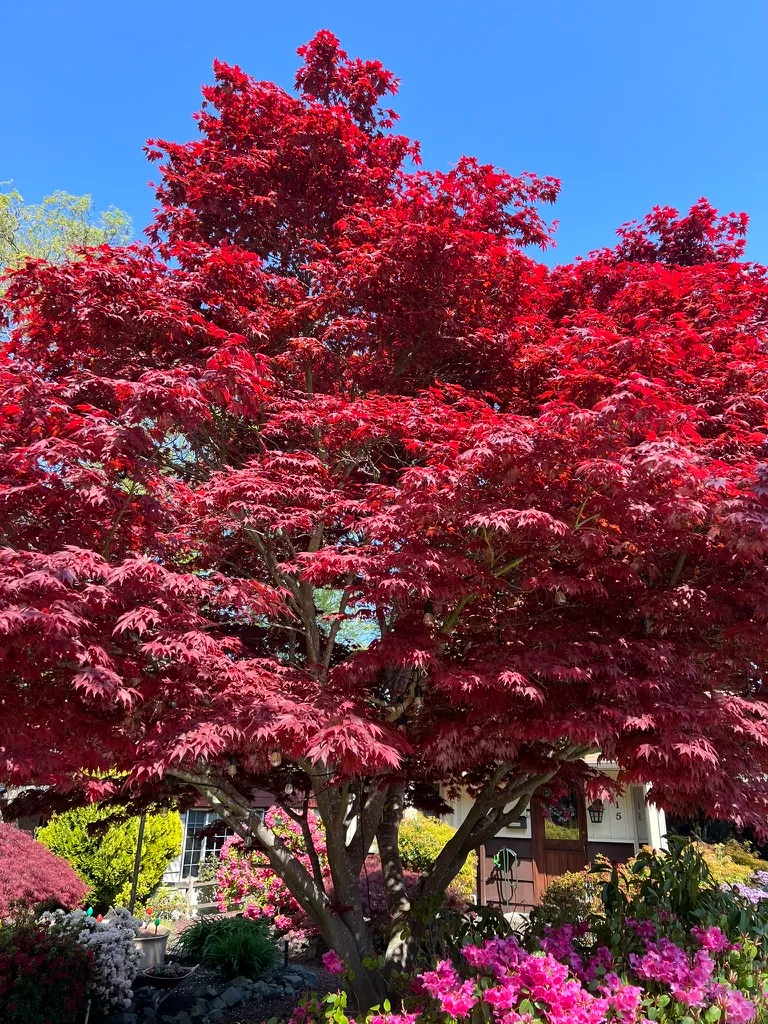
Acer palmatum 'Atropurpureum' is red Japanese maple (bloodleaf Japanese maple), a deciduous tree growing 15-20 feet (4.5-6 m) tall and 12-20 feet (3.7-6 m) wide with a spreading layered canopy. Red-purple palmately lobed leaves with 5-7 pointed lobes, 2-5 inches (5-13 cm) wide. Emerges deep red-purple in spring, holds red-purple through summer, and brightens to crimson-red in fall. Red-purple flowers 0.25 inch (6 mm) in erect corymbs in March-April. In Sapindaceae. 'Atropurpureum' is a seed-grown group (not a single clone) — seedling variation in leaf color intensity and form is common. Named cultivars such as 'Bloodgood' are clonal selections from this group with more consistent color retention. The red-purple foliage color fades to bronze-green in heavy shade or sustained heat above 95°F (35°C) — this color reversion is the primary limitation in hot climates. Leaf scorch (brown margins) develops in hot afternoon sun, wind, or dry soil. Site in morning sun with afternoon shade in zones 7-8. Not drought-tolerant — requires consistent moisture. Sensitive to road salt and alkaline soil (pH above 7.0). Verticillium wilt (Verticillium dahliae) causes branch dieback. Deer browse the foliage. Zones 5-8. Part sun. Growth rate is slow to moderate.
Native Range
Cultivar group. The species A. palmatum is native to Japan, Korea, and eastern China.Suggested Uses
Grown as a specimen tree in residential gardens, courtyard gardens, and containers of at least 25 gallons (95 L). Red-purple foliage spring through fall. Morning sun with afternoon shade. Not for hot dry sites or alkaline soil. Zones 5-8.How to Identify
Appearance
Size & Dimensions
Height15' - 20'
Width/Spread12' - 20'
Bloom Information
Early to mid spring (March-April). Red-purple flowers 0.25 inch (6 mm) in erect terminal corymbs. 3 weeks of bloom. Bee-pollinated. Paired samaras ripen September-October.
Detailed Descriptions
Flower Description
Red-purple, small, 0.25 inch (6 mm), in erect terminal corymbsFoliage Description
Red-purple, palmately lobed with 5-7 pointed lobes, 2-5 inches (5-13 cm) wide; emerges deep red-purple in spring, holds red-purple through summer (may bronze-green in heavy shade or heat), brightens to crimson-red in fallGrowing Conditions
Sun Requirements
Requires 4-6 hours of direct sunlight daily
• Full Sun: 6+ hours of direct sunlight
• Partial Shade: 3-6 hours of direct sunlight
• Full Shade: Less than 3 hours of direct sunlight
Care & Maintenance
Care Guide
Part sun — morning sun with afternoon shade (4-6 hours). Well-drained acidic soil pH 5.5-6.5. Requires consistent moisture — not drought-tolerant. Red color fades in heavy shade or heat above 95°F (35°C). Leaf scorch in hot afternoon sun or wind. Prune only in summer. Verticillium wilt. Zones 5-8.Pruning
Prune only in summer (July-August) to avoid sap bleeding. Remove crossing, dead, or damaged branches. Maintain the natural layered branching structure. Thin interior branches to enhance the tiered silhouette.Pruning Schedule
Prune: July–August
summer
Container Growing
Suitable for container growing
Minimum container size: 25 gallons