Image 1 of 4
1 / 4
Plant Reference
Abies, Genus, koreana, Species, 'Kohout's Ice Breaker', Cultivar,
- Genus & species
- Cultivar
Kohout's ice breaker fir
Korea (species); cultivar selected in the Czech Republic by Jörg Kohout
Overview
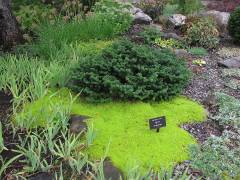
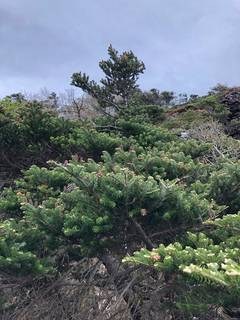
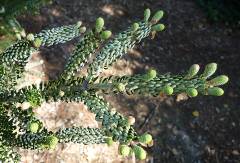
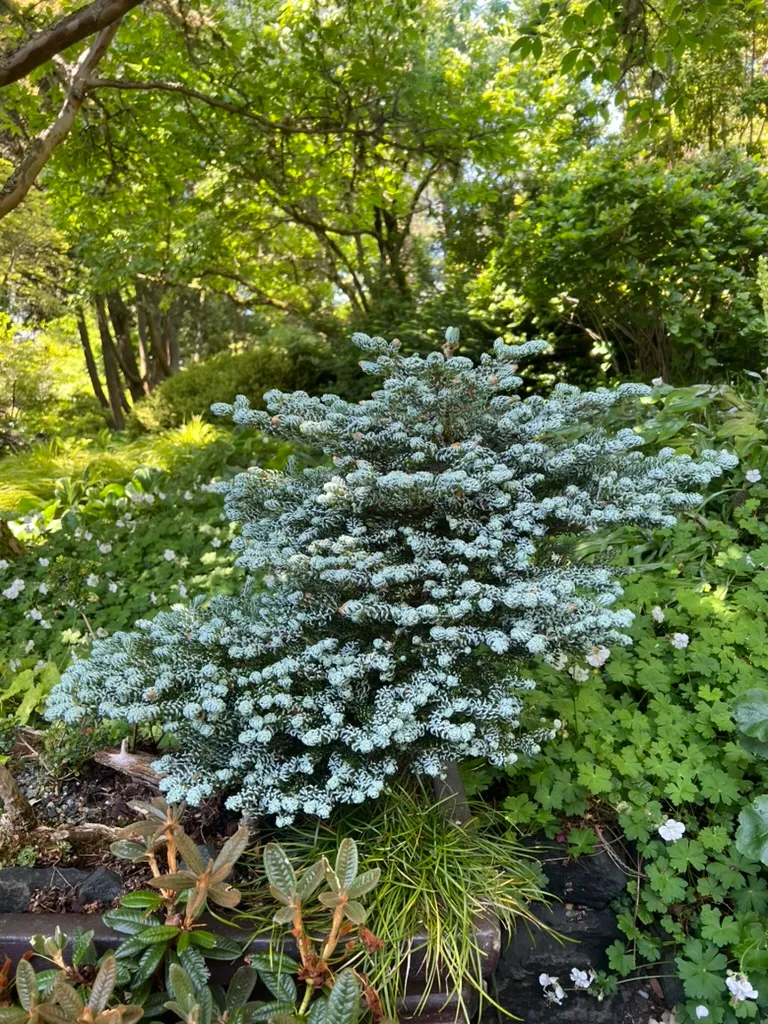
Abies koreana 'Kohout's Ice Breaker' is a dwarf Korean fir, growing 18–36 inches (45–90 cm) tall and 24–36 inches (60–90 cm) wide after 10 years — a globe to mound form. The needles are strongly recurved (curled upward and backward), exposing the bright silver-white undersides — the silver display is visible from all angles and is the cultivar feature. The cultivar name describes the frosted or icy appearance created by the silver-exposed needles. Dark green upper needle surfaces; bright silver-white stomatal bands on the undersides. Originated as a witch's broom mutation of A. koreana — a naturally occurring growth abnormality where a compact ball of congested growth develops on a branch of the normal-sized tree. Selected by Jörg Kohout in the Czech Republic. The species A. koreana grows 15–30 feet (4.5–9 m) and produces purple-violet upright cones 2–3 inches (5–7 cm) — this dwarf cultivar rarely produces cones due to its juvenile growth form. In the pine family (Pinaceae). Intolerant of hot humid summers — performs in zones 4–7 but declines in zone 8+ summer heat. Acidic well-drained soil. Part sun to full sun (afternoon shade in warm climates). Consistent moisture — does not tolerate drought. Non-toxic. Zones 4–7. Growth rate is very slow — 1–2 inches (2.5–5 cm) per year.
Native Range
The species A. koreana is native to mountains of South Korea (Jeju Island, the Jiri and Halla mountains) at 3,300–6,000 feet (1,000–1,800 m). 'Kohout's Ice Breaker' was selected by Jörg Kohout in the Czech Republic from a witch's broom mutation.Suggested Uses
Grown in rock gardens, alpine troughs, and containers in zones 4–7. The silver-exposed recurved needles are visible year-round. Very slow-growing. Intolerant of hot humid summers. Non-toxic.How to Identify
Appearance
Size & Dimensions
Height1'6" - 3'
Width/Spread2' - 3'
Reproduction
The species A. koreana produces purple-violet upright cones, but this dwarf cultivar rarely cones. The silver-exposed recurved needle foliage is the year-round feature.
Detailed Descriptions
Foliage Description
Dark green upper surface, bright silver-white undersides; needles strongly recurved (curled upward and backward), exposing the silver undersidesGrowing Conditions
Sun Requirements
Requires 4-8 hours of direct sunlight daily
• Full Sun: 6+ hours of direct sunlight
• Partial Shade: 3-6 hours of direct sunlight
• Full Shade: Less than 3 hours of direct sunlight
Care & Maintenance
Care Guide
Part sun to full sun (afternoon shade in warm climates). Acidic well-drained soil pH 5.5–6.5. Consistent moisture — does not tolerate drought. Intolerant of hot humid summers (zones 8+). Very slow-growing (1–2 inches / 2.5–5 cm per year). Non-toxic. Zones 4–7.Pruning
No pruning needed — the compact dwarf form develops naturally. The very slow growth rate (1–2 inches / 2.5–5 cm per year) limits size without intervention.Container Growing
Suitable for container growing
Minimum container size: 5 gallons