1 / 5
© Photo by David J. Stang, some rights reserved (CC-BY-SA) · Wikimedia Commons
Thuja occidentalis 'Hetz Midget'
Hetz Midget Arborvitae
Garden origin (cultivar of eastern North American species)
Overview
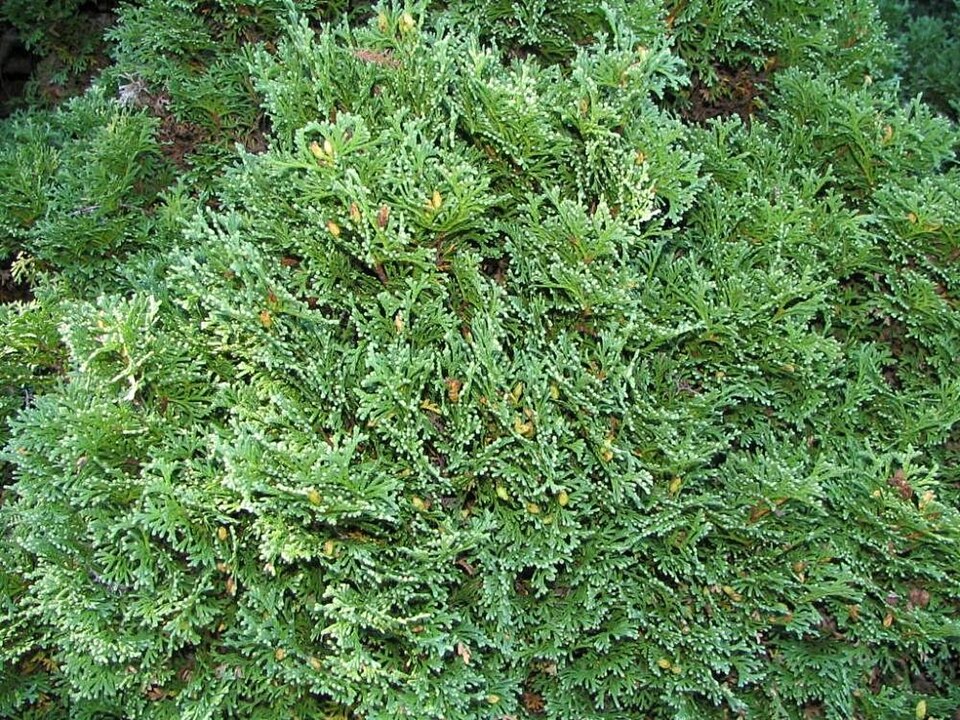
Thuja occidentalis 'Hetz Midget' is a dwarf evergreen conifer reaching 3-4 feet (90-120 cm) tall and 3-4 feet (90-120 cm) wide at maturity, with a tight, rounded globe form. A selection of T. occidentalis (eastern arborvitae) reaching about 5-10 percent of the species' eventual size of 40-60 feet (12-18 m). Foliage consists of soft scale-like leaves arranged in flat sprays, mid-green during the growing season and bronzing slightly in winter at temperatures below 15°F (-9°C). Inconspicuous male and female cones develop on the same plant in spring; mature female cones brown, oval, 0.3 inch (8 mm) long, persistent through winter. Growth rate slow at 1-3 inches (2.5-7.5 cm) per year, with mature size reached in 15-20 years. Hardy in USDA zones 3-8. Spider mites and bagworms can develop on plants in dry, sheltered sites. Foliage may flag temporarily in hot, dry summers in zones 7-8.
Native Range
The species T. occidentalis is native to eastern Canada and the northeastern United States from Manitoba to Nova Scotia and south to North Carolina. Found in cool swamps, limestone cliff tops, and boreal forests at 0-3,000 feet (0-900 m) elevation. The 'Hetz Midget' cultivar is a horticultural selection of garden origin from the United States, in cultivation since the mid-20th century.Suggested Uses
Used in foundation plantings, low borders at 36-48 inch (90-120 cm) spacing, rock gardens, or container culture in pots of at least 7 gallons (26 L). The slow growth rate retains form for 15-20 years before requiring renewal.How to Identify
Appearance
Size & Dimensions
Height3' - 4'
Width/Spread3' - 4'
Reaches mature size in approximately 17 years
Bloom Information
Inconspicuous male and female cones in April and May, both on the same plant. Cones complete development in 6-8 weeks. Wind-pollinated. Mature cones brown, 0.3 inch (8 mm), persisting on branches through the following winter.Detailed Descriptions
Flower Description
Brown (cones)Foliage Description
Mid-greenGrowing Conditions
Sun Requirements
Requires 4-8 hours of direct sunlight daily
• Full Sun: 6+ hours of direct sunlight
• Partial Shade: 3-6 hours of direct sunlight
• Full Shade: Less than 3 hours of direct sunlight
Care & Maintenance
Care Guide
Water deeply once a week during the first growing season; established plants tolerate 2-3 weeks without rain in zones 5-7. Apply 1-2 inches (2.5-5 cm) of bark mulch over the root zone. Bagworms feed on foliage in summer, producing 1-2 inch (2.5-5 cm) silken bag-shaped cases hanging from branches; hand-removal in fall reduces populations. Spider mites can develop in hot, dry summers, causing yellow stippling on foliage. Soils above pH 8.0 cause iron chlorosis. Heavy snow loads can splay branches outward; recovery to symmetric form may take 1-2 seasons.Pruning
Prune in late spring after the new growth has hardened. Light shearing maintains the rounded form, but pruning is unnecessary on the naturally compact habit. Cuts into bare brown wood without foliage do not regenerate; pruning depth must remain in green-leaved tissue.Pruning Schedule
J
F
M
A
M
J
J
A
S
O
N
D
late spring
Maintenance Level
very lowContainer Growing
✓ Suitable for container growing
Minimum container size: 7 gallons