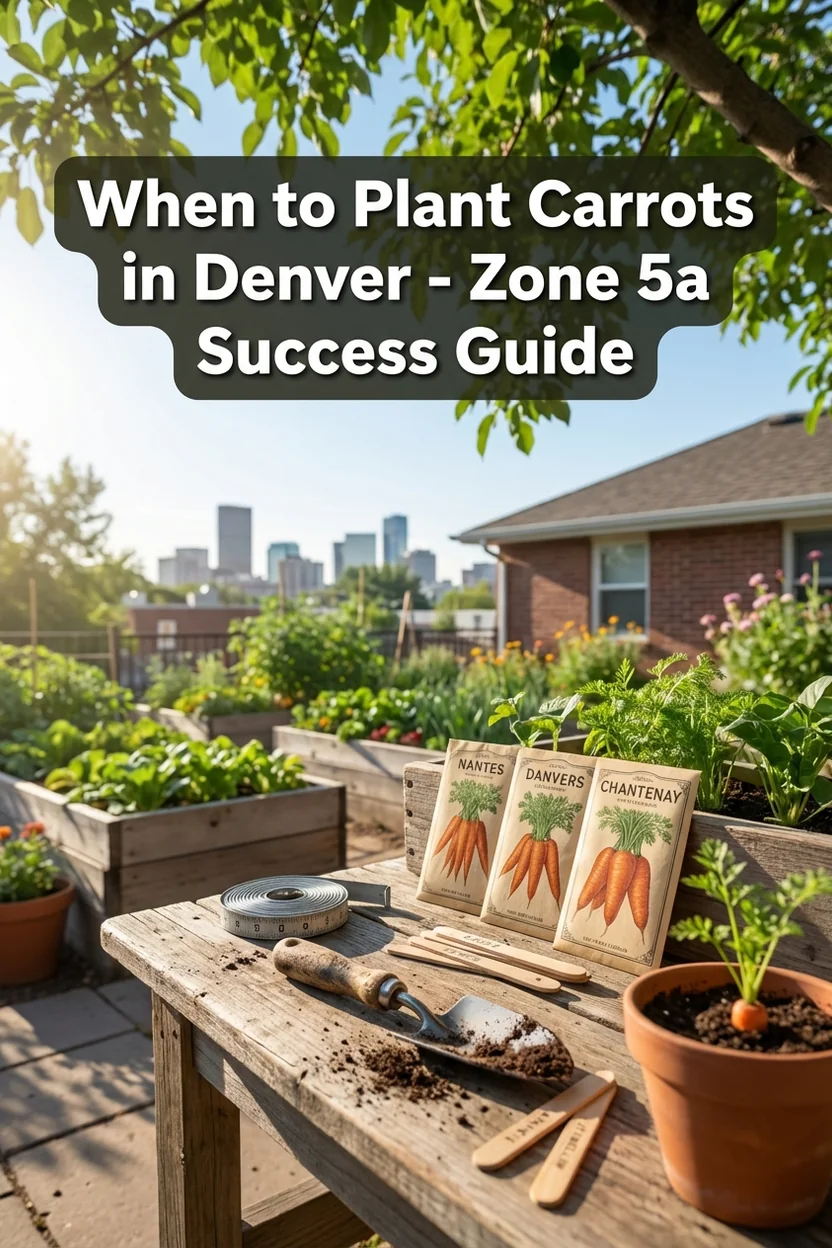
When to Plant Carrots in Denver: Complete Guide + Best Varieties for Zone 5a
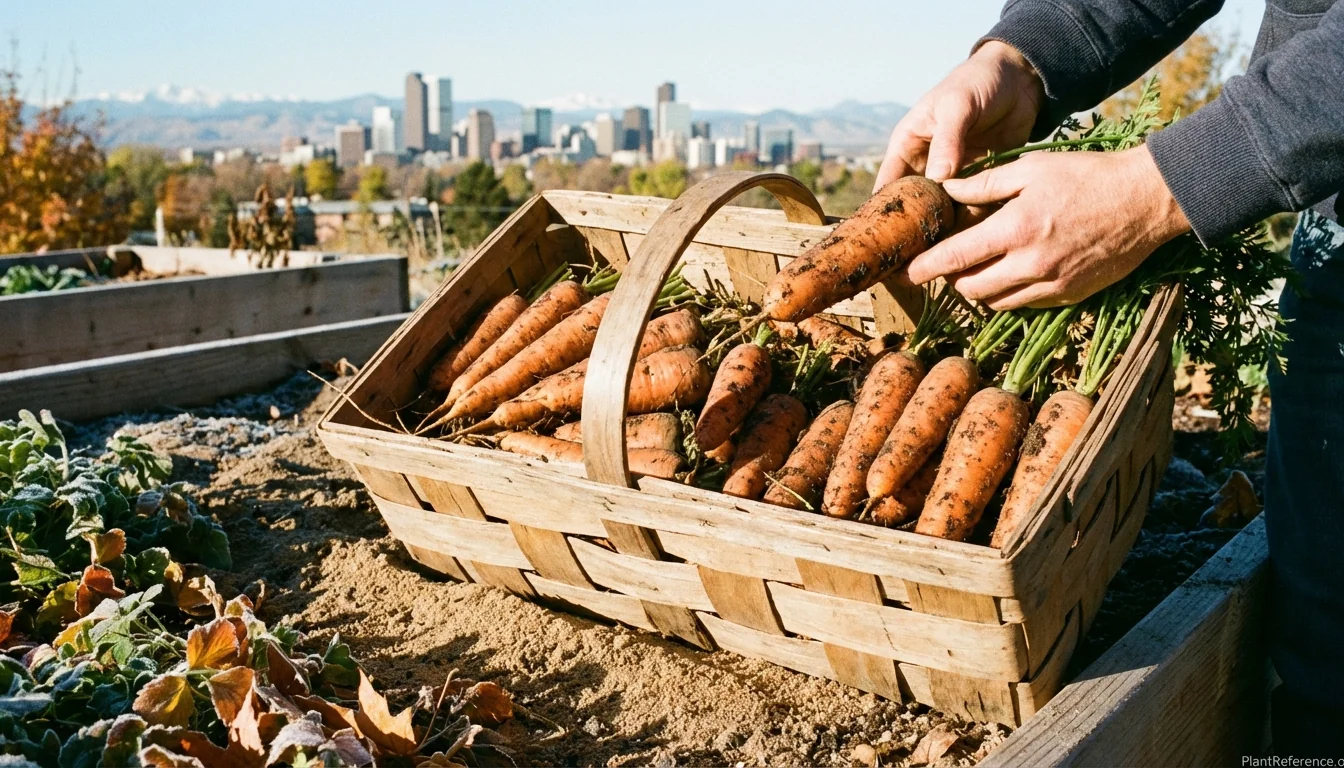
— Image © Plant Reference 2026
I've been growing carrots in Colorado for over thirty years, and I'll tell you straight—Denver's high altitude and clay soil present unique challenges, but with the right timing and variety selection, you can grow excellent carrots. The key to success when to plant carrots in Denver lies in understanding our Zone 5a climate and working with, not against, our heavy soil.
Best Carrot Varieties for Denver's Zone 5a Climate
Denver's 5,280-foot elevation and Zone 5a climate create specific growing conditions that favor certain carrot varieties over others. Our clay-heavy soil, intense sun, and temperature swings require varieties that can handle mechanical resistance and variable moisture.
Variety | Days to Maturity | Best For | Notes for Denver |
|---|---|---|---|
Daucus carota 'Danvers 126' | 70-80 days | Clay soil breakthrough | Perfect for Denver's heavy soil - wedge shape penetrates clay |
Daucus carota 'Red Core Chantenay' | 65-75 days | Rocky/shallow soil | Short, stout roots avoid soil obstacles - ideal for challenging spots |
Daucus carota 'Bolero' | 75-85 days | Disease resistance | Heat tolerant with excellent storage - best for July plantings |
Daucus carota 'Scarlet Nantes' | 65-75 days | Raised beds only | Requires loose soil - won't penetrate Denver clay |
Daucus carota 'Napoli' | 65-70 days | Quick harvest | Fast maturity for short season areas |
Daucus carota 'Rainbow F1' | 70-75 days | Specialty harvest | Mix of colors - moderate soil tolerance |
Understanding Denver's Soil Challenge
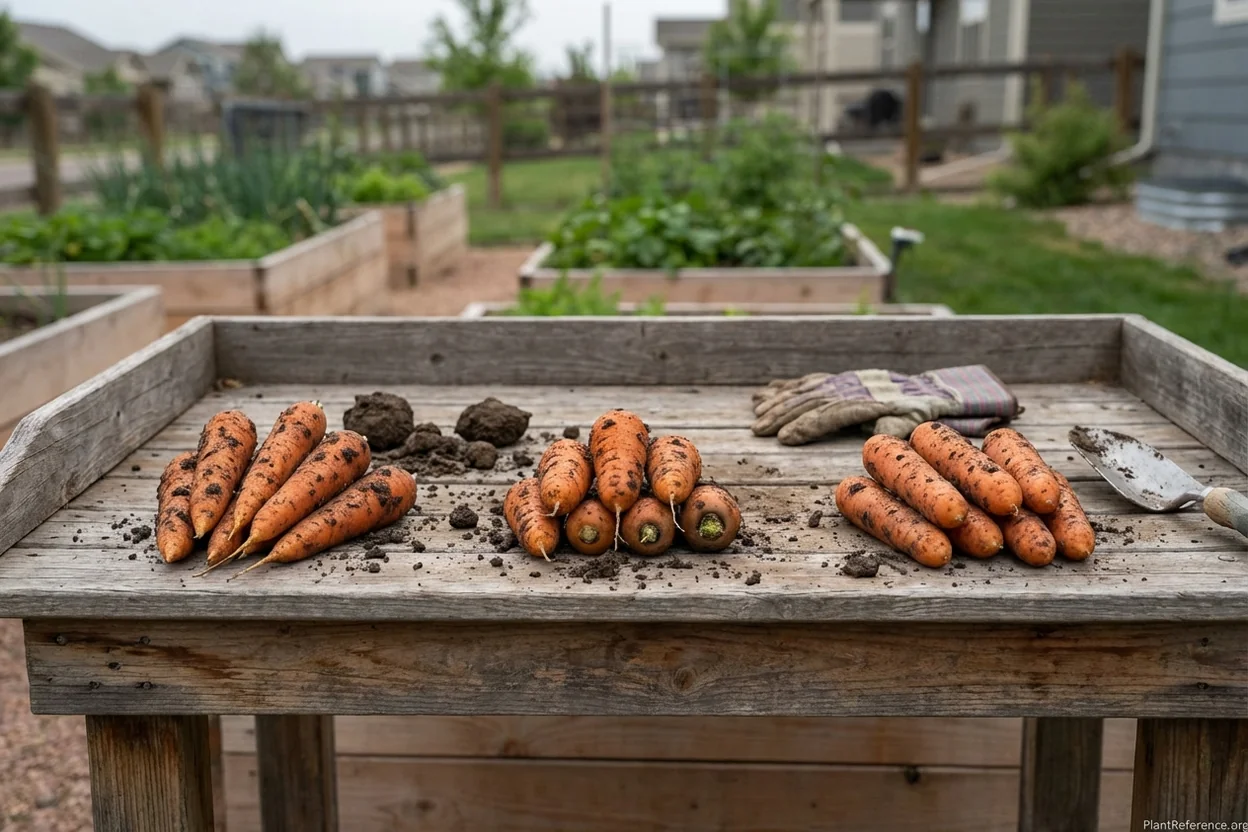
Denver's infamous clay soil is the biggest obstacle to carrot success. I've seen too many gardeners try growing Daucus carota 'Scarlet Nantes' in native clay and end up with stunted, forked roots. The blunt-tipped Nantes varieties simply can't push through compacted soil.
Daucus carota 'Danvers 126' (DAN-vers) is your best bet for native soil. The wedge-shaped root acts like a living crowbar, splitting clay as it grows. I've pulled perfect 7-inch Danvers carrots from soil so hard you could build pottery with it.
For rocky areas common in Denver's bench lands, Daucus carota 'Red Core Chantenay' (shan-tuh-NAY) works miracles. These short, fat carrots grow around obstacles instead of trying to penetrate them. They mature in just 65-75 days, perfect for our 148-day growing season.
Heat Tolerance for High Altitude
Denver's intense UV radiation at 5,280 feet can stress carrot foliage, reducing root development. Daucus carota 'Bolero' (bo-LAIR-oh) handles our mountain sun better than most varieties, maintaining steady growth even during July heat waves.
Specific Planting Dates for Denver
Denver's last frost date of May 9 and first frost date of October 4 give us a 148-day growing season—longer than many mountain areas but shorter than the plains. Here's how I schedule carrot plantings:
Spring Planting Window: April 15 - May 15
Best Planting Date: April 25 - Soil temperature: 45-50°F (7-10°C) - Air temperature: Nighttime lows around 35°F (2°C) - Harvest window: July 15 - August 15
Start your spring carrots three weeks before the last frost. Carrot seeds germinate in soil as cool as 40°F (4°C), and the seedlings tolerate light frost down to 28°F (-2°C). April 25 has been my most reliable spring planting date for thirty years.
Soil Preparation Timeline: - April 1-10: Remove winter mulch, test soil temperature - April 10-20: Till beds when soil crumbles in your hand (not sticky) - April 20-25: Final bed preparation and seeding
Early Summer Succession: May 15 - June 15
Plant every 2-3 weeks for continuous harvest. These plantings mature during Denver's hottest weather (July-August), so choose heat-tolerant varieties like Daucus carota 'Bolero'.
Fall Crop Window: July 1 - July 15
Best Planting Date: July 10 - Matures: September 25 - October 15 - Benefits from frost sweetening before harvest - Best storage quality of the year
This is my favorite planting for storage carrots. July-planted carrots mature as temperatures cool in September and October. The cold converts starches to sugars, creating the sweetest carrots of the year.
Calculate your latest planting by counting backward from first frost (October 4) minus days to maturity plus 10 days buffer:
Daucus carota 'Napoli' (70 days): Latest planting July 15
Daucus carota 'Danvers 126' (75 days): Latest planting July 10
Daucus carota 'Bolero' (80 days): Latest planting July 5
Complete Growing Guide for Denver
Soil Preparation: Working with Denver Clay
Don't fight the clay—work with it. Here's my proven approach:
Fall Preparation (Best Method): Add 3-4 inches of compost to beds in October. Leave rough over winter. Freeze-thaw cycles break down clay naturally. Till in spring when soil crumbles.
Spring Amendment (If You Didn't Plan Ahead): Add coarse sand (not fine sand which creates concrete) at 1:1 ratio with clay. Work in 2-3 inches compost. This creates drainage channels the roots can follow.
Raised Bed Solution: Build beds 8-12 inches (20-30 cm) deep with 1/3 compost, 1/3 topsoil, 1/3 coarse sand mix. Perfect for Daucus carota 'Scarlet Nantes' and Daucus carota 'Rainbow F1'.
Seeding Technique for High Altitude
Denver's dry air and intense sun create unique germination challenges:
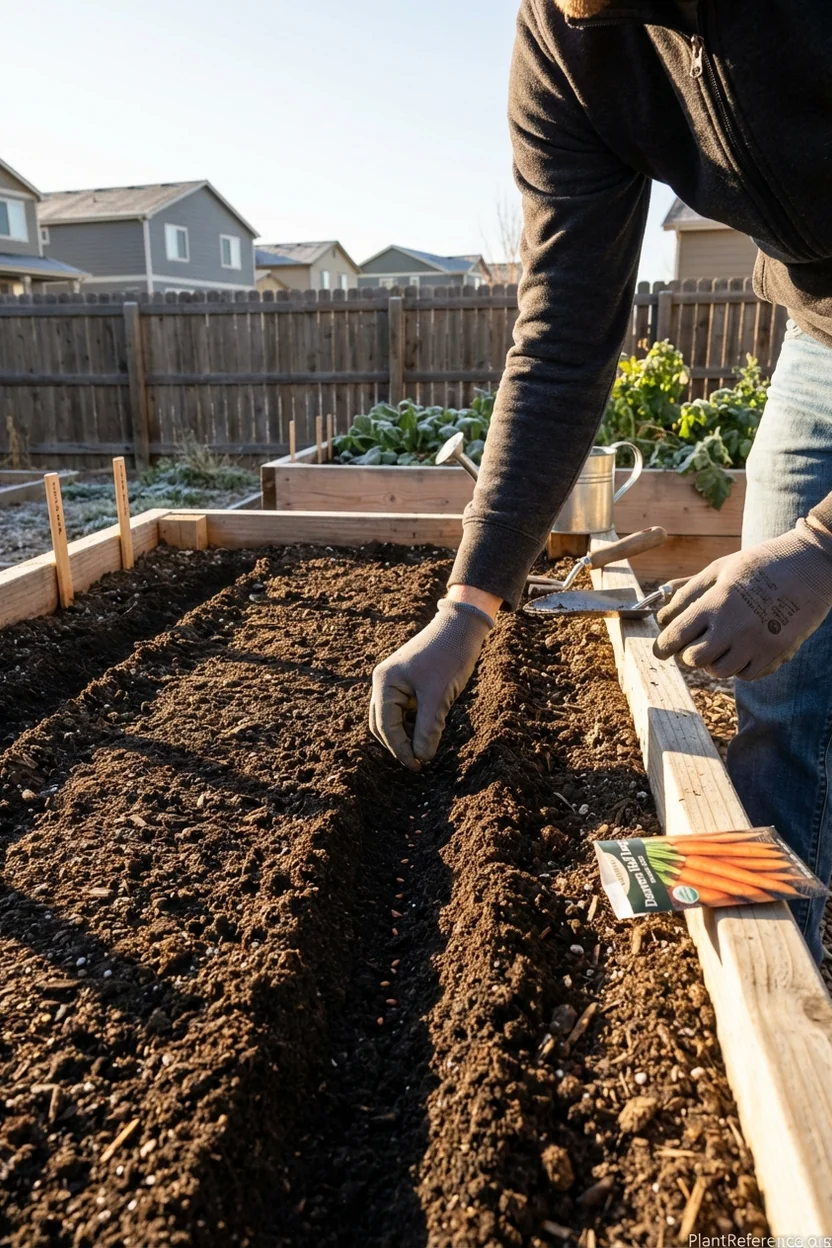
Depth: Plant seeds 1/4 to 1/2 inch (6-13 mm) deep. Deeper in summer plantings to reach moisture.
Spacing: Sow thick—about 15-20 seeds per foot. Thin to final spacing of 2-3 inches (5-8 cm) apart.
Moisture Retention Method: 1. Create furrow and plant seeds 2. Cover with fine compost (not clay soil) 3. Lay burlap or row cover over seeded area 4. Water through cover daily 5. Remove cover immediately when green loops appear (5-10 days)
This method prevents the surface crust that kills more carrot stands than any pest or disease.
Watering Strategy for Denver Climate
Our low humidity (often 15% in summer) and clay soil create unique irrigation challenges:
Spring Plantings: 1 inch (2.5 cm) per week, applied slowly for deep penetration Summer Plantings: 1.5 inches (3.8 cm) per week during July heat Fall Crops: 1 inch per week, tapering to 0.5 inches as temperatures cool
Critical Rule: Never let the surface dry completely during the first 21 days after planting. Check daily by touching the soil surface.
Altitude-Specific Growing Tips
UV Protection: In areas above 5,000 feet, afternoon shade during July-August prevents foliage stress. Use 30% shade cloth during extreme heat.
Wind Protection: Denver's Chinook winds dessicate plants. Plant carrots on the east side of taller crops (tomatoes, corn) for wind protection.
Temperature Swings: Our 40°F (22°C) daily temperature swings stress plants. Mulch around plants (not over seedlings) once they're 3 inches tall to buffer soil temperature.
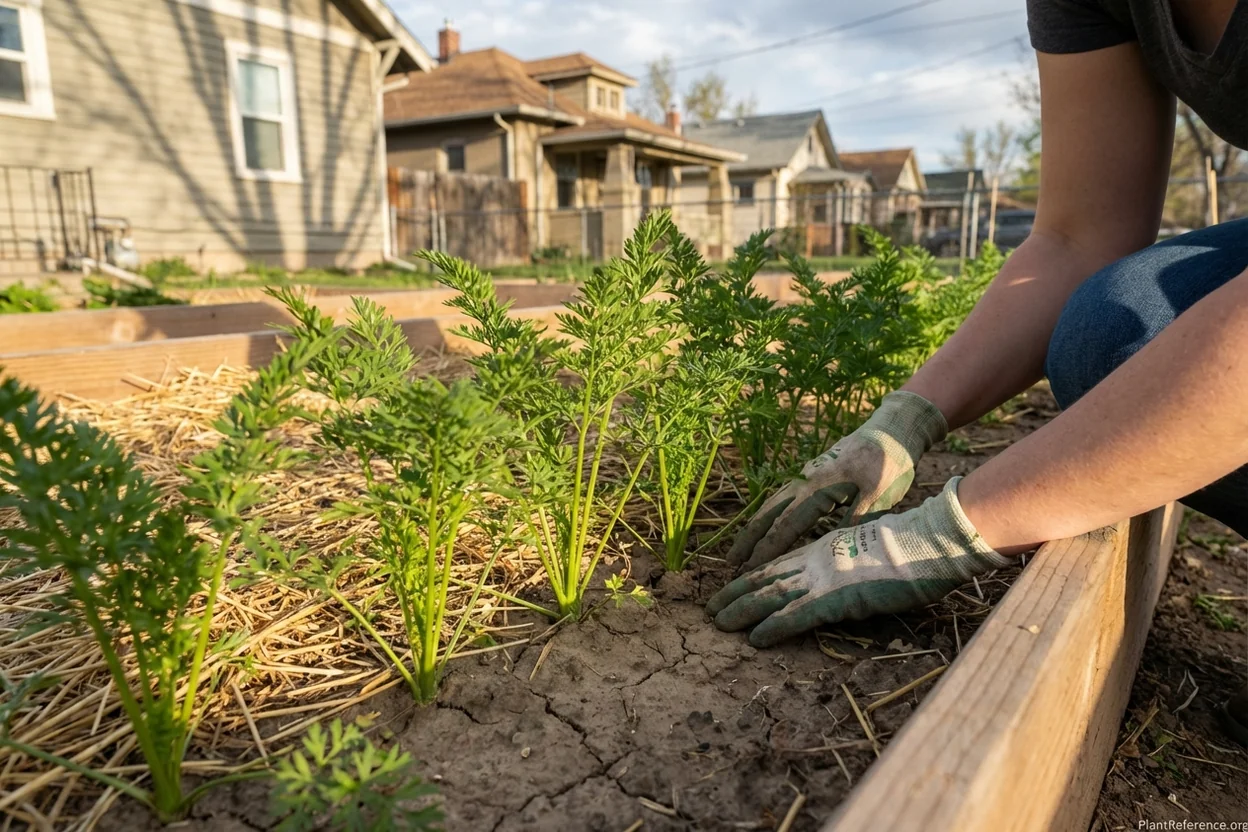
Troubleshooting Denver-Specific Problems
Clay Soil Issues
Problem: Forked, twisted carrots Cause: Clay clods or compacted layers Solution: Switch to Daucus carota 'Danvers 126' or Daucus carota 'Red Core Chantenay'. Add sand and compost next season.
Problem: Carrots won't germinate Cause: Surface crusting after watering Solution: Cover seeds with compost instead of clay soil. Use row cover method described above.
Problem: Stunted 2-inch carrots Cause: Hardpan layer at 3-4 inches deep Solution: Double-dig beds to 12 inches or switch to Chantenay varieties that don't need depth.
High Altitude Challenges
Problem: Foliage turns purple or yellow Cause: UV stress and rapid temperature changes Solution: Provide afternoon shade during peak summer (June-August). Plant on east side of structures.
Problem: Poor germination in summer plantings Cause: Surface soil temperature exceeds 85°F (29°C) Solution: Plant in partial shade or use shade cloth over germination area.
Problem: Carrots bolt (go to seed) prematurely Cause: Extended cold spell followed by heat Solution: Use row covers during late cold snaps. Choose bolt-resistant varieties like Daucus carota 'Bolero'.
Denver Weather Pattern Problems
Problem: Hail damage to foliage Cause: Common June-July afternoon storms Solution: Row covers during storm season. Damaged foliage regrows if roots aren't damaged.
Problem: Chinook wind dessication Cause: Warm, dry downslope winds Solution: Increase watering after Chinook events. Plant windbreaks on west side of garden.
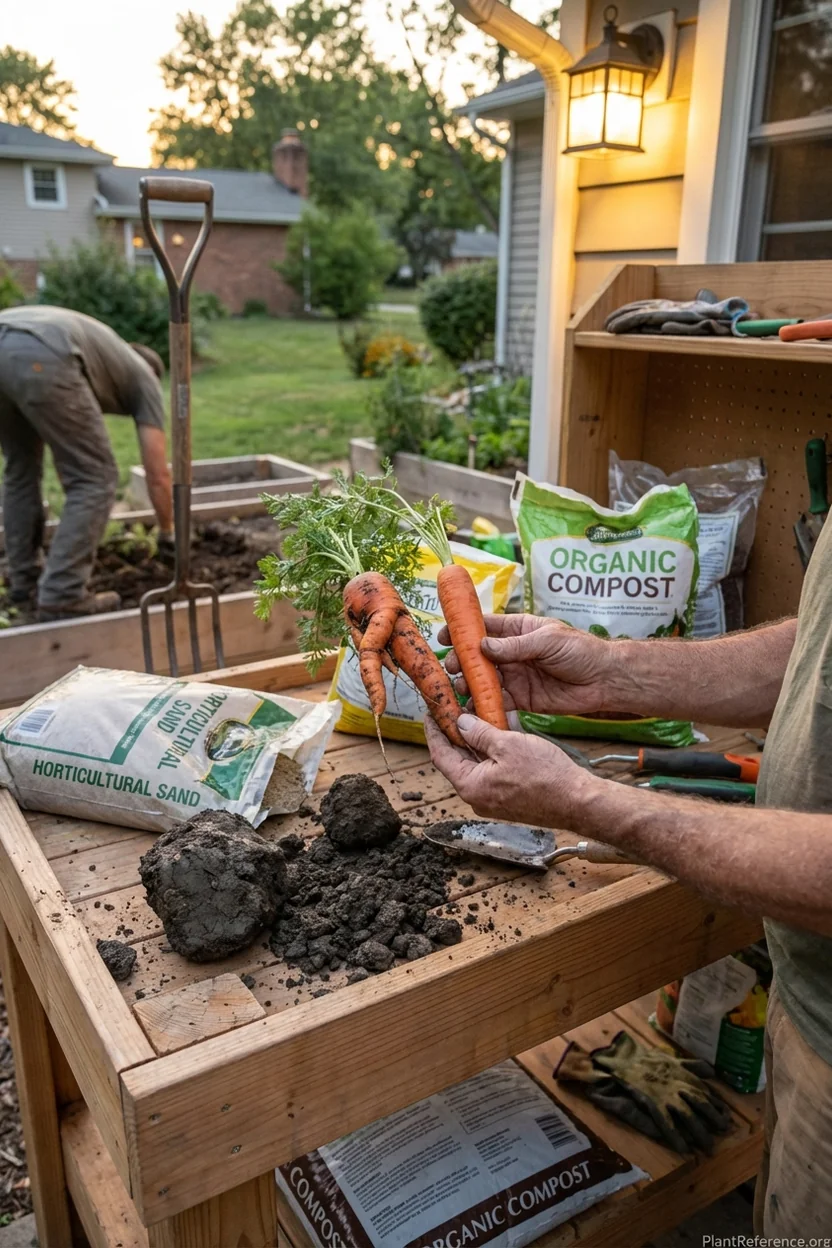
Harvest & Storage
Timing Your Denver Harvest
Spring Crop (Planted April): Harvest July through August. Don't delay—summer heat makes carrots bitter and tough.
Fall Crop (Planted July): Begin harvest in late September. Leave in ground through first frost (October 4) for sweetest flavor. Cold converts starches to sugars.
Storage Methods for Denver Climate
Short-term (1-3 months): Remove tops, brush off soil (don't wash). Store in perforated plastic bags in refrigerator at 32-35°F (0-2°C).
Long-term (4-6 months): Use root cellar method in unheated garage or basement. Layer carrots in damp sand in boxes. Maintain 32-40°F (0-4°C) and 90% humidity.
Denver Advantage: Our dry climate prevents rot issues common in humid areas. Carrots stored properly keep until March.
Signs of Proper Maturity
Shoulders 1-2 inches (2.5-5 cm) in diameter for most varieties
Daucus carota 'Red Core Chantenay': Harvest when 1.5 inches diameter (don't let them get oversized)
Daucus carota 'Danvers 126': Can grow larger—up to 2.5 inches at shoulder
Deep color development—pale carrots need more time
Frequently Asked Questions
Reading about plants and recognising them are different skills. These three build the second.
- Daily PlantIdentify the day’s mystery plant from a close-up photograph.
- Keyed OutWork a dichotomous key, lead by lead, to name a hidden specimen.
- Name That PlantName a specimen from botanical clues dealt hardest first.
Free to play, no account needed
Nathan is a garden designer in Denver who focuses on water-wise plantings adapted to Colorado's Front Range climate. He grew up in Nebraska, studied environmental science in college, and fell into garden design after spending summers working at a native plant nursery in Fort Collins. Denver's climate is genuinely challenging—low humidity, intense UV, alkaline clay soil, and wild temperature swings that can go from 70°F to snow in 24 hours. Nathan designs gardens that handle all of that without supplemental irrigation once established. He writes about xeric gardening, native plant selection for the Front Range, and the practical realities of high-altitude growing.