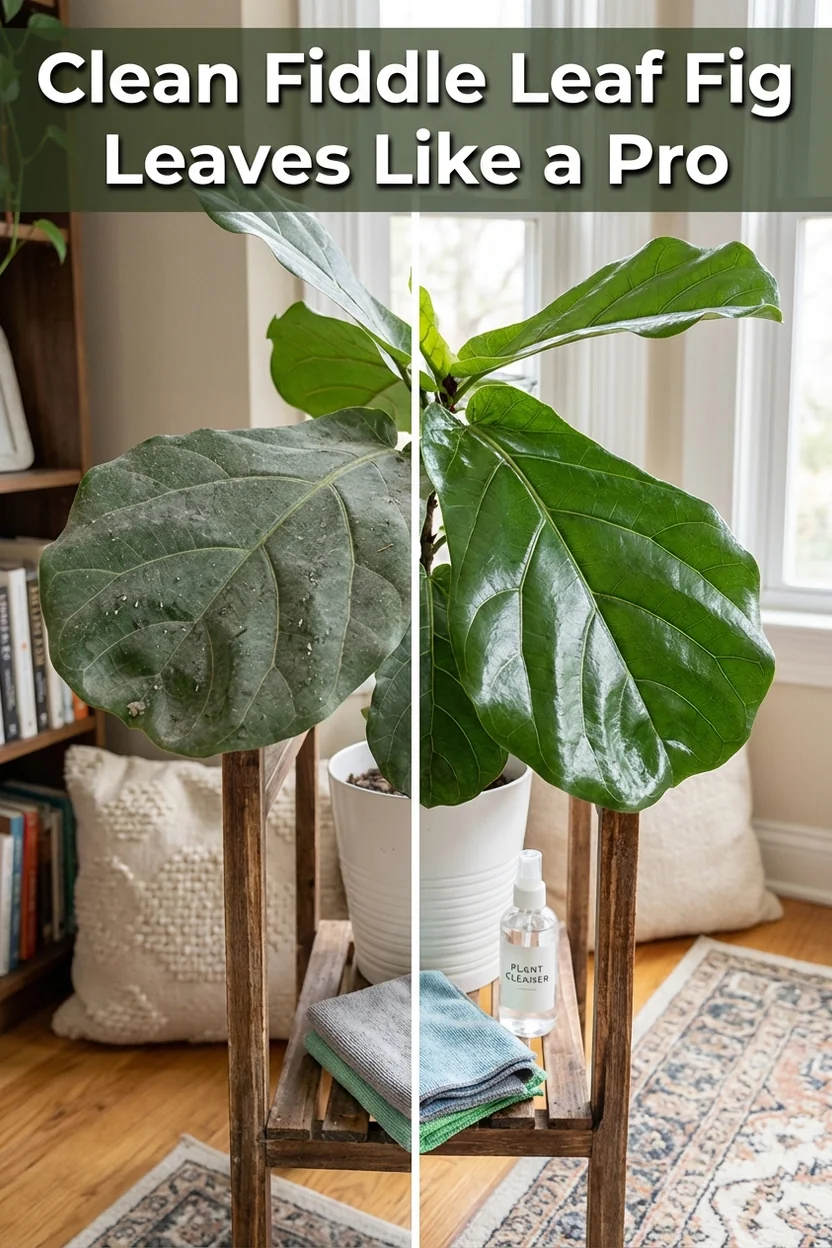
How to Clean Fiddle Leaf Fig Leaves (Shiny & Healthy)
Pets & Toxicity
Recorded toxicity for plants linked in this guide. An unknown status is not a safety assessment.
Toxic to pets: fiddle leaf figDetailsHide
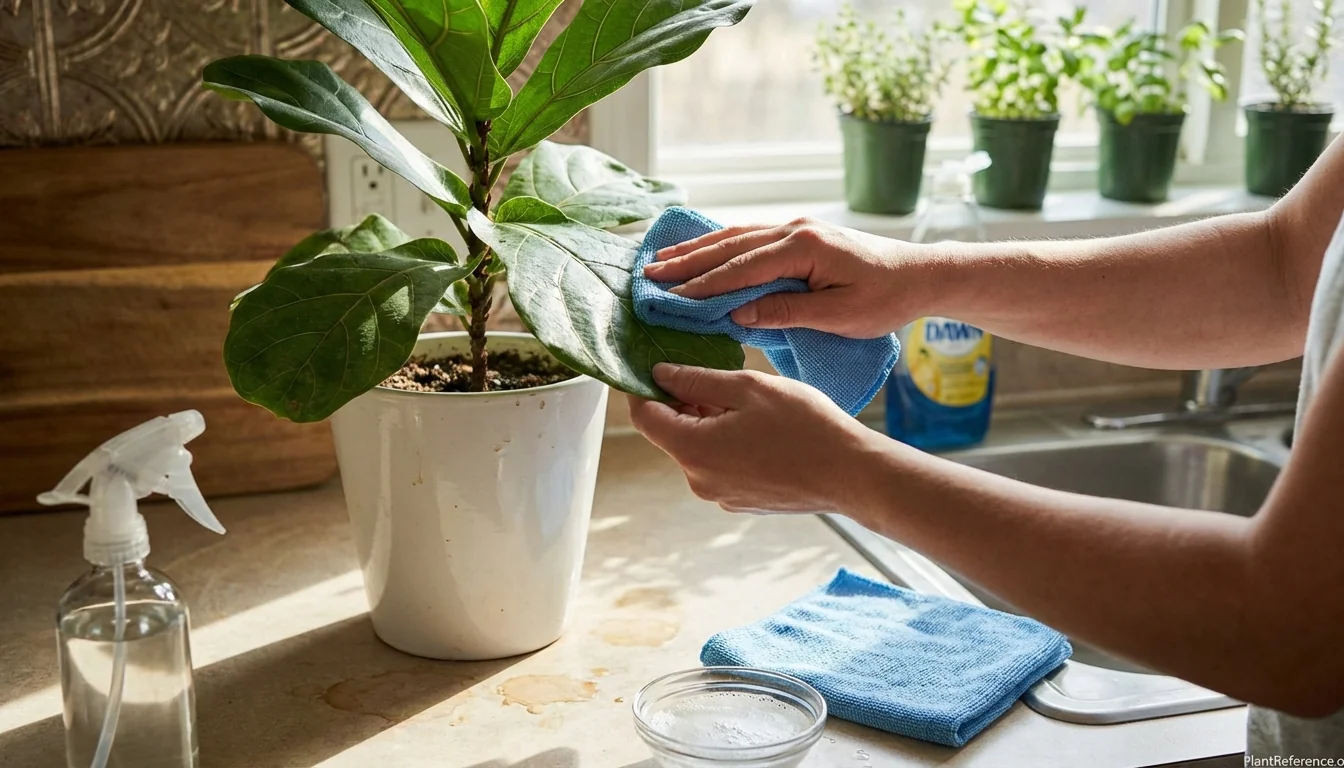
— Image © Plant Reference 2026
Dusty, grimy fiddle leaf fig leaves aren't just an eyesore—they're actually suffocating your plant. When you learn how to clean fiddle leaf fig leaves properly, you'll see dramatic improvements in growth rate, leaf color, and overall plant health within just a few weeks.
Let me be blunt: most people are cleaning their fiddle leaf fig 🌿Ficus lyrata (FY-kus ly-RAY-tuh) leaves wrong. They're using the wrong products, applying too much pressure, or skipping this crucial maintenance step entirely. Then they wonder why their Instagram-worthy plant looks dull and grows slowly.
Why Clean Fiddle Leaf Fig Leaves?
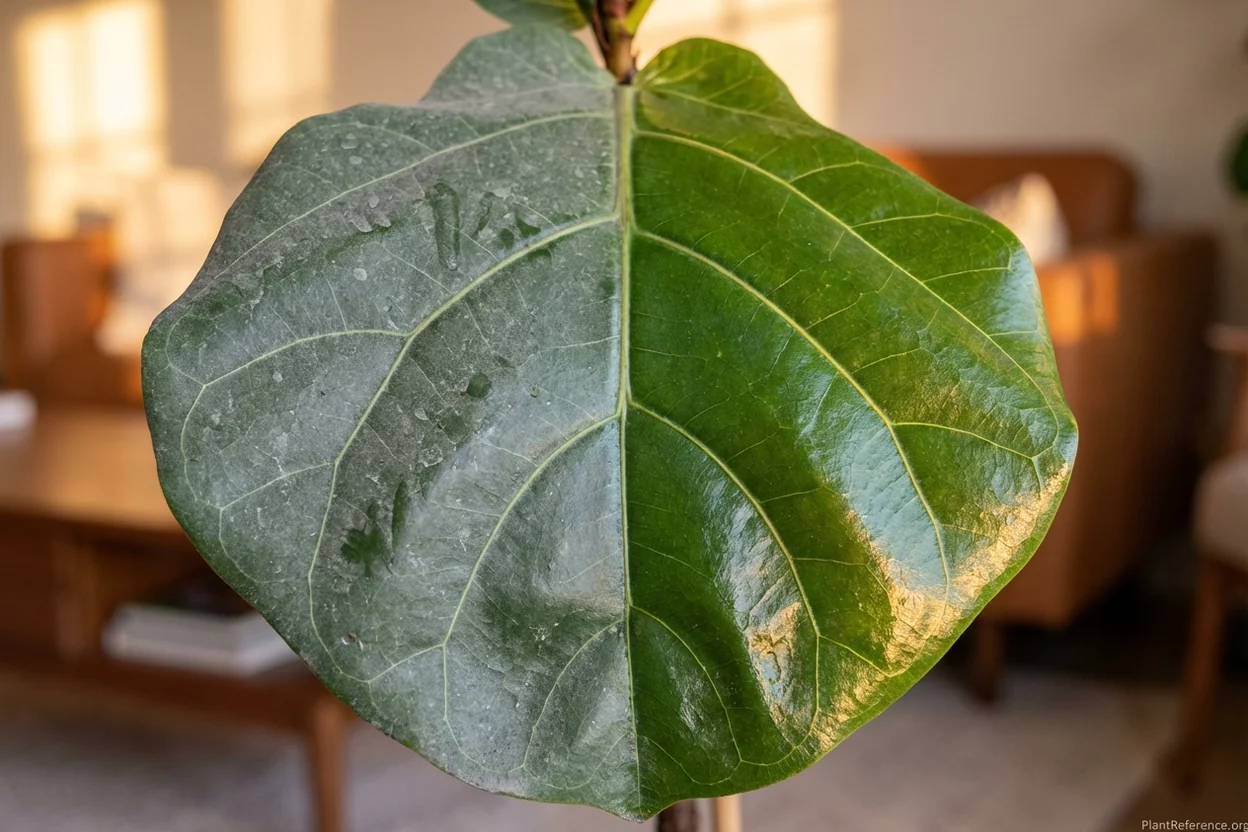
Here's what actually happens when you don't clean those leaves. Dust, grime, and water spots create a barrier on the leaf surface that blocks up to 50% of available light from reaching the chloroplasts inside. That's like forcing your plant to photosynthesize while wearing sunglasses indoors.
The science behind dirty leaves: Fiddle leaf figs have specialized cells called stomata that need to breathe. When these microscopic pores get clogged with dust, oil, and household particles, gas exchange becomes restricted. Carbon dioxide can't enter efficiently, and oxygen can't exit properly. The result? Slower photosynthesis, reduced energy production, and that telltale dull, lifeless appearance.
What you'll notice from regular cleaning:
Leaves appear glossy and vibrant within 24-48 hours
New growth emerges faster and larger
Colors become more saturated and deep green
Brown spots from blocked pores disappear
Plant looks healthier and more Instagram-ready
The fiddle leaf fig originates from tropical rainforests where frequent rainfall naturally washes leaves clean. In our dry indoor environments, this natural cleaning process doesn't happen, so dust accumulates continuously from heating systems, cooking vapors, pet dander, and general household particles.
When to Clean Your Fiddle Leaf Fig Leaves
Monthly deep cleaning is the sweet spot for most indoor environments. However, your cleaning frequency depends on several factors related to Fiddle Leaf Fig Light Requirements and Placement:
Clean every 2 weeks if you have:
Forced air heating or cooling systems
Pets that shed
High household traffic
Kitchen or bathroom placement
Recently painted or renovated spaces
Monthly cleaning works for:
Standard living room or bedroom placement
Minimal dust accumulation
Good air circulation
Away from cooking areas
Weekly cleaning needed for:
Plants near heating vents or fireplaces
Homes with multiple pets
Areas with heavy cooking or smoking
Construction or renovation nearby
Signs your plant needs immediate cleaning: Run your finger across a leaf surface. If you see a visible streak or your finger comes away dirty, it's cleaning time. Also watch for dull, lackluster leaves that don't reflect light naturally.
What You Need for Leaf Cleaning
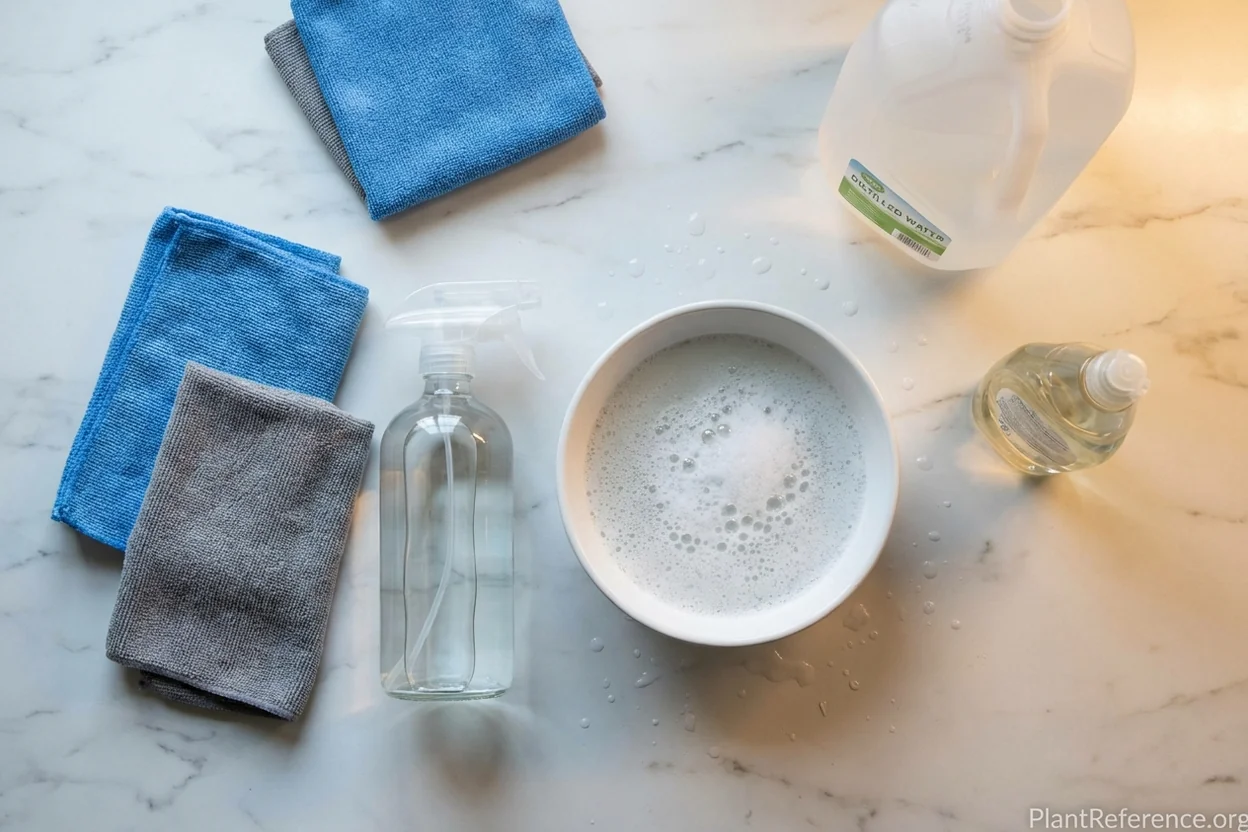
Forget the fancy products—effective fiddle leaf fig cleaning requires just a few basic items you probably already own:
Essential supplies:
Microfiber cloths (2-3 pieces)
Lukewarm distilled or filtered water
Mild dish soap (1-2 drops per cup of water)
Spray bottle for misting
Small bowl for soapy water solution
Clean towel for workspace protection
Why microfiber works best: The microscopic fibers trap dust particles instead of pushing them around like paper towels or regular cloths do. Microfiber also won't scratch the leaf surface or leave lint behind. This principle applies to the entire Fiddle Leaf Fig Care: The Complete Guide (2025) ecosystem.
Water quality matters: Tap water often contains minerals that leave spots on leaves after drying. Use distilled water or let tap water sit 24 hours to allow chlorine to evaporate. Hard water with high mineral content will leave white residue that requires additional cleaning.
Soap concentration: Less is more. One to two drops of mild dish soap per cup of water creates sufficient cleaning power without leaving residue. Avoid antibacterial soaps, which can be too harsh for plant surfaces.
Step-by-Step Leaf Cleaning Method
This is the method I use on dozens of fiddle leaf figs, and it works every single time without causing damage:
Step 1: Prepare your workspace (2 minutes) Lay a clean towel under the plant to catch drips. Work near a sink if possible, or have cleanup materials ready. Ensure adequate lighting to see dust and grime clearly.
Step 2: Start with dry dusting (3-5 minutes) Using a clean, dry microfiber cloth, gently wipe each leaf from stem to tip. This removes loose dust and debris before wet cleaning. Support the leaf from underneath with your non-dominant hand to prevent bending or tearing.
Step 3: Prepare cleaning solution (1 minute) Mix lukewarm water with 1-2 drops of mild dish soap in your bowl. The water should feel barely slippery—if it's sudsy, you've used too much soap.
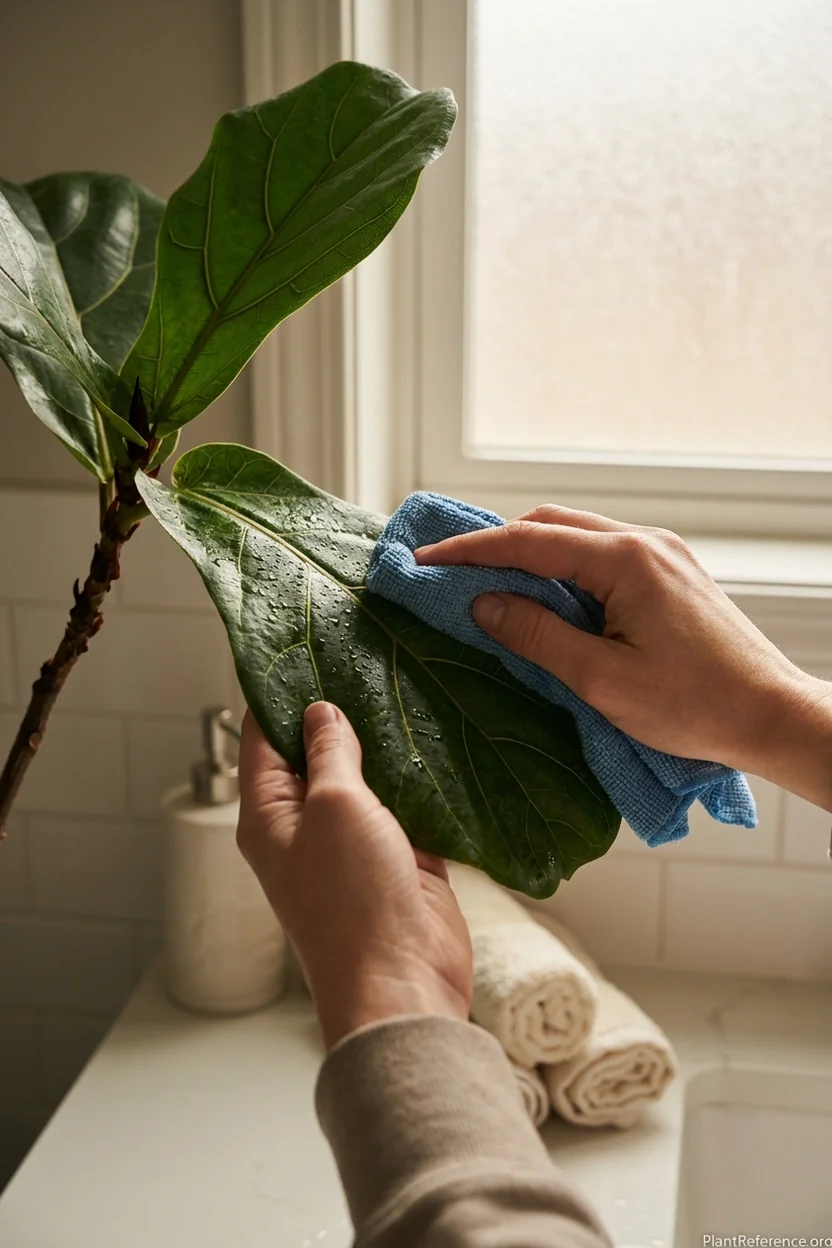
Step 4: Clean the upper surface (10-15 minutes) Dip your second microfiber cloth in the soapy solution and wring out excess water—it should be damp, not dripping. Support each leaf from underneath and gently wipe from the base near the stem toward the tip. Use light pressure and follow the natural leaf veins.
Step 5: Clean the undersides (5-10 minutes) Flip leaves carefully and clean undersides using the same technique. Undersides accumulate less visible dust but harbor spider mites and other pests, so don't skip this step. Understanding Fiddle Leaf Fig Pest Control: Complete Guide to Spider Mites helps you identify early pest indicators during cleaning.
Step 6: Rinse with clean water (5 minutes) Using a third cloth dampened with plain distilled water, wipe each leaf again to remove soap residue. Soap left on leaves can attract more dirt and create a sticky film.
Step 7: Air dry completely (30-60 minutes) Allow leaves to air dry naturally. Never towel-dry or use heat sources like hair dryers. Place the plant in bright, indirect light with good air circulation until completely dry.
Total time investment: 25-35 minutes for a mature 6-foot fiddle leaf fig with 20-30 leaves.
Common Leaf Cleaning Mistakes to Avoid
I've seen people destroy otherwise healthy plants with these cleaning errors:
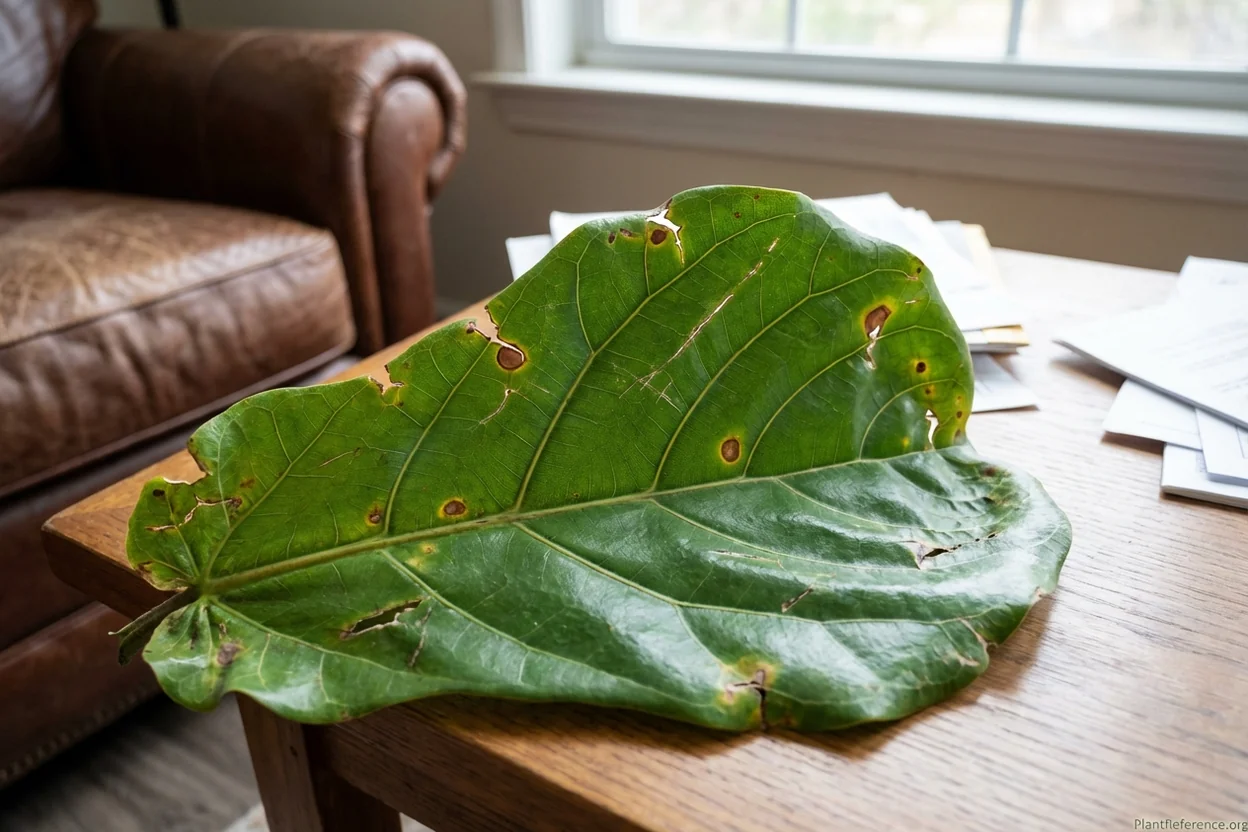
Using too much pressure: Fiddle leaf fig leaves are surprisingly delicate. Aggressive scrubbing causes microscopic tears that become entry points for bacterial infections. Light, gentle strokes are always sufficient.
Cleaning during peak sun hours: Wet leaves in direct sunlight act like magnifying glasses, causing burn spots. Always clean in morning or evening when plants aren't receiving direct light. This timing principle aligns with Fiddle Leaf Fig Watering Schedule: When and How Much.
Using commercial leaf shine products: Products like Leaf Shine, Miracle-Gro Leaf Shine, and similar commercial glossers clog leaf pores and attract dust faster than clean leaves. The temporary shine isn't worth the long-term damage to plant health.
Forgetting to support leaves: Unsupported leaves can tear at the stem connection point during cleaning. Always cradle leaves from underneath, especially larger mature leaves.
Using paper towels or tissues: These materials leave lint, scratch leaf surfaces, and fall apart when damp. Stick with quality microfiber cloths.
Natural vs. Commercial Leaf Cleaners
Natural cleaning solutions that work:
Plain water: For light dust, distilled water alone removes most surface particles without risk of residue buildup.
Diluted neem oil: Mix 1 teaspoon neem oil with 1 quart of water for cleaning that also prevents pest infestations. Use monthly maximum to avoid oil buildup. This connects to broader Fiddle Leaf Fig Common Problems: Brown Spots, Yellow Leaves & Pests management.
Milk solution: One part milk to one part water creates natural shine, but requires thorough rinsing to prevent sour odors and bacterial growth.
Commercial products to avoid:
Leaf shine sprays: These petroleum-based products clog stomata and create an unnatural glossy appearance that attracts dust faster.
Furniture polish: Never use products designed for wood furniture on plants. The chemicals can poison your plant through leaf absorption.
Glass cleaners: Ammonia-based cleaners burn leaf tissues and disrupt natural protective coatings.
Troubleshooting Cleaning Problems
White residue after cleaning: This indicates hard water or too much soap. Rinse immediately with distilled water and reduce soap concentration for future cleaning.
Brown spots appearing 24-48 hours after cleaning: You either cleaned during bright sun hours (causing burn spots) or used contaminated water or cloths. Check your cleaning timing and ensure all materials are clean. See Brown Spots on Fiddle Leaf Fig: 7 Causes + Solutions for comprehensive troubleshooting.
Leaves appear dull despite cleaning: Old residue buildup requires multiple gentle cleaning sessions. Don't attempt aggressive scrubbing—instead, clean weekly for 2-3 weeks to gradually remove accumulated grime.
Water spots despite using distilled water: Check your microfiber cloths for fabric softener residue, which can leave spots. Wash cloths in plain hot water without fabric softener before plant use.
Sticky feeling after cleaning: Soap residue hasn't been completely removed. Always do a final rinse with plain distilled water to eliminate all cleaning solution.
If you're dealing with persistent leaf problems beyond cleaning issues, check our comprehensive guides: Fiddle Leaf Fig Yellow Leaves: Complete Troubleshooting, Why is My Fiddle Leaf Fig Not Growing? 9 Reasons, and How to Repot a Fiddle Leaf Fig.
Maintenance Schedule for Healthy Leaves
Weekly quick maintenance (5 minutes):
Visual inspection for dust accumulation
Dry dusting with microfiber cloth if needed
Check for pest signs on leaf undersides
Remove any dead or damaged leaves
Monthly deep cleaning (30 minutes):
Complete wash with soapy solution
Thorough rinse with distilled water
Clean both upper and lower leaf surfaces
Inspect for pest eggs or early infestations
Seasonal intensive care (45 minutes):
Deep clean all leaves and stems
Check for scale insects and spider mites
Apply diluted neem oil treatment if needed
Evaluate overall plant health and growth
Environmental adjustments: During winter months when heating systems run constantly, increase cleaning frequency to every 2-3 weeks. Spring and summer may require less frequent cleaning if windows stay open and natural air circulation increases. Monitor your specific Fiddle Leaf Fig Humidity Requirements to adjust cleaning schedules accordingly.
The bottom line: Clean leaves aren't just about appearances. When you remove the dust and grime blocking light absorption, your fiddle leaf fig will reward you with faster growth, richer colors, and that glossy, healthy look that makes everyone ask for your plant care secrets.
Regular leaf cleaning takes 30 minutes once a month but delivers results you'll see every single day. Skip the commercial products, stick with gentle techniques, and watch your fiddle leaf fig transform from dull and struggling to vibrant and thriving.
Frequently Asked Questions
Reading about plants and recognising them are different skills. These three build the second.
- Daily PlantIdentify the day’s mystery plant from a close-up photograph.
- Keyed OutWork a dichotomous key, lead by lead, to name a hidden specimen.
- Name That PlantName a specimen from botanical clues dealt hardest first.
Free to play, no account needed
Sarah earned her doctorate in plant biology and spent time working in botanical garden education before transitioning to freelance writing and consulting. Now based in Portland, Oregon, she teaches plant identification workshops at local community centers and maintains a modest collection of over 60 houseplants in her small apartment. Sarah specializes in helping beginners understand plant science without the jargon—her approach focuses on practical observation over theory. She's killed her fair share of fiddle leaf figs and finally cracked the code on keeping them alive.