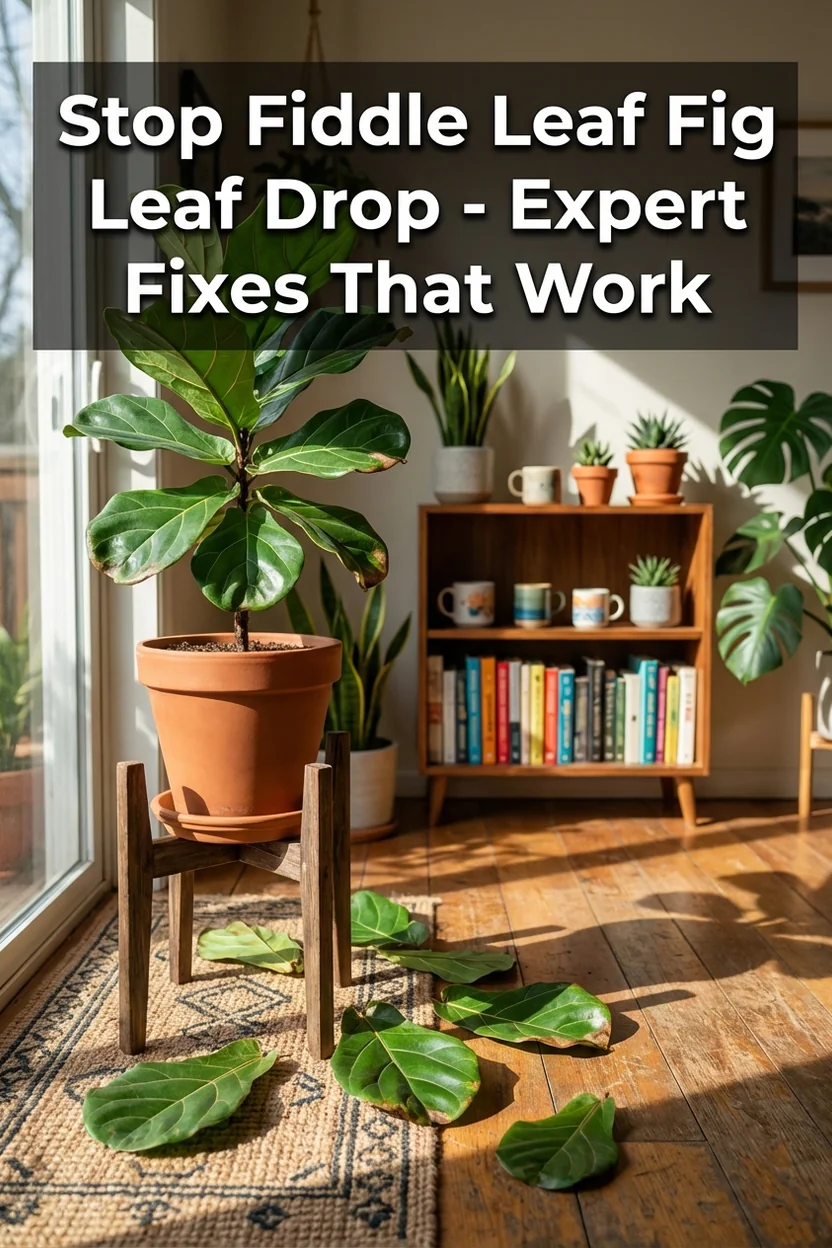
Fiddle Leaf Fig Leaves Dropping? Here's Why (+ Fixes)
Pets & Toxicity
Recorded toxicity for plants linked in this guide. An unknown status is not a safety assessment.
Toxic to pets: fiddle leaf figDetailsHide
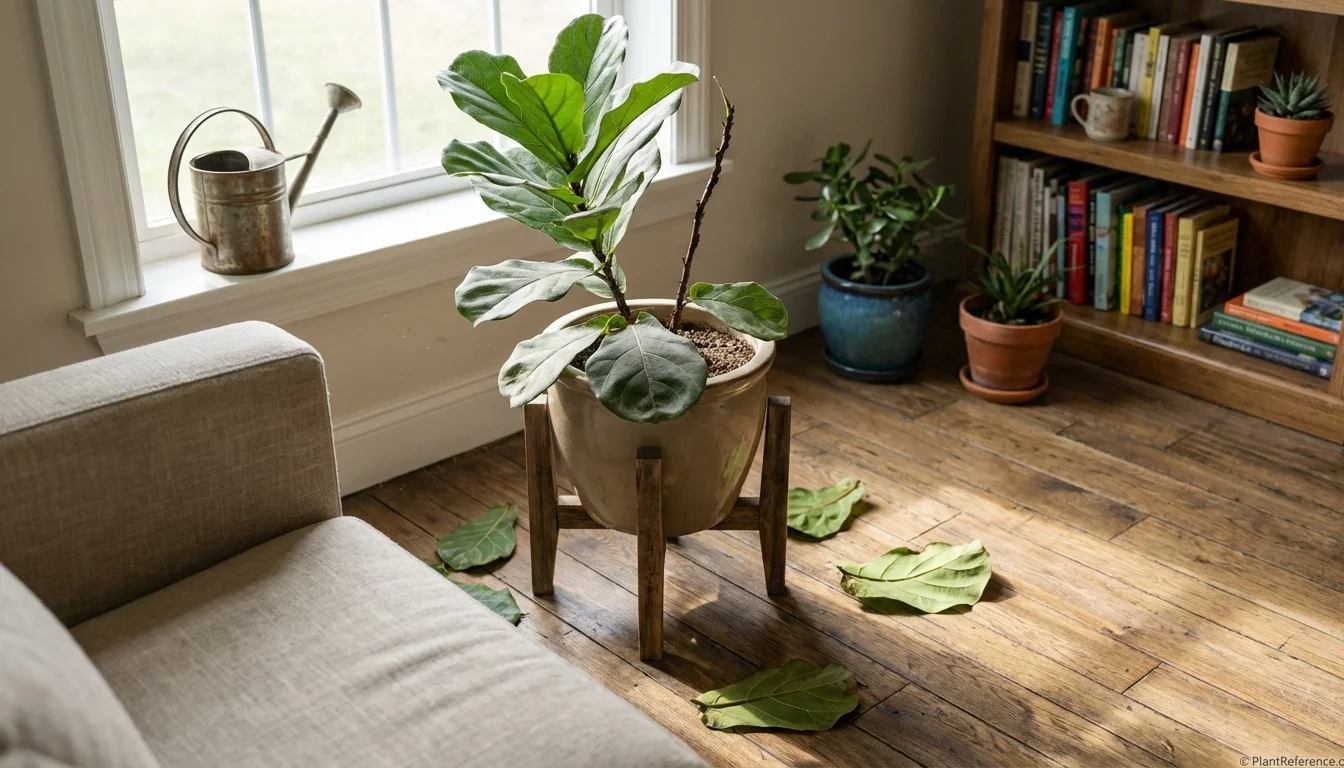
— Image © Plant Reference 2026
Let's be honest—your fiddle leaf fig 🌿Ficus lyrata (FYE-kus lye-RAY-tuh) is dropping leaves because something changed, and these plants hate change. Whether you moved it across the room, started watering differently, or your heating kicked on for winter, fiddle leaf figs respond to stress by dropping leaves fast. The good news? Once you identify what triggered the drop, you can stop it within days.
Here's what's actually happening: when conditions shift suddenly, the plant can't maintain all its leaves and prioritizes survival by shedding foliage to reduce water demand. This is a protective mechanism, not a death sentence. But you need to act now—every day you wait means more leaves on the floor.
Why Fiddle Leaf Figs Drop Leaves
Fiddle leaf figs drop leaves for one simple reason: stress. These plants evolved in stable West African rainforests where temperature, humidity, and light stay consistent year-round. When conditions change in your home, the plant panics.
The fiddle leaf fig's transpiration system—how it moves water from roots to leaves—depends on stable conditions. When something disrupts this system (cold draft, dry soil, root damage), the plant sheds leaves to reduce water loss and stay alive. It's not being dramatic; it's being strategic.
Think of it like this: if you suddenly had to run a marathon with no training, you'd conserve energy by slowing down. Your plant conserves resources by dropping leaves. The key is figuring out which stressor triggered the response.
Normal vs. Problem Leaf Drop
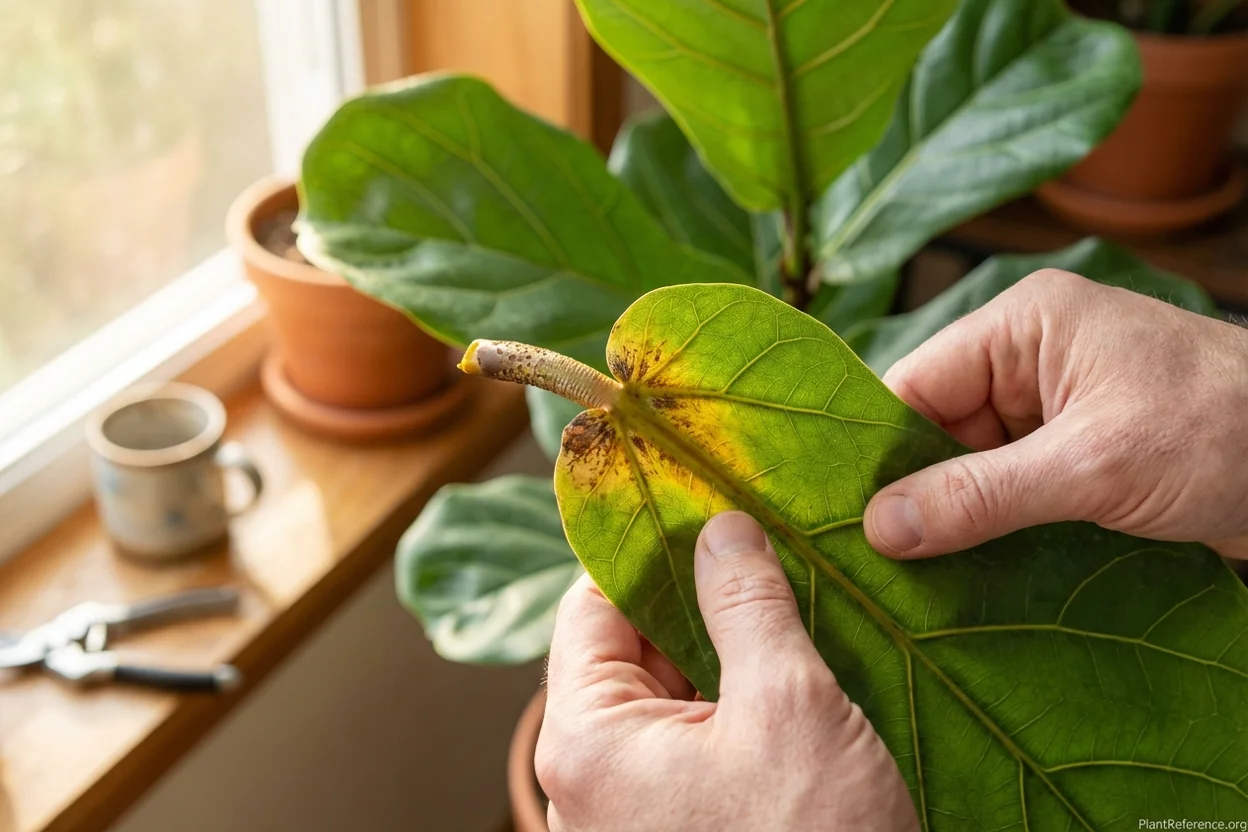
Here's the truth most articles won't tell you: some leaf drop is completely normal. Fiddle leaf figs naturally shed 1-2 of their oldest lower leaves per year as they grow taller. This is called senescence—the plant redirects resources from old leaves to new growth.
Normal leaf drop looks like this:
Only the lowest 1-2 leaves on the plant
Leaves turn yellow gradually over 2-3 weeks before falling
New growth appears at the top at the same time
Happens during spring/summer growing season
No other symptoms present (brown spots, drooping, etc.)
Problem leaf drop looks completely different:
Multiple leaves dropping within days or weeks
Leaves fall while still partially green
Drop affects leaves throughout the plant, not just bottom
Accompanied by yellowing, brown spots, or drooping
Happens suddenly after a change (moving, repotting, season change)
No new growth appearing
If you're losing more than 2 leaves per year, or leaves are dropping rapidly, you've got a problem that needs fixing now.
Cause #1: Environmental Shock
This is the number one reason fiddle leaf figs drop leaves, and it's usually something you did recently. Did you move the plant? Buy it new? Change its location? Repot it? Environmental shock happens when conditions change faster than the plant can adapt.
Common triggers:
Moving the plant to a new room or rotating it dramatically
Bringing a new plant home from the nursery (different humidity, light, temperature)
Repotting or root disturbance
Seasonal changes (heating/AC turning on, less natural light in winter)
Opening windows for the first time in spring (temperature fluctuations)
Placing near drafty doors, heating vents, or AC units
How to diagnose: Think back 1-2 weeks. Did anything change? Even moving a plant from one window to another can trigger shock. The leaf drop typically starts 5-10 days after the change.
The fix:
Stop changing things. Seriously. The worst thing you can do now is panic and move the plant again or drastically alter care. Pick a stable location and commit for at least 4-6 weeks. The plant needs time to adapt.
Choose a spot with consistent temperature (65-75°F or 18-24°C)
Avoid areas near doors, vents, or windows that open frequently
Keep humidity at 40-60% if possible
Maintain your current watering schedule unless it's clearly wrong
Don't fertilize during recovery—wait until new growth appears
Recovery timeline: Leaf drop should stop within 7-14 days if you stabilize conditions. New growth appears 4-8 weeks later. For more guidance on creating stable conditions, see Fiddle Leaf Fig Care: The Complete Guide (2025).
Cause #2: Overwatering and Root Rot
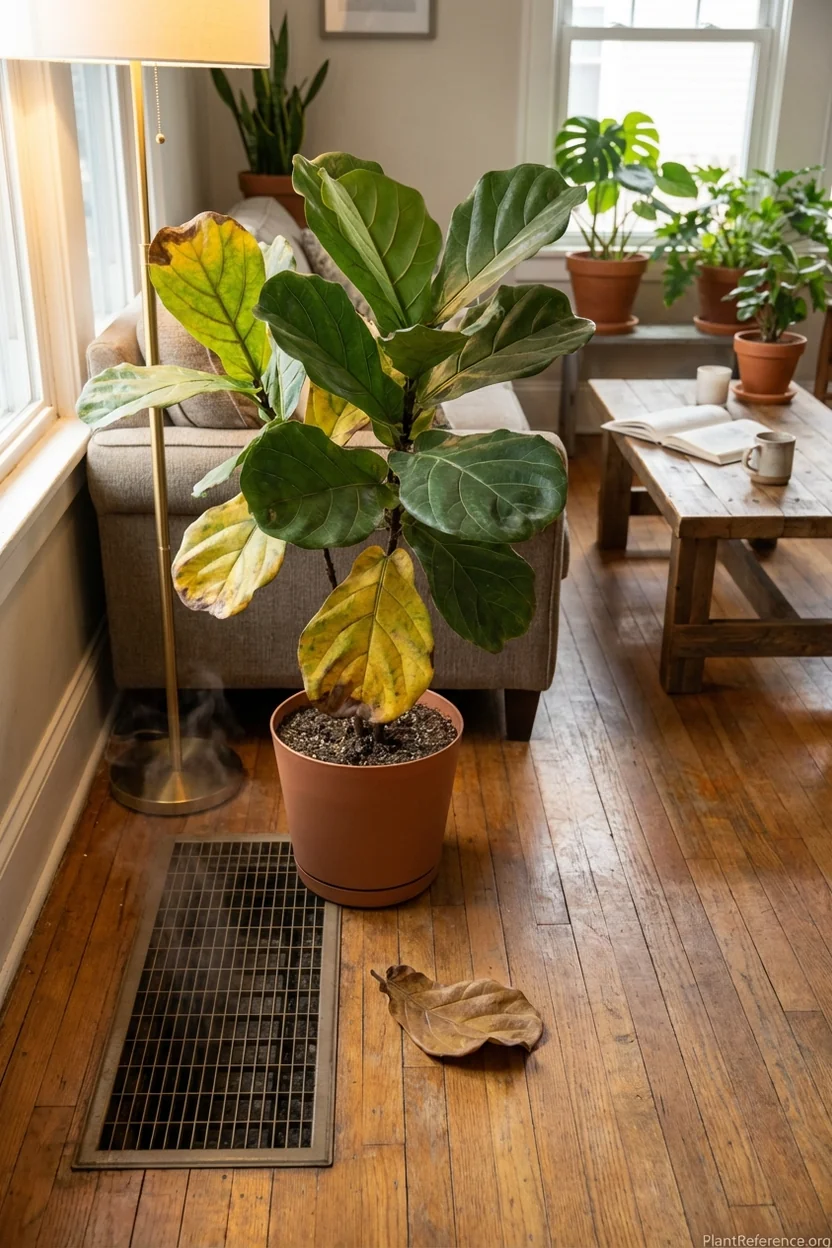
If your plant is dropping leaves AND those leaves are yellow or have brown spots, you're overwatering. This is different from environmental shock—overwatering causes root rot, which prevents the plant from absorbing water even though the soil is wet.
Symptoms of overwatering:
Leaves turn yellow before dropping
Dark brown or black spots in the center of leaves
Soil stays wet for more than 7-10 days after watering
Musty smell from soil
Leaves feel soft or droopy before falling
Multiple leaves affected at once
How to diagnose: Stick your finger 2-3 inches (5-7 cm) into the soil. If it's wet or soggy, that's your problem. Pull the plant from its pot and check the roots—healthy roots are white and firm; rotted roots are brown, black, and mushy.
The fix:
If you catch it early (roots mostly white with some brown):
Stop watering immediately
Let soil dry out until top 50-75% is dry (this might take 2-3 weeks)
Improve drainage by ensuring pot has holes and soil is fast-draining
Consider repotting in fresh, well-draining soil if roots smell bad
Resume watering only when top 2-3 inches (5-7 cm) are completely dry
If root rot is advanced (most roots brown/mushy):
Remove plant from pot immediately
Wash all soil off roots under running water
Cut away ALL brown, mushy roots with sterilized shears
Repot in completely fresh, sterile potting mix
Water sparingly—less than you think—until new growth appears
Cross your fingers and wait 6-8 weeks for recovery
For detailed root rot treatment, see Fiddle Leaf Fig Root Rot: How to Save Your Plant. For proper watering technique, check How to Water a Fiddle Leaf Fig (Never Kill Yours Again).
Cause #3: Underwatering Stress
Underwatering causes leaf drop too, but it looks different from overwatering. The plant drops leaves to reduce water demand when it can't get enough moisture from dry soil.
Symptoms of underwatering:
Leaves droop or curl before dropping
Leaf edges are brown and crispy
Soil pulls away from the sides of the pot
Soil is bone dry 4-6 inches (10-15 cm) down
Leaves feel papery and brittle
Lower leaves affected first, but drop can spread upward
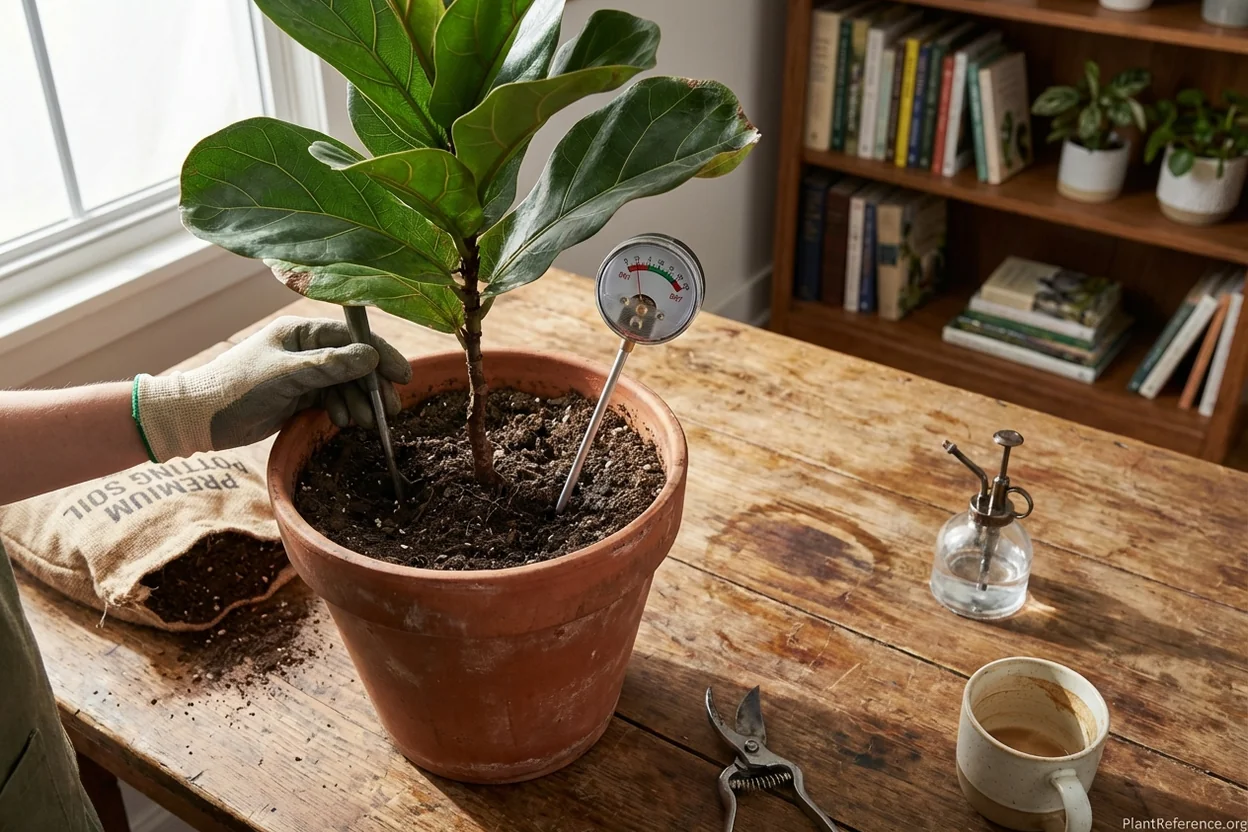
How to diagnose: Check soil moisture with your finger or a moisture meter. If it's dry more than 3 inches (7 cm) down, you're underwatering. Also check if you're watering thoroughly—if you're only wetting the top inch of soil, water isn't reaching the roots.
The fix:
Water thoroughly until water runs out the drainage holes
Empty any runoff from the saucer after 15 minutes
Water again when top 2-3 inches (5-7 cm) of soil are dry
Use a moisture meter to track soil moisture at root level
Consider moving to a slightly more humid location (bathroom, kitchen)
Establish a consistent schedule—most fiddle leaf figs need water every 7-10 days
Pro tip: Don't compensate for past underwatering by overwatering now. One thorough watering is enough. Then return to a regular schedule. For more on proper watering frequency, see How to Water a Fiddle Leaf Fig (Never Kill Yours Again).
Cause #4: Temperature Extremes
Fiddle leaf figs are tropical plants that demand stable temperatures. Exposure to cold drafts (below 60°F or 15°C) or hot blasts (above 85°F or 29°C) triggers immediate leaf drop.
Common temperature problems:
Cold drafts from opening doors/windows in winter
AC vents blowing directly on the plant
Heating vents creating hot, dry zones
Placing near single-pane windows (cold in winter, hot in summer)
Sudden temperature swings of more than 10-15°F (5-8°C) in 24 hours
How to diagnose: Use a thermometer to check the temperature where your plant sits. Check multiple times per day, especially early morning and evening when heating/cooling cycles change. If temperature varies more than 10°F (5°C) daily, that's your problem.
The fix:
Move plant away from vents, doors, and single-pane windows
Maintain consistent temperature of 65-75°F (18-24°C)
Use a space heater or fan to moderate extreme temperature zones
Close vents near the plant if possible
Add insulation to windows if cold is the issue
Avoid placing in unheated rooms during winter
Temperature stability matters more than the exact temperature. A plant kept at a steady 68°F (20°C) will thrive; a plant that swings between 60-80°F (15-27°C) daily will drop leaves constantly.
Cause #5: Pest Infestations
Pests stress fiddle leaf figs enough to cause leaf drop, especially spider mites, scale, and mealybugs. These insects feed on plant sap, weakening the plant and triggering defensive leaf shedding.
Signs of pest problems:
Fine webbing on leaf undersides or between leaves (spider mites)
Sticky residue on leaves or floor below plant (scale, aphids)
White cottony substance in leaf joints (mealybugs)
Tiny moving dots on leaves (thrips, spider mites)
Yellow stippling or speckled appearance on leaves
Leaves drop even though watering and temperature are correct
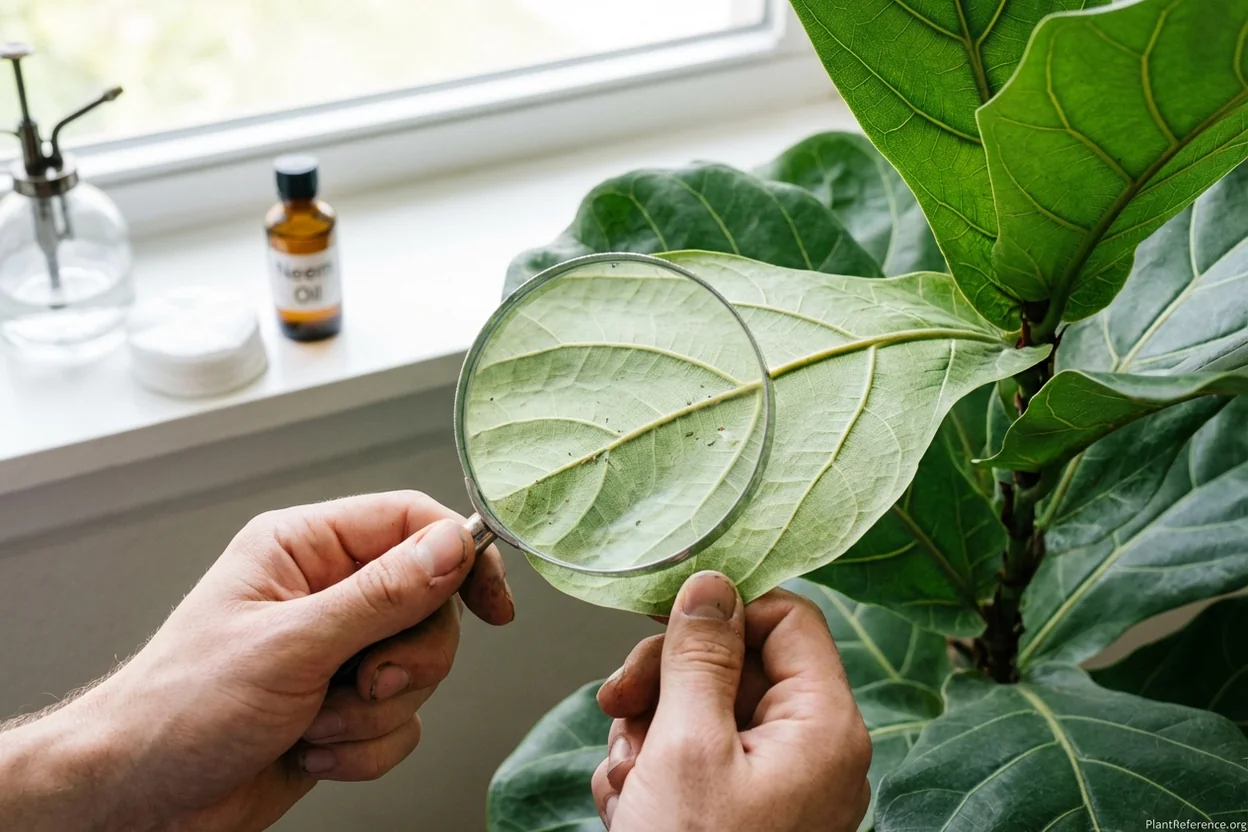
How to diagnose: Use a magnifying glass to inspect leaf undersides, stems, and soil surface. Check where leaves meet stems (petiole junction)—this is where pests hide. Look for the insects themselves or evidence like webbing, sticky residue, or white fluff.
The fix:
Isolate the plant immediately to prevent spread to other houseplants
Spray plant thoroughly with water to dislodge visible pests
Apply neem oil or insecticidal soap every 7 days for 3-4 weeks
Wipe leaves manually with rubbing alcohol on a cotton pad for scale
Remove heavily infested leaves entirely
Monitor weekly for 2 months to ensure pests don't return
For complete pest identification and treatment, see Fiddle Leaf Fig Pests: Identification & Treatment.
Cause #6: Light Changes
Sudden changes in light intensity cause stress that leads to leaf drop. This is especially common when bringing a new plant home from a greenhouse (where light is intense and consistent) to your home (where light is lower and changes throughout the day).
Common light-related triggers:
Moving from greenhouse to home (massive light reduction)
Moving from bright window to darker room
Seasonal changes (much less light in winter)
Trees leafing out in spring (shading windows that were bright in winter)
Moving plant away from a window
How to diagnose: Compare current light levels to previous location. If the plant was in very bright light and now sits in medium light, that's enough to trigger leaf drop. Also look for etiolation (leggy growth reaching toward light) which indicates insufficient light.
The fix:
Place in brightest available location (directly in front of window is ideal)
Use sheer curtains to filter intense direct sun if needed
Consider a grow light if natural light is insufficient
Acclimate gradually when moving to brighter locations (1-2 weeks)
Rotate plant 1/4 turn weekly for even light exposure
Aim for 6-8 hours of bright indirect light daily
For comprehensive light requirements, see Fiddle Leaf Fig Light Requirements: The Ultimate Guide.
Emergency Triage Protocol
When leaves are dropping fast, follow this protocol within 24 hours:
Step 1: Stop the bleeding - Stabilize conditions immediately. Don't change anything except the obvious problem. If it's near a vent, move it. If soil is soaked, stop watering. But don't repot, fertilize, prune, or move it multiple times.
Step 2: Check the basics - Soil moisture (finger test 3 inches or 7 cm deep), temperature (thermometer), light level (compare to previous location), pests (magnifying glass inspection).
Step 3: Make one change - Fix the most obvious problem only. Don't correct multiple issues at once or you won't know what worked. Give it 7-14 days to respond.
Step 4: Monitor daily - Check for new leaf drop, new growth, or other symptoms. Take photos to track changes. Keep notes on what you did and when.
Step 5: Be patient - Leaf drop stops 7-14 days after you fix the cause. New growth appears 4-8 weeks later. If you're not seeing improvement after 3 weeks, reassess.
Prevention Strategy
Once you've stopped the current leaf drop, prevent it from happening again:
Establish consistent care:
Water on a schedule based on soil moisture, not calendar days
Check soil moisture before every watering (top 2-3 inches or 5-7 cm dry)
Maintain temperature of 65-75°F (18-24°C) year-round
Provide 6-8 hours bright indirect light daily
Keep humidity at 40-60% (use humidifier if needed)
Avoid changes:
Don't move the plant unless absolutely necessary
If you must move it, acclimate gradually over 1-2 weeks
Make seasonal adjustments slowly (winter watering reduction over 3-4 weeks)
Rotate plant only 1/4 turn weekly for even growth—no dramatic repositioning
Monitor proactively:
Inspect for pests weekly (check leaf undersides with magnifying glass)
Track watering dates and soil moisture levels
Watch for early symptoms (slight yellowing, drooping, brown edges)
Address small problems immediately before they cause leaf drop
For year-round care adjustments, see Fiddle Leaf Fig Winter Care (Keep Yours Thriving).
Frequently Asked Questions
Reading about plants and recognising them are different skills. These three build the second.
- Daily PlantIdentify the day’s mystery plant from a close-up photograph.
- Keyed OutWork a dichotomous key, lead by lead, to name a hidden specimen.
- Name That PlantName a specimen from botanical clues dealt hardest first.
Free to play, no account needed
Tagged with
Sarah earned her doctorate in plant biology and spent time working in botanical garden education before transitioning to freelance writing and consulting. Now based in Portland, Oregon, she teaches plant identification workshops at local community centers and maintains a modest collection of over 60 houseplants in her small apartment. Sarah specializes in helping beginners understand plant science without the jargon—her approach focuses on practical observation over theory. She's killed her fair share of fiddle leaf figs and finally cracked the code on keeping them alive.