Succulents
Yucca, Genus, rostrata, Species,
- Genus & species
Beaked yucca
Chihuahuan Desert, Texas and northern Mexico
Overview
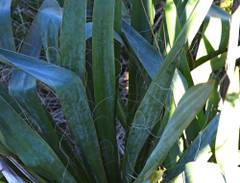
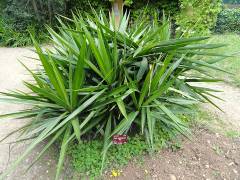
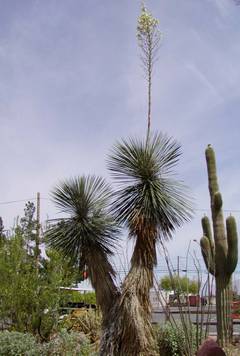
Yucca rostrata is an evergreen, tree-like yucca that forms a single trunk, or occasionally a few branched trunks, topped with a spherical rosette of narrow leaves. Trunks reach 8–15 feet (2.4–4.6 m) at maturity and 4–8 inches (10–20 cm) in diameter, and hold a skirt of dead tan leaves beneath the crown until they weather away. Leaves are 12–24 inches (30–60 cm) long and 0.3–0.5 inch (8–13 mm) wide, blue-green to grey-green, stiff, and finely serrated with pale yellow margins ending in a sharp spine. A mature rosette contains several hundred leaves and spans 3–5 feet (0.9–1.5 m). Overall spread is 4–8 feet (1.2–2.4 m). Growth is slow, adding roughly 2–4 inches (5–10 cm) of trunk per year. Plants tolerate winter lows near -15°F (-26°C) in dry soil but rot in poorly drained soil and in prolonged winter wet, which limits cultivation in humid climates.
Native Range
Native to the northern Chihuahuan Desert in the Big Bend region of Texas and the Mexican states of Coahuila, Nuevo León, and Chihuahua, growing on rocky limestone slopes and gravelly flats.Suggested Uses
Used as a vertical accent in gravel gardens, xeriscapes, and desert-style plantings. Grown in large containers in zones 5–7 where winter moisture can be controlled. Spaced 5–8 feet (1.5–2.4 m) from paths because of the sharp leaf tips.How to Identify
Appearance
Size & Dimensions
Height8' - 15'
Width/Spread4' - 8'
Colors
Bloom Information
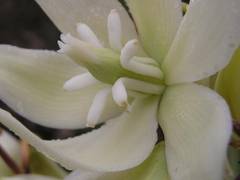
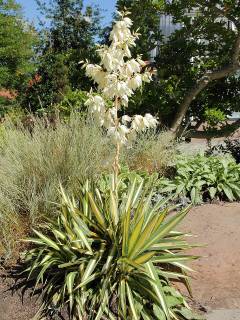
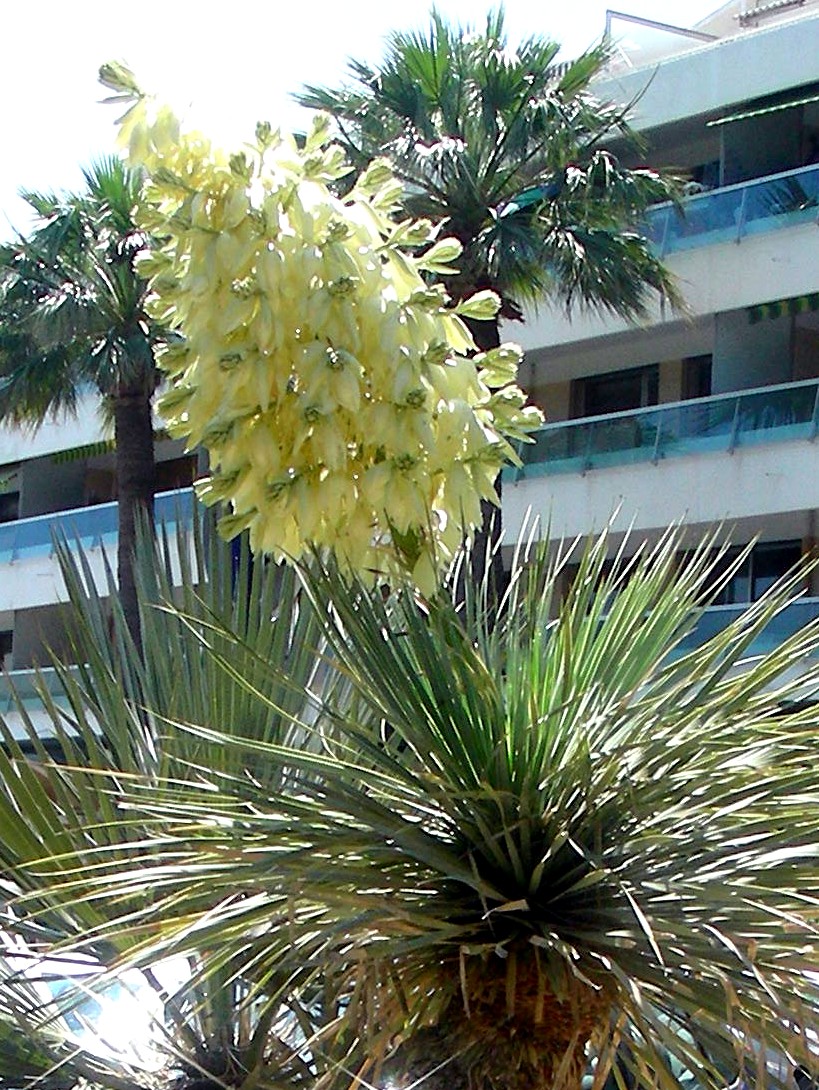
Flowers open from May to July on a panicle 2–3 feet (60–90 cm) tall held at or just above the leaf crown. Individual flowers are white, bell-shaped, 1–2 inches (2.5–5 cm) long, and pendent. Plants generally begin flowering after 8–10 years, and flowering is sparse in cool summers.
Detailed Descriptions
Foliage Description
Blue-green to grey-green with pale yellow marginsGrowing Conditions
Sun Requirements
Requires 8-12 hours of direct sunlight daily
• Full Sun: 6+ hours of direct sunlight
• Partial Shade: 3-6 hours of direct sunlight
• Full Shade: Less than 3 hours of direct sunlight
Care & Maintenance
Care Guide
Grows in full sun (8–12 hours) and sharply drained sandy, gravelly, or rocky soil with a pH of 6.5–8.0. Established plants tolerate long dry periods and are watered every 3–4 weeks in summer and rarely in winter. Hardy in USDA zones 5–10 where winter soils stay dry; cold combined with wet soil is the main cause of loss. Fertilizer is not needed, and rich soil produces soft growth. Container plants need drainage holes and a gritty mix with 50–70% mineral content. Specimens 6 feet (1.8 m) tall are often 15 or more years old.Pruning
Pruning is limited to cutting spent flower stalks at the base after flowering and removing damaged or dead leaves close to the trunk. The dead leaf skirt, 2–4 feet (0.6–1.2 m) deep, can be trimmed to expose the trunk, though bare trunks are more prone to sunscald in hot climates. Leaf spines can puncture skin, and cuts are made with long-handled loppers or a pruning saw.Pruning Schedule
Prune: July–August
summer
Container Growing
Suitable for container growing
Minimum container size: 15 gallons