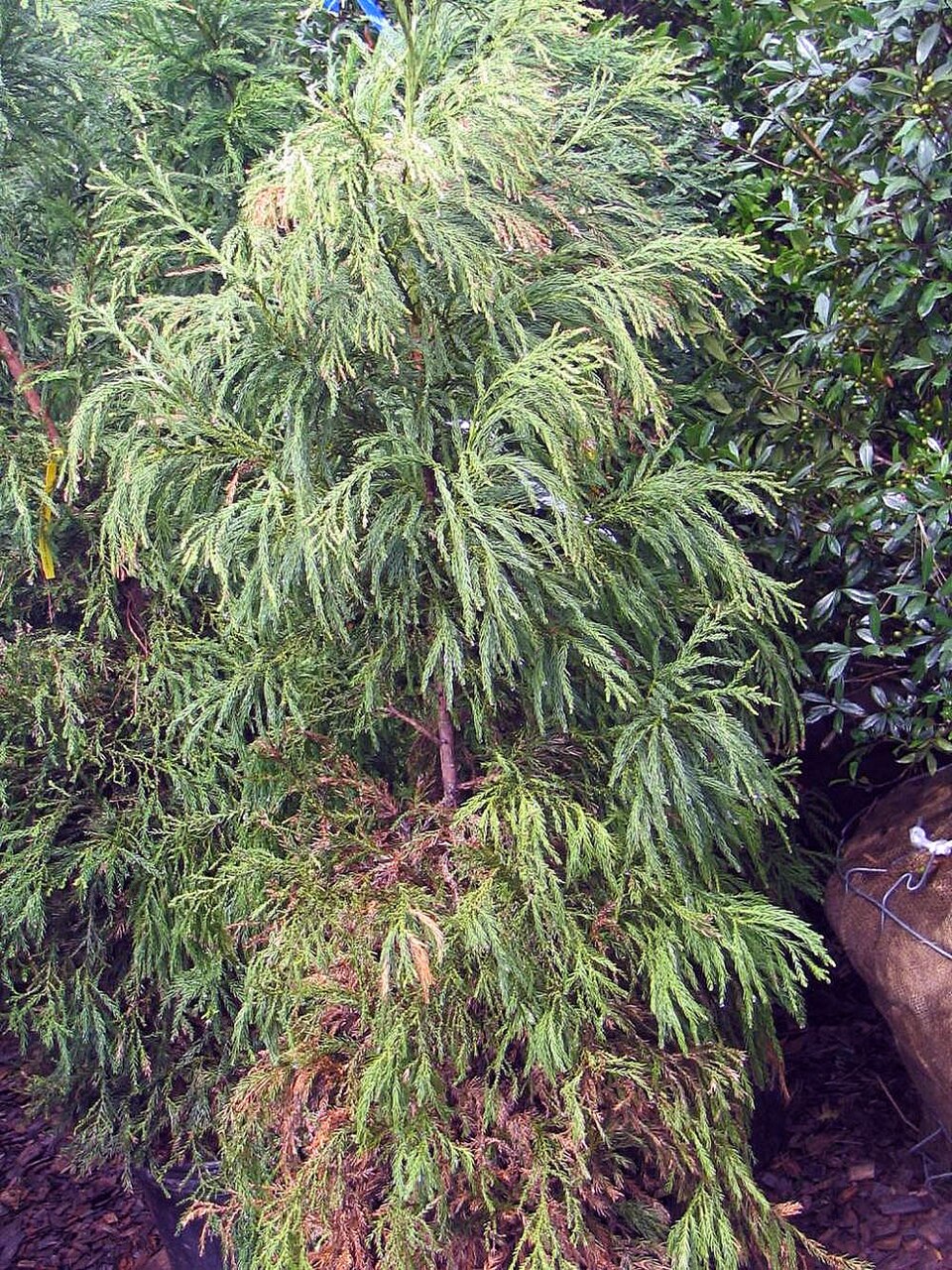
Cryptomeria, Genus, japonica, Species, 'Yoshino', Cultivar,
- Genus & species
- Cultivar
Yoshino Japanese cedar
Overview
'Yoshino' is a vigorous narrow pyramidal cultivar of Cryptomeria japonica reaching 30-40 feet (9-12 m) tall and 15-20 feet (4.5-6 m) wide at 25-30 years, with growth rates of 18-30 inches (45-75 cm) per year on young plants. Foliage consists of awl-shaped needles 0.3-0.6 inch (8-15 mm) long, spirally arranged on whip-like branchlets. Color is bright blue-green from spring through autumn, transitioning to bronze-green in winter cold below 25°F (-4°C); the bronze fades back to green as temperatures warm in spring. Branches densely arranged, holding lower limbs longer than seed-grown C. japonica. Bark reddish-brown, fibrous, peeling in vertical strips on mature trunks. Pollen cones small, yellowish-brown, in clusters at branch tips in February-March, releasing high quantities of allergenic pollen typical of the species; female cones globose, 0.5-1 inch (12-25 mm) wide, opening to release winged seeds in autumn. Susceptible to needle blight (Pestalotiopsis or Cercosporidium) on stressed plants and to ice damage on the columnar form. Generally pest-tolerant.
Native Range
The species Cryptomeria japonica is native to Japan and parts of China, where it grows in mountain forests on humid temperate slopes. Naturalized populations exist in the Azores. The cultivar 'Yoshino' was selected for vigorous columnar form and improved winter color, and is widely planted across the southeastern United States.Suggested Uses
Used as a specimen, in screens, and in mass plantings, with mature spread of 15-20 feet (4.5-6 m). Spaced 15-20 feet (4.5-6 m) apart in screens. Tolerates the humid summers of the southeastern United States and is planted as a substitute for Picea and Abies species that struggle in that region.How to Identify
Appearance
Size & Dimensions
Height30' - 40'
Width/Spread15' - 20'
Colors
Foliage Colors
Bloom Information
Cryptomerias produce wind-pollinated cones rather than flowers. Male pollen cones develop in clusters at branch tips in late winter, releasing high quantities of yellow pollen in February-March; pollen is a major hay-fever allergen in Japan. Female cones develop in spring, mature within one growing season, and reach 0.5-1 inch (12-25 mm) wide before opening to release winged seeds in autumn.
Detailed Descriptions
Foliage Description
blue-green in summer, bronze-green in winterGrowing Conditions
Sun Requirements
Requires 4-12 hours of direct sunlight daily
• Full Sun: 6+ hours of direct sunlight
• Partial Shade: 3-6 hours of direct sunlight
• Full Shade: Less than 3 hours of direct sunlight
Care & Maintenance
Care Guide
Establish in moist, well-drained acidic soil (pH 4.5-6.5) with full sun to part sun exposure of at least 4 hours direct sun daily. Water deeply once per week during the first two growing seasons; established plants need supplemental water during summer drought to avoid foliage browning. Tolerates humid summer heat better than most northern conifers and is widely planted in the southeastern United States in zones 6-9. Bronze winter color is expected and reverses with spring warming. Bagworms (Thyridopteryx ephemeraeformis) feed on foliage in some regions. Pollen release in February-March is heavy and can aggravate allergies in sensitive individuals.Pruning
Cryptomerias regenerate poorly from old wood; pruning is limited to removal of dead, broken, or diseased branches at any time of year. The narrow pyramidal form develops without training. Lower limbs may be removed for clearance on mature trees, with cuts made flush to the branch collar. Light tip pruning of new growth maintains compactness on young plants but is not required for typical landscape use.Pruning Schedule
Prune: June–July
summer
Toxicity
Non-toxicRelated Cryptomeria species
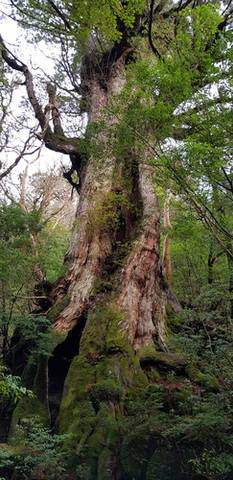 Japanese cedarCryptomeria japonica
 Japanese crested cedarCryptomeria japonica 'Cristata'
 Plume cryptomeriaCryptomeria japonica 'Elegans'
 Dwarf Japanese cedarCryptomeria japonica 'Pygmaea'
 Black dragon Japanese cedarCryptomeria japonica 'Black Dragon'
 Globe Japanese cedarCryptomeria japonica 'Globosa Nana'