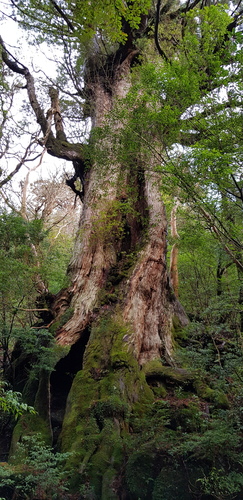
Cryptomeria, Genus, japonica, Species,
- Genus & species
Japanese cedar
Japan (throughout Honshu, Shikoku, Kyushu) and central-southern China; mountain forests at 500-6,000 feet (150-1,800 m)
Overview
Cryptomeria japonica is Japanese cedar (sugi), an upright conical evergreen conifer growing 50-80 feet (15-24 m) tall and 20-30 feet (6-9 m) wide. Mid to dark green spirally arranged awl-shaped foliage 0.25-0.5 inch (6-12 mm). Reddish-brown fibrous exfoliating bark. Globular brown seed cones 0.5-1 inch (1.3-2.5 cm). In Cupressaceae. Cryptomeria = hidden parts. The national tree of Japan. Monotypic genus. Ancient specimens exceed 150 feet (45 m) and 2,000 years old. The massive pollen production makes this the most significant tree pollen allergen in Japan. The large mature size (50-80 feet / 15-24 m) is the primary landscape limitation. Winter bronzing in cold sites (zones 6-7) — cosmetic. Reddish-brown exfoliating bark is a key ornamental feature. Not drought-tolerant. Not alkaline-tolerant. Non-toxic. Deer-resistant. Zones 6-9. Full sun to part shade. Growth rate is moderate to fast.
Native Range
Native to Japan (throughout Honshu, Shikoku, Kyushu) and central-southern China. Found in mountain forests at 500-6,000 feet (150-1,800 m).Suggested Uses
Grown as a large specimen conifer, screen, or windbreak on large sites, spaced 20-30 feet (6-9 m). Exfoliating bark. Monotypic genus. Compact cultivars available. Non-toxic. Zones 6-9.How to Identify
Appearance
Size & Dimensions
Height50' - 80'
Width/Spread20' - 30'
Bloom Information
Late winter to early spring (February-March). Massive pollen release from terminal male strobili (the most significant tree pollen allergen in Japan). Globular brown seed cones 0.5-1 inch (1.3-2.5 cm). Wind-pollinated. 4 weeks.
Detailed Descriptions
Foliage Description
Mid to dark green, awl-shaped (needle-like but spirally arranged and pressed against the branchlet), 0.25-0.5 inch (6-12 mm); bronze to brown-green in cold winters (zones 6-7) — recovers green in spring; reddish-brown exfoliating bark in fibrous strips on mature trunksGrowing Conditions
Sun Requirements
Requires 4-8 hours of direct sunlight daily
• Full Sun: 6+ hours of direct sunlight
• Partial Shade: 3-6 hours of direct sunlight
• Full Shade: Less than 3 hours of direct sunlight
Care & Maintenance
Care Guide
Full sun to part shade (4-8 hours). Well-drained acidic to neutral soil pH 5.0-7.0. Not drought-tolerant. Not alkaline-tolerant. Large mature size (50-80 feet / 15-24 m) — allow ample space. Winter bronzing in cold sites is cosmetic. Minimal pruning. Non-toxic. Deer-resistant. Zones 6-9.Pruning
Prune in late spring (May) if needed to shape. The natural conical form requires minimal pruning. Does not regenerate well from old bare wood. Compact cultivars ('Globosa Nana', 'Yoshino') need less space.Pruning Schedule
Prune: May
late spring
Toxicity
Non-toxicRelated Cryptomeria species
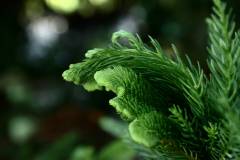 Japanese crested cedarCryptomeria japonica 'Cristata'
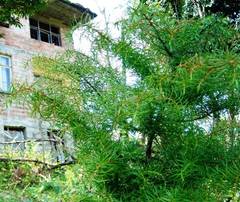 Plume cryptomeriaCryptomeria japonica 'Elegans'
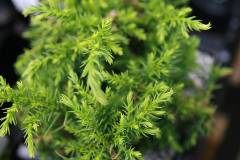 Dwarf Japanese cedarCryptomeria japonica 'Pygmaea'
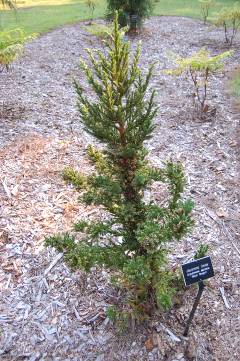 Black dragon Japanese cedarCryptomeria japonica 'Black Dragon'
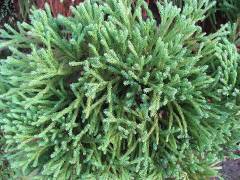 Globe Japanese cedarCryptomeria japonica 'Globosa Nana'
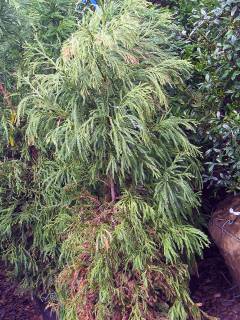 Yoshino Japanese cedarCryptomeria japonica 'Yoshino'