Cryptomeria, Genus, japonica, Species, 'Globosa Nana', Cultivar,
- Genus & species
- Cultivar
globe Japanese cedar
Species native to Japan and southeastern China; cultivar selected in cultivation
Overview
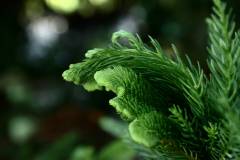
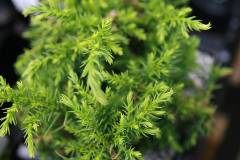
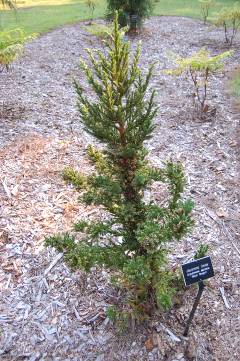
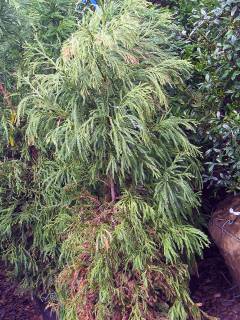
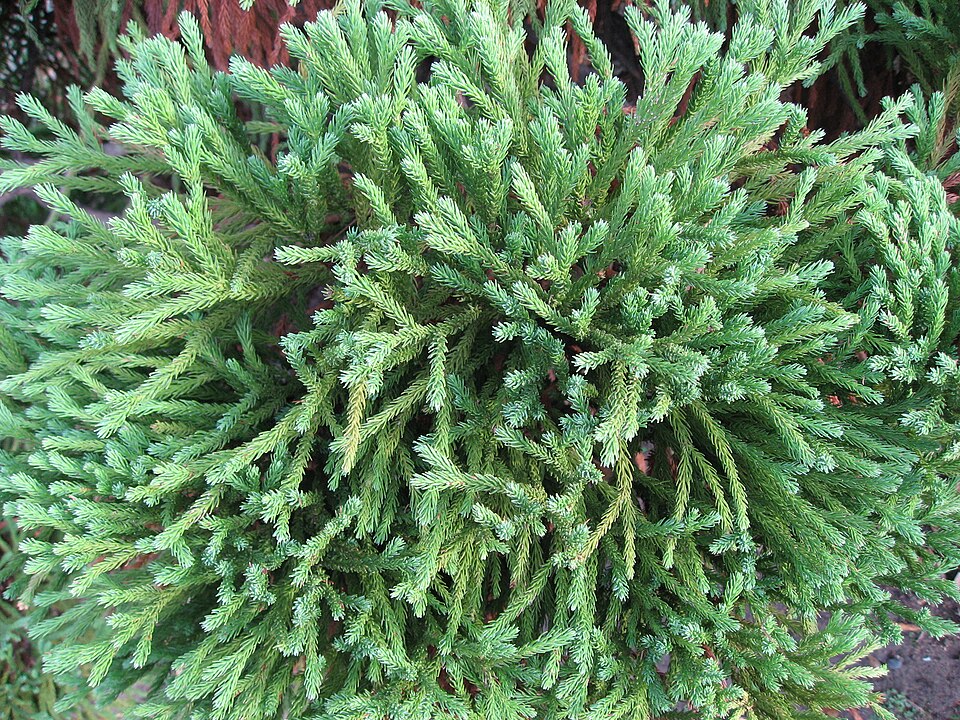
Cryptomeria japonica 'Globosa Nana' is a compact, dome-shaped to irregularly globose, evergreen conifer reaching 3–4 feet (0.9–1.2 m) tall with a spread of 3–4 feet (0.9–1.2 m) at 10 years, eventually reaching 6–8 feet (1.8–2.4 m) over 30–40 years. The cultivar is the dwarf Cryptomeria stocked by most general-purpose nurseries in the UK and US—the commercial default among compact Japanese cedars. The foliage carries a mix of juvenile and adult forms—short, slightly curved, awl-shaped needles—bright green in summer and taking on a bronze to reddish-brown tint in winter. The dense, rounded form develops without pruning intervention. Individual spray tips curve slightly inward, producing a textured, tufted surface close up. Growth rate is very slow at 2–4 inches (5–10 cm) per year. The bark is reddish-brown and fibrous, mostly hidden by foliage until the plant is mature. The compact size and dense form place this in foundation and rock garden positions rather than as a specimen tree.
Native Range
The species Cryptomeria japonica is native to Japan and southeastern China. 'Globosa Nana' was selected in cultivation for dwarf, globose habit and is documented in European and North American nurseries since the early 20th century.Suggested Uses
Planted in foundation plantings, rock gardens, and mixed borders at 3–4 foot (0.9–1.2 m) spacing. The compact, dome-shaped form carries evergreen structure at a scale that matches small gardens and narrow foundation beds where full-size conifers would outgrow the space. Grows in containers of at least 5 gallons (19 L). Paired with low-growing perennials, heathers (Calluna vulgaris), and groundcovers, the dwarf conifer anchors compositions through winter when deciduous companions are dormant. The winter bronzing carries seasonal color change on a plant that otherwise looks the same year-round. Hedging or screening roles are a poor fit given the very slow growth rate.How to Identify
Appearance
Size & Dimensions
Height3' - 4'
Width/Spread3' - 4'
Bloom Information
Male strobili release pollen in February–March. Female cones are round, 0.75 inch (2 cm), sparse on dwarf cultivars. Cones are inconspicuous and often absent.
Detailed Descriptions
Foliage Description
Bright green in summer, bronze to reddish-brown in winter; awl-shapedGrowing Conditions
Sun Requirements
Requires 4-10 hours of direct sunlight daily
• Full Sun: 6+ hours of direct sunlight
• Partial Shade: 3-6 hours of direct sunlight
• Full Shade: Less than 3 hours of direct sunlight
Care & Maintenance
Care Guide
Plant in full sun to partial shade in moist, well-drained, acidic to neutral soil (pH 5.0–7.0). Full sun produces the densest form; deep shade causes the plant to open up. Drying winter winds cause foliage desiccation, so sheltered sites on the lee side of buildings reduce winter browning on exposed portions of the crown. The very slow growth supports the compact form for 20–25 years without pruning. Consistent moisture during establishment. Spider mites can develop in hot, dry conditions and respond to stronger irrigation and foliar hosing. No other serious pest or disease problems.Pruning
Minimal to no pruning required. The globose form develops naturally on its own. Dead or damaged branches are removed. Shearing destroys the tufted texture that is the cultivar's main character and is avoided.Container Growing
Suitable for container growing
Minimum container size: 5 gallons