Thymus, Genus, serpyllum, Species, 'Albus', Cultivar,
- Genus & species
- Cultivar
white creeping thyme
Overview
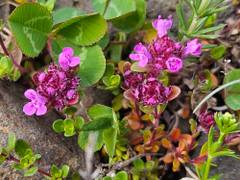
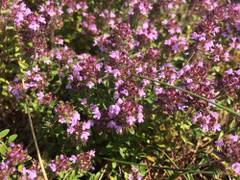
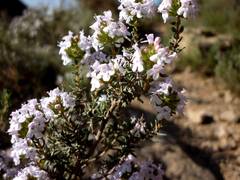
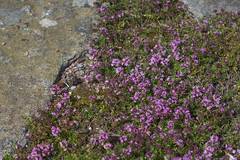
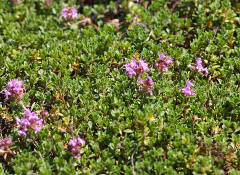
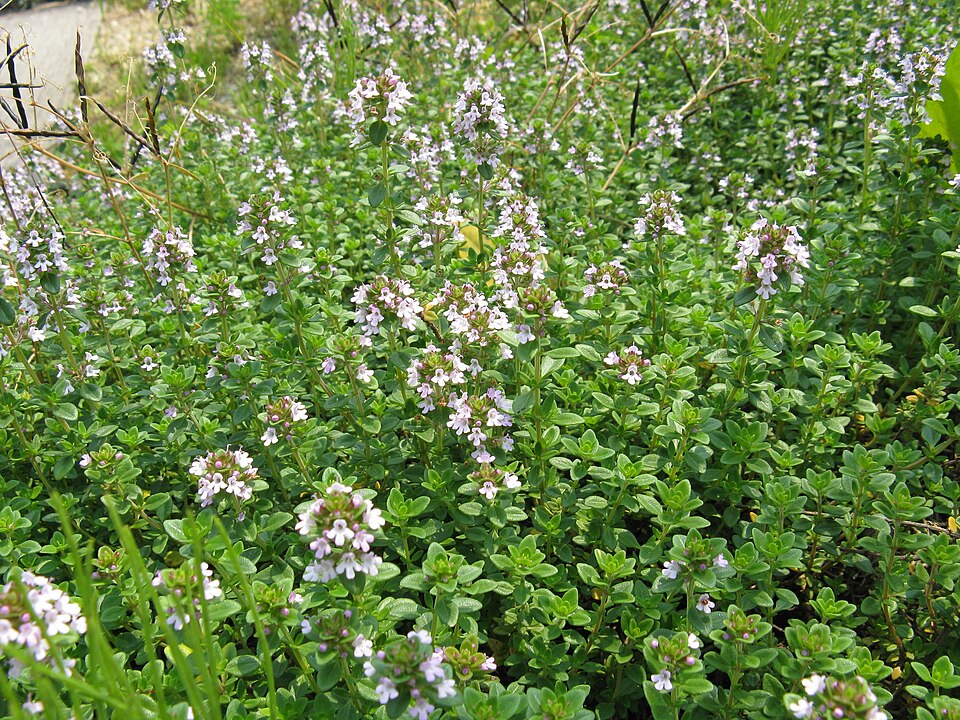
Thymus serpyllum 'Albus' is a mat-forming evergreen subshrub in the Lamiaceae family, growing 2–4 inches (5–10 cm) tall and spreading 12–18 inches (30–45 cm) wide at maturity. Stems are wiry, woody at the base, and root where they touch soil, producing a dense mat of small dark-green leaves. Leaves are oval to elliptic, 4–7 mm (0.15–0.28 inch) long, opposite, and aromatic when crushed, releasing a thyme scent characteristic of the species. The cultivar 'Albus' differs from the species in flower color: dense terminal whorls of pure white tubular flowers 4–6 mm (0.15–0.25 inch) long appear in June and July, where the species type produces pink to purple flowers. Bees and other small pollinators visit the open flowers. After bloom, four small nutlets develop in each calyx. Foliage holds through winter in zones 4–8 and may take on bronze tones in cold conditions before regreening in spring. The plant tolerates light foot traffic but does not withstand regular walking; in heavy clay or poorly drained soil, the basal stems can rot during wet winters. Established mats can become woody and bare in the center after 4–6 seasons and benefit from division or replanting at that point.
Native Range
Thymus serpyllum is native to Europe, ranging from Iceland and the British Isles east to Russia and south to the Mediterranean basin, growing in dry sandy heaths, calcareous grasslands, and rocky outcrops. The cultivar 'Albus' is a horticultural selection of garden origin and does not occur in the wild.Suggested Uses
Used as a groundcover between flagstones, in rock gardens, on dry slopes, and as filler in xeric herb borders. Tolerates light foot traffic but breaks down under repeated walking, so placement is along path edges rather than along the path itself. Spaced 8–12 inches (20–30 cm) on center, three to four plants form 1 square foot of cover within two seasons.How to Identify
Appearance
Size & Dimensions
Height2" - 4"
Width/Spread1' - 1'6"
Colors
Bloom Information
Flowers open from early June through late July in zones 4–8, with peak bloom lasting 3–4 weeks in mid- to late June. Each terminal whorl carries 6–12 tubular white flowers 4–6 mm (0.15–0.25 inch) long; whole mats can appear sheeted in white during peak. Bees, especially honey bees and small native bees, visit during warm midday hours. Bloom shortens to 2 weeks under heat stress above 90°F (32°C) or in dry rooty soils.
Detailed Descriptions
Foliage Description
dark greenGrowing Conditions
Sun Requirements
Requires 6-12 hours of direct sunlight daily
• Full Sun: 6+ hours of direct sunlight
• Partial Shade: 3-6 hours of direct sunlight
• Full Shade: Less than 3 hours of direct sunlight
Care & Maintenance
Care Guide
Lean, well-drained soil with a pH of 6.0–8.0 suits this species; sandy loam, gravelly soil, or soil amended with crushed grit produces firm compact growth. Full sun of 6 or more hours direct light is required, and in less than 4 hours of sun the mat thins and becomes leggy. Establishment watering covers the first 6–8 weeks, after which mature plants need only occasional irrigation during droughts of 3 or more weeks. Supplemental fertilizer reduces flowering and produces lax growth, so the species is grown without amendment in lean garden soils. Winter wet is the main cause of failure — basal stems rot in waterlogged ground, and slopes or raised beds reduce this risk in zones 5 and colder. After 4–6 years the center of the mat often dies back; lifting, dividing rooted edge sections, and replanting in refreshed soil renews the planting.Pruning
Shearing the mat to 1 inch (2.5 cm) immediately after bloom in late July or early August removes spent flower heads and stimulates compact regrowth. A second light shear in early spring removes winter-damaged tips. Cutting into bare woody stems with no foliage produces uneven regrowth, since Thymus serpyllum recovers poorly from old wood.Pruning Schedule
Prune: July–August
summer
Container Growing
Suitable for container growing
Minimum container size: 1 gallons