Thymus, Genus, serpyllum, Species, 'Elfin', Cultivar,
- Genus & species
- Cultivar
elfin creeping thyme
Cultivar selected from European species
Overview
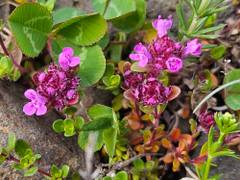
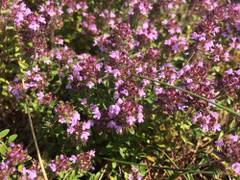
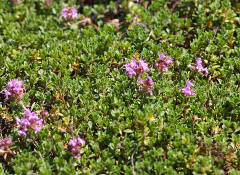
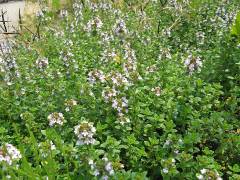
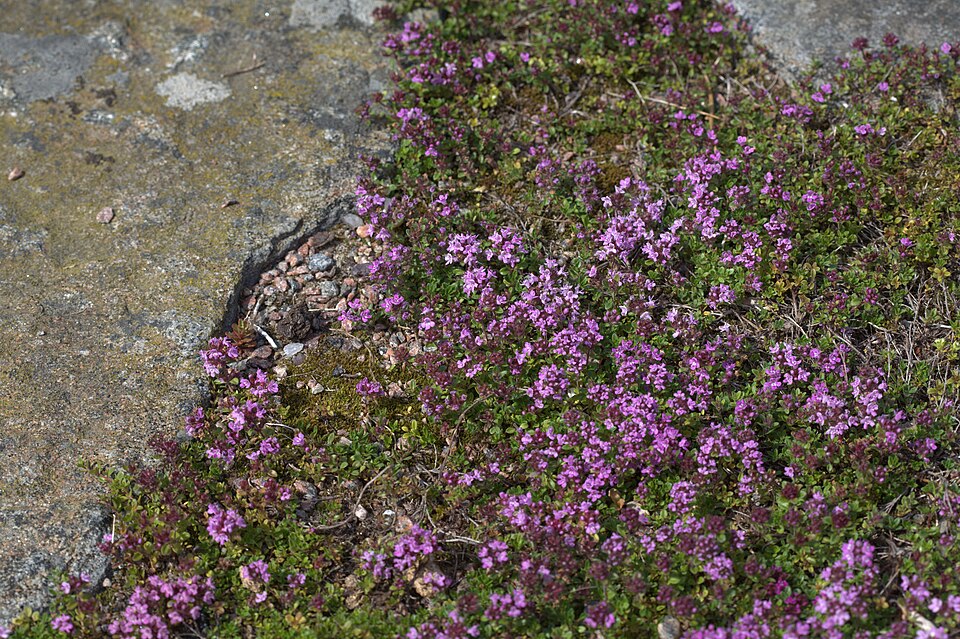
Thymus serpyllum 'Elfin' is a dwarf evergreen subshrub reaching 1-2 inches (2.5-5 cm) tall and 6-12 inches (15-30 cm) wide, forming a tight cushion of thread-thin wiry stems and tiny leaves. Compared to the species type, which reaches 2-4 inches (5-10 cm) tall and spreads 12-18 inches (30-45 cm) wide, 'Elfin' grows about half as tall and spreads more slowly. Leaves are oval to elliptic, 0.1-0.2 inch (2.5-5 mm) long, dark green and slightly glossy, densely arranged along the stems. Tubular pale pink to lavender-pink flowers about 0.1 inch (2.5 mm) across appear in dense clusters at the stem tips from June through July, attracting honeybees and small native pollinators. Each flowering cluster lasts 3-4 weeks; bloom on a single plant extends 4-6 weeks. Foliage stays evergreen in mild climates (zones 5-9), bronzing in cold winters but rebounding to green with spring growth. Aromatic throughout, with the typical thyme essential-oil scent of thymol and carvacrol released when foliage is bruised. Lifespan 4-7 years; mats may need replanting as central zones thin out.
Native Range
The species Thymus serpyllum is native to Europe (from Iceland and Britain east to the Caucasus) and naturalized across temperate North America. The cultivar 'Elfin' was selected from cultivated stock and is propagated vegetatively to maintain its compact form.Suggested Uses
Used between flagstones, in rock gardens, on green roofs, and as a low edging in herb borders. Spaced 8-12 inches (20-30 cm) apart for solid coverage in 2 years. Tolerance for foot traffic and lean soil suits the cultivar to paver gardens; not suited to areas with heavy daily foot traffic or summer-irrigated garden beds.How to Identify
Appearance
Size & Dimensions
Height1" - 2"
Width/Spread6" - 1'
Bloom Information
Flowers from June through July in zones 5-9, with peak bloom in mid-June to early July. Cool, wet springs delay bloom by 1-2 weeks; hot dry summers shorten the flowering period to 3-4 weeks. Each flower cluster lasts 3-4 weeks; total bloom on a single plant extends 4-6 weeks.
Detailed Descriptions
Flower Description
pale pink to lavender-pinkFoliage Description
dark greenGrowing Conditions
Sun Requirements
Requires 6-12 hours of direct sunlight daily
• Full Sun: 6+ hours of direct sunlight
• Partial Shade: 3-6 hours of direct sunlight
• Full Shade: Less than 3 hours of direct sunlight
Care & Maintenance
Care Guide
Plant container-grown stock in spring after frost has passed in well-drained loamy or rocky soils with full sun. Water weekly during the first growing season; established plants tolerate extended summer drought of 4-6 weeks without irrigation. Heavy clay or persistently wet soils promote crown rot, the primary cause of plant loss in unsuited sites. The cultivar tolerates light foot traffic between pavers but does not survive heavy daily traffic. Tolerates a soil pH range from 6.0 to 8.0 and grows in lean as well as moderately fertile soils. Centers of older mats may thin out after 4-5 years; replant from rooted divisions or cuttings to refresh thinning areas.Pruning
Shear back lightly after flowering in late summer to remove spent flower clusters and encourage compact regrowth. The cultivar regenerates poorly from old stem tissue; pruning into bare wood produces dieback. Cut out dead patches in spring to allow the surrounding live mat to fill in.Pruning Schedule
Prune: August
summer
Container Growing
Suitable for container growing
Minimum container size: 1 gallons