Thymus, Genus, ×, Hybrid, citriodorus, Species,
- Genus & species
- Hybrid
lemon thyme
Garden hybrid; parents native to Europe and the Mediterranean
Overview
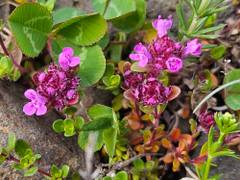
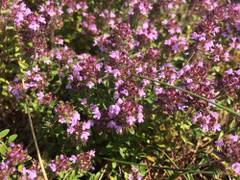
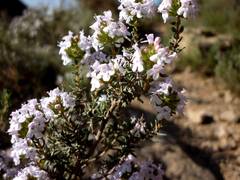
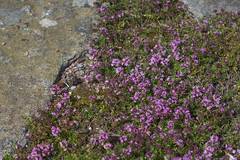
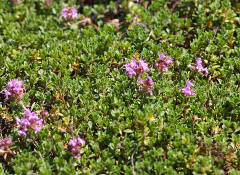
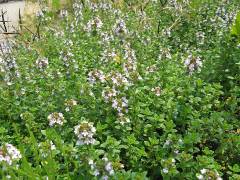
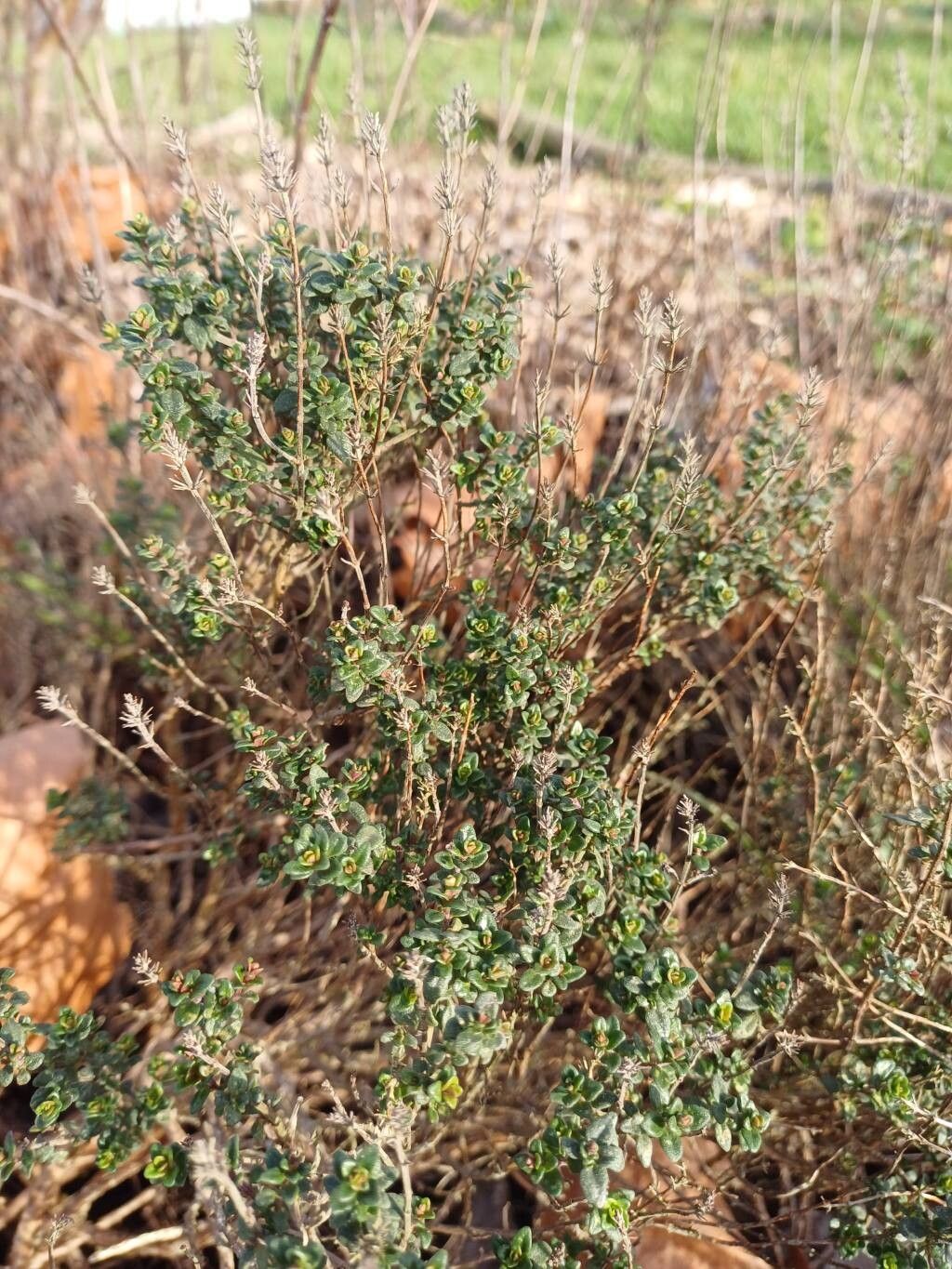
Thymus × citriodorus is a hybrid of T. pulegioides and T. vulgaris, grown as a low, woody-based evergreen subshrub. It forms a dense mound 4-12 inches (10-30 cm) tall and 12-16 inches (30-40 cm) wide, with many slender, wiry stems. The leaves are oval, 0.2-0.4 inch (5-10 mm) long, glossy green and dotted with oil glands that release a lemon scent when crushed; several variegated forms with gold or cream margins are grown. Small two-lipped flowers in pale pink to lilac open in clusters at the stem tips from early to mid summer, lasting 3-5 weeks and drawing bees. The plant is shorter and broader than upright T. vulgaris, and the foliage carries a citrus aroma rather than the sharper scent of common thyme. Stems become woody and bare at the base after a few years, and growth thins in cold, wet winters. The leaves are used fresh or dried as a culinary herb.
Native Range
A hybrid of garden origin, not found in the wild. Its parent species T. pulegioides and T. vulgaris are native to southern and western Europe and the Mediterranean, where they grow on dry, rocky, sunny slopes. The hybrid is grown in herb gardens worldwide.Suggested Uses
Planted in herb gardens, along path edges, in rock gardens, and between paving stones, spaced 10-12 inches (25-30 cm) apart. Grown in containers of at least 1 gallon (4 L) with a free-draining mix. The lemon-scented leaves are used in cooking, and the summer flowers draw bees.How to Identify
Appearance
Size & Dimensions
Height4" - 1'
Width/Spread1' - 1'4"
Bloom Information
Flowers from early to mid summer, roughly June to July, with bloom lasting 3-5 weeks. A light shearing after the first flush can bring a lighter second bloom in late summer. Flowering is heaviest in full sun and on plants not cut hard for harvest.
Detailed Descriptions
Flower Description
pale pink to lilacFoliage Description
greenGrowing Conditions
Sun Requirements
Requires 6-8 hours of direct sunlight daily
• Full Sun: 6+ hours of direct sunlight
• Partial Shade: 3-6 hours of direct sunlight
• Full Shade: Less than 3 hours of direct sunlight
Care & Maintenance
Care Guide
Grow in full sun in light, well-drained soil; wet or heavy soil causes root rot and winter loss. Water sparingly once established, as the plant tolerates drought and declines with frequent watering. A pH near neutral to slightly alkaline suits it, and poor, gritty soils give firmer, more aromatic growth than rich ones. Shear lightly after flowering to keep the mound dense and slow the woody, bare-stemmed stage. Divide or replace plants every 3-4 years as the centers open up. Few pests trouble it, though root rot and fungal dieback follow poor drainage.Pruning
Shear the plant lightly after flowering, removing the top third to keep it compact and encourage fresh leafy growth. Cuts are kept within green growth, since old, leafless wood resprouts slowly. A light trim in spring removes winter-damaged stems.Pruning Schedule
Prune: July–August
summer
Container Growing
Suitable for container growing
Minimum container size: 1 gallons