Thymus, Genus, vulgaris, Species,
- Genus & species
thyme
Western Mediterranean (southern France, Spain, Italy); rocky dry scrubland and garrigue at low to moderate elevations.
Overview
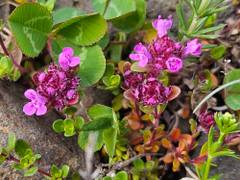
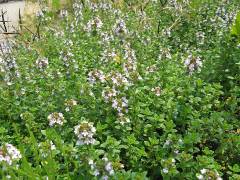
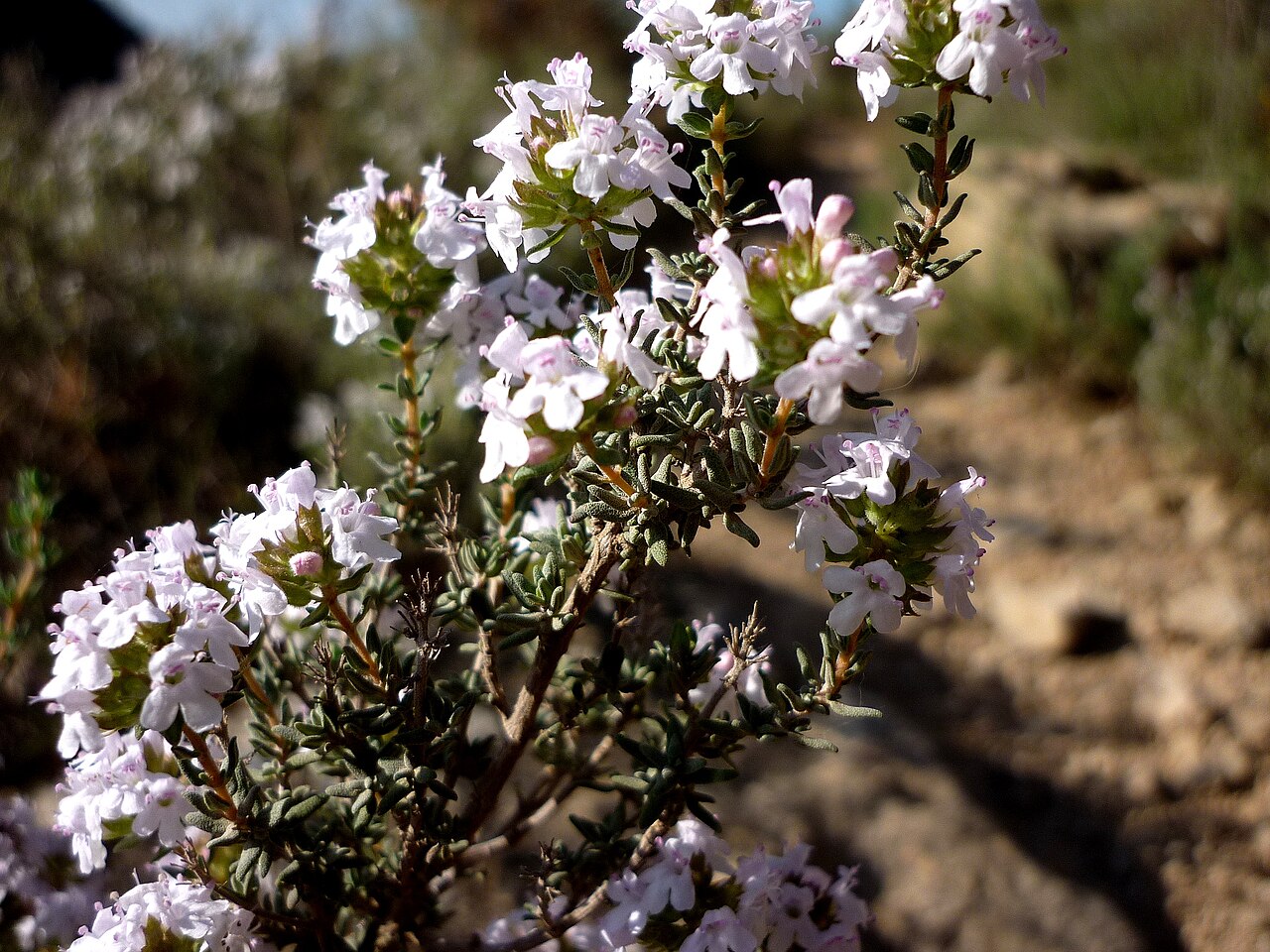
Thymus vulgaris is a low-growing woody-based perennial herb in the mint family (Lamiaceae) reaching 6-12 inches (15-30 cm) tall and 12-18 inches (30-45 cm) wide. The habit is spreading to mounding, with slender upright to semi-prostrate stems that become woody at the base with age. Leaves are very small, 0.1-0.3 inch (3-8 mm) long, oval to linear, dark gray-green to olive-green, with rolled (revolute) leaf margins and a dense covering of short hairs and oil glands; crushing a leaf releases a warm pungent thyme aroma from volatile compounds dominated by thymol and carvacrol, the two phenolic monoterpenes that give the species its culinary signature. Tubular two-lipped lavender-pink to pale-purple flowers 0.1-0.2 inch (3-5 mm) long open in dense short spikes at stem tips from May through July, with a total bloom span of 4-6 weeks. Flavor and essential oil content peak just before full bloom, which is the standard harvest window for culinary and medicinal use. Plants are semi-evergreen in Pacific Northwest winters, with stems sometimes dying back in severe cold but regenerating from the woody base in spring. Performance depends strongly on soil drainage; plants decline rapidly in waterlogged or compacted soils. Hardy in USDA zones 4-10 (-30°F / -34°C). Non-toxic.
Native Range
Thymus vulgaris is native to the western Mediterranean, primarily southern France, Spain, and Italy, where it grows on rocky dry scrubland, garrigue, and open hillsides at low to moderate elevations. The species is not native to the Pacific Northwest but is widely cultivated as a culinary perennial herb across all Pacific Northwest hardiness zones with adequate drainage.Suggested Uses
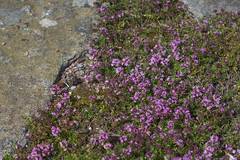
Grown in herb gardens, rock gardens, raised beds, and container plantings of 1 gallon (4 liters) or larger for culinary harvest. The small scale and mounding spreading habit suit edges, cracks in paving, and low border plantings as well as kitchen-garden production. A 6-8 inch (15-20 cm) container is sufficient for patio use as long as drainage holes are open. Lavender-pink flowers attract bees through the May-through-July bloom window. Culinary use covers fresh stems for cooking, dried leaves for storage, and steam-distilled essential oil for medicinal preparations.How to Identify
Appearance
Size & Dimensions
Height6" - 1'
Width/Spread1' - 1'6"
Colors
Bloom Information
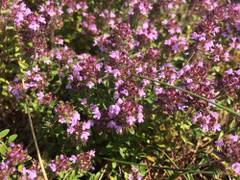
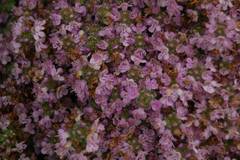
Tubular two-lipped lavender-pink to pale-purple flowers 0.1-0.2 inch (3-5 mm) long open in dense short spikes at stem tips from May through July, with a total bloom span of 4-6 weeks. Individual flowers are heavily visited by bees, particularly honeybees and small native bees that work the short corolla tubes. Essential oil content and culinary flavor peak just before full bloom, which is the standard cut window for harvest.
Detailed Descriptions
Flower Description
Lavender-pink to pale purple; tubular two-lipped flowers 0.1-0.2 inch (3-5 mm) long densely produced on short spikes at stem tips from May through JulyFoliage Description
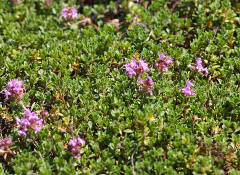
Dark gray-green to olive-green; very small leaves 0.1-0.3 inch (3-8 mm) long, oval to linear with rolled (revolute) margins; carry a dense covering of short hairs and oil glands that release a warm pungent thyme aroma when leaves are crushedGrowing Conditions
Sun Requirements
Requires 6-12 hours of direct sunlight daily
• Full Sun: 6+ hours of direct sunlight
• Partial Shade: 3-6 hours of direct sunlight
• Full Shade: Less than 3 hours of direct sunlight
Care & Maintenance
Care Guide
Plants grow in full sun in well-drained to dry lean soil; sharp drainage is required because plants decline rapidly in waterlogged, high-fertility, or heavily amended soils. Watering is weekly until establishment and then minimal; the species is drought-tolerant once rooted. Overhead irrigation in humid conditions encourages fungal rot at the woody base and is avoided in favor of drip or hand-watering at the soil line. Plants are cut back by one-third to one-half in early spring to remove winter damage and stimulate fresh growth from the woody base. Stems are harvested frequently through the growing season, since regular harvest maintains vegetative growth and delays the woody senescent phase. Plants are divided every 2-3 years to renew vigor as the woody base becomes open at the center.Pruning
Cut back by one-third in early spring before new growth to remove winter-killed tips and stimulate fresh growth from the woody base. Shear lightly after flowering in summer to maintain a compact mounded form. The species does not regenerate well from cuts into bare old wood without green growth attached, so pruning is kept above the green-leafed portion of each stem. Plants are replaced every 3-4 years as the woody base opens at the center and overall vigor declines.Pruning Schedule
Prune: March–April & July–August
early springsummer
Container Growing
Suitable for container growing
Minimum container size: 1 gallons