Image 1 of 13
1 / 13
Plant Reference
Viburnum, Genus, plicatum, Species, f., Form, tomentosum, Form,
- Genus & species
- Form
doublefile viburnum
Japan, Korea, and China; mountain forests and woodland edges at middle elevations
Overview
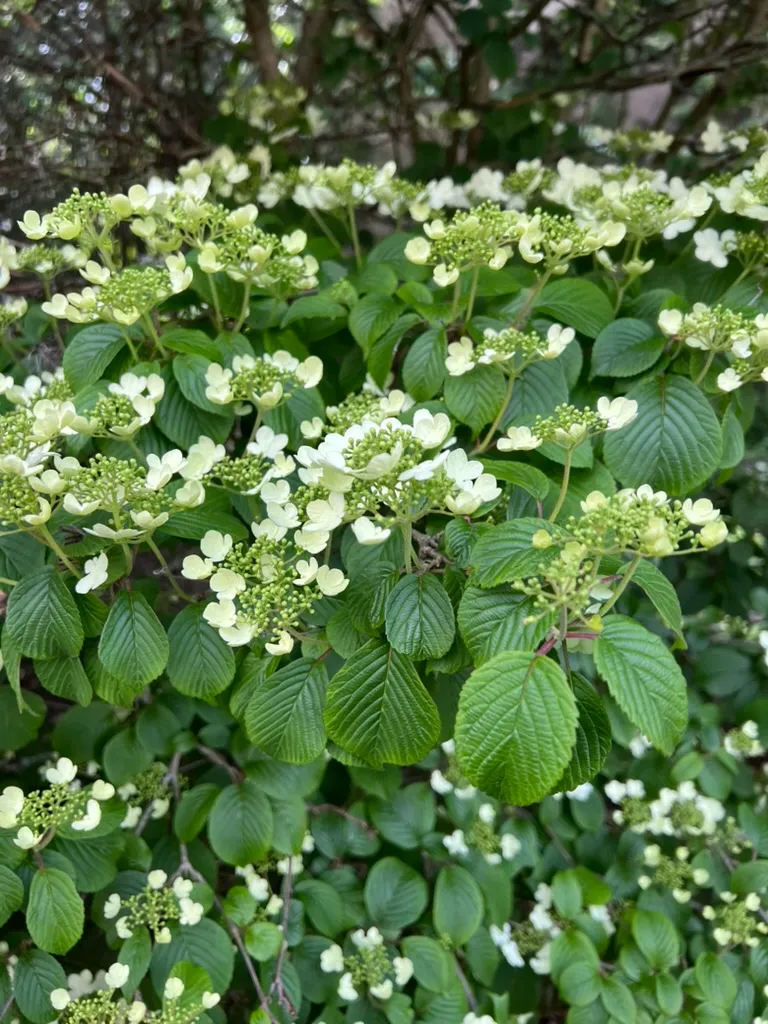
Viburnum plicatum f. tomentosum is a spreading deciduous shrub in the family Adoxaceae reaching 6–12 feet (1.8–3.6 m) tall and 8–15 feet (2.4–4.5 m) wide with a horizontal tiered branching framework that is wider than tall at maturity. White lacecap flower clusters 2–4 inches (5–10 cm) across open in May across about 3 weeks and carry a ring of large sterile florets 1 inch (2.5 cm) each surrounding a flat-topped center of small fertile flowers; the flower clusters are borne in two parallel rows along the tops of each horizontal branch tier, which is the feature the common name doublefile refers to. Leaves are opposite, simple, ovate, 2–4 inches (5–10 cm) long, with prominently impressed parallel veins that give the foliage a pleated texture, and turn red, burgundy, and purple in fall for a multicolor display before leaf drop. Red berries 0.3 inch (8 mm) across develop in clusters through summer after pollination of the fertile inner flowers, and the berries ripen to black in late summer and are consumed by birds through fall. Common cultivars include 'Mariesii' (a widely available selection with heavy bloom along the horizontal branches), 'Shasta' (larger sterile florets and a more pronounced horizontal branching framework), and 'Summer Snowflake' (reblooms sporadically through summer after the main May display). The form differs from f. plicatum (Japanese snowball) in carrying lacecap rather than all-sterile snowball flower clusters and in producing red-to-black berries rather than no fruit at all. Limitation: the mature horizontal spread of 8–15 feet (2.4–4.5 m) is frequently underestimated at planting because young nursery plants look compact and upright for the first 2–3 years before the horizontal tiered framework develops, and the width-versus-space mismatch is the most common landscape failure for this form; small lots, foundation beds against walls, and narrow borders are unsuitable because the natural horizontal habit cannot be preserved through corrective pruning. The form is not drought-tolerant and calls for consistent summer soil moisture, and hot dry afternoon sun in USDA zones 7 and 8 produces leaf scorch and premature leaf drop.
Native Range
Native to Japan, Korea, and China, growing in mountain forests and woodland edges at middle elevations. Introduced to Western cultivation from Japan in the mid-19th century through European plant collectors, together with the all-sterile f. plicatum snowball form. V. plicatum f. tomentosum is the naturally occurring lacecap-flowering form of the species, and the all-sterile f. plicatum is a mutant selection that arose in Japanese horticulture centuries before European contact.Suggested Uses
Used as a specimen shrub in large residential landscapes, parks, and woodland garden edges at 8–15 foot (2.4–4.5 m) spacing where the horizontal tiered branching framework has room to develop. The May lacecap bloom in two parallel rows along the horizontal branches is the main design reason for the shrub, the red-to-black berry crop feeds songbirds through late summer and fall, and the pleated dark green summer foliage and red-to-purple fall color supply additional seasons of interest. Common cultivars: 'Mariesii' (a widely available selection with heavy bloom), 'Shasta' (larger sterile florets, more pronounced horizontal framework), and 'Summer Snowflake' (reblooms sporadically through summer). Small residential lots, foundation beds against walls, and narrow borders are unsuitable because of the 8–15 foot horizontal spread and the consistent moisture requirement.How to Identify
Appearance
Size & Dimensions
Height6' - 12'
Width/Spread8' - 15'
Bloom Information
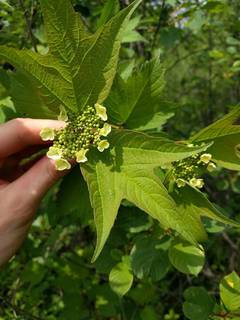
White lacecap flower clusters 2–4 inches (5–10 cm) across open in May across about 3 weeks on previous-season (old) wood. A ring of large sterile florets 1 inch (2.5 cm) each surrounds a flat-topped center of small fertile flowers that attract bees and butterflies for pollen and nectar. Red berries 0.3 inch (8 mm) across develop in clusters through summer after fertile-flower pollination and ripen to black in August and September, and the berries are consumed by songbirds through fall as they ripen.
Detailed Descriptions
Flower Description
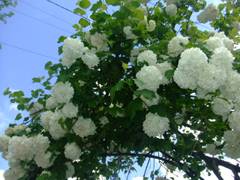
white lacecap flower clusters 2-4 inches (5-10 cm) across with a ring of large sterile florets 1 inch (2.5 cm) each surrounding a center of small fertile flowers; borne in two parallel rows (doublefiles) along the tops of the horizontal spreading branches in MayFoliage Description
dark green on the upper surface; opposite, simple, ovate, 2-4 inches (5-10 cm) long with prominently impressed parallel veins that give the foliage a pleated texture; turns red, burgundy, and purple in fall before leaf dropGrowing Conditions
Sun Requirements
Requires 4-8 hours of direct sunlight daily
• Full Sun: 6+ hours of direct sunlight
• Partial Shade: 3-6 hours of direct sunlight
• Full Shade: Less than 3 hours of direct sunlight
Care & Maintenance
Care Guide
Site in full sun to partial shade with 4–8 hours of direct sun per day; afternoon shade in USDA zones 7 and 8 holds foliage quality and reduces leaf scorch during hot summer afternoons. Soil should be well-drained loam with a pH of 5.5–7.5, and the form is not drought-tolerant so consistent summer soil moisture holds foliage and flower bud quality for the following year. The mature horizontal spread of 8–15 feet (2.4–4.5 m) calls for a planting position with that much room because shearing or topping to control spread destroys the horizontal tiered branching framework that is the main design feature. Bloom forms on previous-season (old) wood, so any shaping pruning is done in June immediately after the May bloom period rather than in winter or early spring, which would remove the following year's flower buds. Hardy in USDA zones 5–8. Non-toxic.Pruning
Pruning is done in June immediately after the May bloom period because flower buds for the following year form on current-season (new) wood through summer, and winter or early spring pruning removes the next year's bloom. Minimal pruning is needed because the horizontal tiered branching framework develops naturally without training. Dead, crossing, or damaged branches can be removed at any season with clean cuts, and the horizontal tiered structure in the upper crown is preserved in all pruning operations. Shearing and topping are avoided because they destroy the layered habit that is the main design reason for planting the form.Pruning Schedule
Prune: June
summer