Image 1 of 14
1 / 14
Plant Reference
Viburnum, Genus, carlesii, Species,
- Genus & species
Korean spice viburnum
Korea and Japan; open woodlands and forest edges
Overview
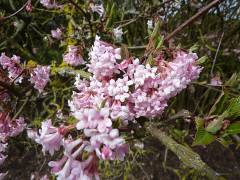
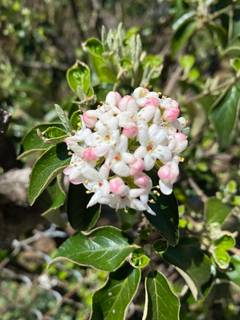
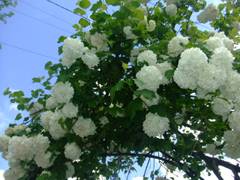
Viburnum carlesii is Korean spice viburnum, a compact mounding deciduous shrub growing 4-6 feet (1.2-1.8 m) tall and 4-7 feet (1.2-2.1 m) wide. Deep pink buds opening to white tubular flowers 0.5 inch (1.3 cm) in dense hemispherical clusters 2-3 inches (5-7 cm) in April-May. Strongly fragrant (sweet clove-like spicy scent — the source of 'spice viburnum'). Dull grayish-green softly pubescent (downy) ovate opposite leaves 2-4 inches (5-10 cm). Turns red to purple in fall. In Adoxaceae. Native to Korea and Japan. Named for William Richard Carles. Parent species of V. × burkwoodii and V. × carlcephalum. Bacterial leaf spot can cause defoliation in humid summers with poor air circulation — this is the primary disease concern. The dull grayish-green foliage with a downy texture is visually unremarkable when not in bloom or fall color. Not drought-tolerant — leaf scorch in dry conditions. Grafted specimens may produce rootstock suckers that should be removed. Deer-resistant. Non-toxic. Zones 4-8. Full sun to partial shade. Growth rate is slow to moderate.
Native Range
Native to Korea and Japan. Found in open woodlands and forest edges.Suggested Uses
Grown as a specimen shrub, foundation plant, near entries and walkways (for fragrance), and in containers of at least 10 gallons (38 L), spaced 4-7 feet (1.2-2.1 m). Strong spicy fragrance. Compact size. Non-toxic. Zones 4-8.How to Identify
Appearance
Size & Dimensions
Height4' - 6'
Width/Spread4' - 7'
Bloom Information
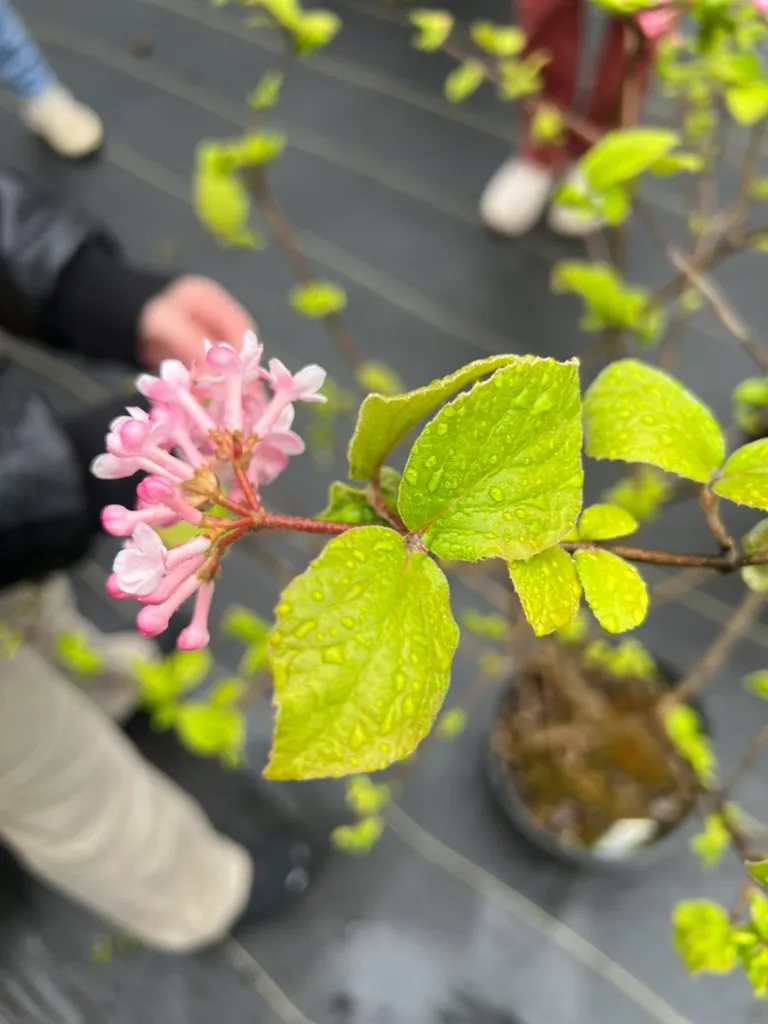
Mid to late spring (April-May). Deep pink buds opening to white flowers 0.5 inch (1.3 cm) in dense hemispherical clusters 2-3 inches (5-7 cm). Strongly fragrant (sweet clove-like spicy). 3 weeks on old wood. Bee- and butterfly-visited. Sparse red-to-black berries sometimes follow.
Detailed Descriptions
Flower Description
White from deep pink buds, tubular opening to flat 5-lobed corolla, 0.5 inch (1.3 cm), in dense hemispherical clusters 2-3 inches (5-7 cm); strongly fragrant (sweet clove-like spicy scent — the source of 'spice viburnum')Foliage Description
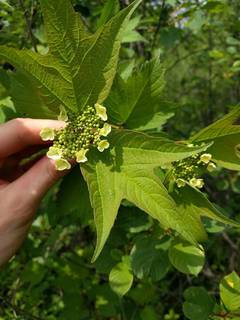
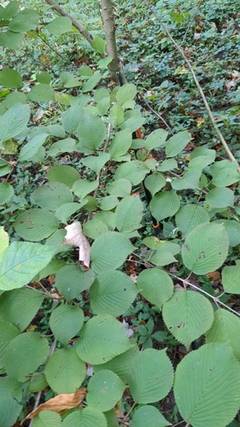
Dull grayish-green, simple, ovate, opposite, softly pubescent (downy), 2-4 inches (5-10 cm), irregularly serrated; turns red to purple in fallGrowing Conditions
Sun Requirements
Requires 4-12 hours of direct sunlight daily
• Full Sun: 6+ hours of direct sunlight
• Partial Shade: 3-6 hours of direct sunlight
• Full Shade: Less than 3 hours of direct sunlight
Care & Maintenance
Care Guide
Full sun to partial shade (4-12 hours). Well-drained soil pH 5.5-7.5. Not drought-tolerant — leaf scorch in dry conditions. Bacterial leaf spot in humid summers — space for air circulation. Remove rootstock suckers on grafted specimens. Blooms on old wood — prune after flowering (May-June). Deer-resistant. Non-toxic. Zones 4-8.Pruning
Prune after flowering (May-June) — blooms on old wood. Shape lightly if needed. Remove 1/3 of oldest stems at the base for renewal if the plant becomes open. Remove rootstock suckers on grafted plants. Do not prune in late winter (removes flower buds).Pruning Schedule
Prune: May–June
late spring
Container Growing
Suitable for container growing
Minimum container size: 10 gallons