Image 1 of 14
1 / 14
Plant Reference
Viburnum, Genus, opulus, Species, var., Variety, americanum, Variety,
- Genus & species
- Variety
American cranberry bush
North America from Newfoundland west to British Columbia, south through the Great Lakes region and into the Pacific Northwest; moist woodlands, stream banks, and thicket margins
Overview
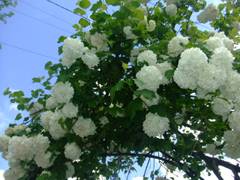
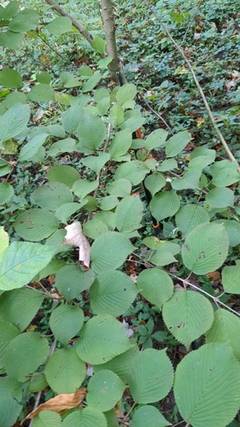
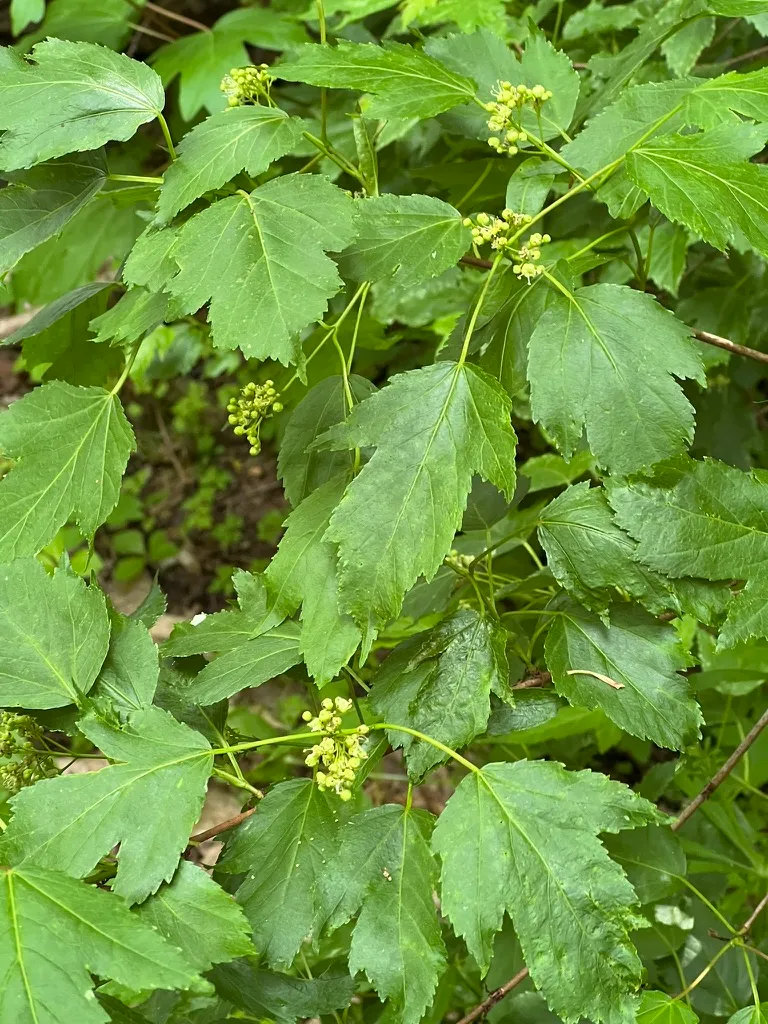
Viburnum opulus var. americanum is an upright multi-stemmed deciduous shrub in the family Adoxaceae reaching 8–12 feet (2.4–3.6 m) tall and 8–12 feet (2.4–3.6 m) wide with a rounded crown. Leaves are opposite, simple, 3-lobed and maple-like in outline, 2–4 inches (5–10 cm) long with coarsely serrated margins, and turn red, orange, and yellow in fall for a multicolor display before leaf drop. White lacecap flower clusters 2–4 inches (5–10 cm) across open in May and June and carry a ring of large sterile florets 0.75 inch (2 cm) each surrounding a flat-topped center of tiny fertile flowers. Bright red translucent berries 0.3 inch (8 mm) across develop through summer in drooping clusters, ripen from August through September, and persist through winter on the bare branches until eaten by cedar waxwings, robins, and other overwintering birds in late winter and early spring. Some botanists elevate this North American taxon to species rank as Viburnum trilobum rather than treating it as a variety of the European V. opulus, and the two taxa are separated by the shape of the nectar glands at the leaf petiole base: V. opulus var. americanum carries concave nectar glands while the European V. opulus carries stalked (raised) nectar glands. The berries are tart raw but edible when cooked and are the source of jelly and preserves across the cold-winter range of the species; the common name cranberry bush refers to the fruit flavor rather than any botanical relationship with true cranberry (Vaccinium oxycoccos), which is an unrelated species in a different family. Limitation: viburnum leaf beetle (Pyrrhalta viburni), an invasive European species first detected in North America in 1947, skeletonizes the foliage and can defoliate and eventually kill susceptible Viburnum plants through successive-year attacks; V. opulus var. americanum is among the more susceptible native species and calls for seasonal inspection for egg cavities on young twigs in fall and winter, removal of infested twigs before larvae emerge in spring, and hand-picking of larvae and adults through the growing season on small plantings where pesticide treatment is not the management choice.
Native Range
Native to North America from Newfoundland west across Canada to British Columbia, south through the Great Lakes region, New England, and into the northern Pacific Northwest. Grows in moist woodlands, stream banks, thicket margins, and wetland edges from sea level to middle elevations. Some botanists elevate this taxon to species rank as Viburnum trilobum.Suggested Uses
Used as an informal hedge, screen, wildlife habitat shrub, and native plant garden specimen at 8–12 foot (2.4–3.6 m) spacing in cold-climate gardens where the May and June lacecap bloom, the August through winter red berry display, and the multicolor fall foliage supply three seasons of interest. The persistent red winter fruit is a valuable late-winter food source for cedar waxwings, robins, and other overwintering birds. The edible tart fruit is the source of traditional jelly and preserves across the cold-winter native range. Small formal gardens and dry hot summer sites are unsuitable because of the 8–12 foot mature size and the consistent moisture requirement.How to Identify
Appearance
Size & Dimensions
Height8' - 12'
Width/Spread8' - 12'
Bloom Information
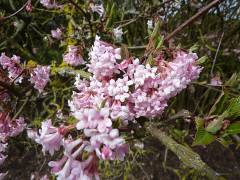
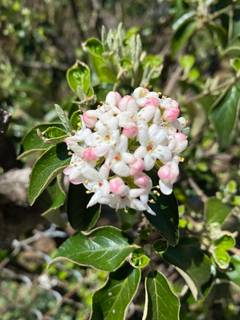
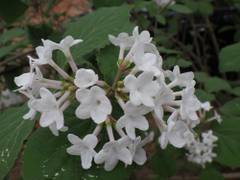
White lacecap flower clusters 2–4 inches (5–10 cm) across open in May and June across about 2 weeks. A ring of large sterile florets 0.75 inch (2 cm) each surrounds a flat-topped center of tiny fertile flowers that attract bees and butterflies for the pollen and nectar. Bright red translucent berries 0.3 inch (8 mm) across develop through summer in drooping clusters and ripen from August through September, persisting through winter on the bare branches until consumed by cedar waxwings, robins, and other birds in late winter and early spring.
Detailed Descriptions
Flower Description
white lacecap flower clusters 2-4 inches (5-10 cm) across with a ring of large sterile florets 0.75 inch (2 cm) across surrounding a flat-topped center of tiny fertile flowersFoliage Description
dark green on the upper surface; simple, 3-lobed (maple-like), opposite, 2-4 inches (5-10 cm) long with coarsely serrated margins; turns red, orange, and yellow in fallGrowing Conditions
Sun Requirements
Requires 4-8 hours of direct sunlight daily
• Full Sun: 6+ hours of direct sunlight
• Partial Shade: 3-6 hours of direct sunlight
• Full Shade: Less than 3 hours of direct sunlight
Care & Maintenance
Care Guide
Site in full sun to partial shade with 4–8 hours of direct sun per day in moist well-drained soil with a pH of 5.5–7.5. The species is not drought-tolerant and calls for consistent summer soil moisture, particularly during the fruit development period in July and August. Viburnum leaf beetle (Pyrrhalta viburni) is the main pest concern: egg cavities on young twig tips are inspected in fall and winter and infested twig tips are removed and destroyed before larvae emerge in spring, and larvae and adults are hand-picked through the growing season on small plantings where pesticide treatment is not the management choice. The species is extremely cold-hardy to USDA zone 2 and tolerates the heavy-winter climates of northern New England, the upper Midwest, and the Canadian Prairie Provinces better than most ornamental shrubs. Hardy in USDA zones 2–7.Pruning
Pruning is done in early spring (March) after the worst of winter cold has passed but before the bloom opens on second-year wood. A renewal pruning cut removes about one-third of the oldest stems at ground level each year, which rebuilds the multi-stemmed framework with younger vigorous stems over a 3-year rotation and holds the shrub at the intended size without losing the natural upright form. Light shaping cuts can remove dead, crossing, or damaged stems at any season. The upright multi-stemmed form develops naturally and is not improved by shearing or formal clipping.Pruning Schedule
Prune: March
early spring