Stokesia, Genus, laevis, Species,
- Genus & species
Stokes' aster
Southeastern United States coastal plain
Overview
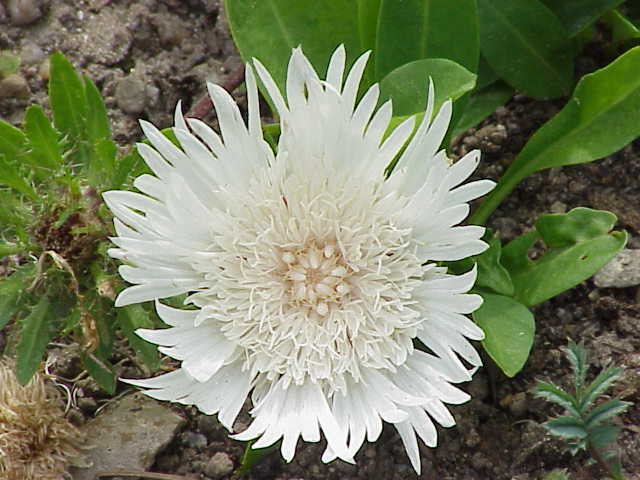
Stokesia laevis is a clump-forming perennial in the daisy family (Asteraceae), growing 12–24 inches (30–60 cm) tall and 12–24 inches (30–60 cm) wide from a basal rosette. The genus Stokesia contains only this species. Basal leaves are lanceolate to oblong, 4–8 inches (10–20 cm) long and 0.5–1.5 inches (1.3–4 cm) wide, leathery, and dark green with a pale midrib, with a few spiny bristles near the base of the margin. Stem leaves are smaller and alternate. Flower heads are 3–4 inches (7.5–10 cm) across, with 20–30 overlapping, deeply fringed ray florets in blue to lavender-purple surrounding a center of pale tubular florets. Heads open from June to September, with each head lasting 7–10 days, and the plant carries 10–20 heads in a season. Foliage persists in winter in zones 7–9. Plants decline in soil that stays wet in winter, and they flower less in more than 50 percent shade. Stems lean in rain when grown in rich soil. Clumps widen slowly and form 18–24 inch (45–60 cm) mats in 3–4 years.
Native Range
Stokesia laevis is native to the southeastern United States, from South Carolina south to central Florida and west to Louisiana. It grows in moist pine savannas, open woodland, and bog margins on the coastal plain in acidic, sandy to loamy soil.Suggested Uses
Used in mixed perennial borders, native plant gardens, and rain gardens with plants spaced 12–18 inches (30–45 cm) apart. Heads are cut for arrangements and last 5–7 days in water, and bees and butterflies visit the flowers from July to September.How to Identify
Appearance
Size & Dimensions
Height1' - 2'
Width/Spread1' - 2'
Bloom Information
Detailed Descriptions
Flower Description
Blue to lavender-purpleFoliage Description
Dark green with pale midribGrowing Conditions
Sun Requirements
Requires 5-10 hours of direct sunlight daily
• Full Sun: 6+ hours of direct sunlight
• Partial Shade: 3-6 hours of direct sunlight
• Full Shade: Less than 3 hours of direct sunlight
Care & Maintenance
Care Guide
Grows in full sun to part shade in moist, well-drained, acidic to neutral soil with a pH of 5.5–7.5. Hardy in USDA zones 5–9. Soil that stays wet in winter causes crown rot, and soil that dries for long periods reduces flowering. Plants receive 1 inch (2.5 cm) of water per week during bloom. More than 50 percent shade produces fewer, floppier stems. Clumps are divided every 3–4 years in spring. Pests are few, with occasional aphids and leaf spot in humid summers.Pruning
Spent flower heads are cut back to a side bud or leaf to extend bloom from July through September. Flower stems are cut to the basal rosette after bloom ends in October. Dead foliage is trimmed in late winter before new growth.Pruning Schedule
Prune: February, July & October
summerfallwinter
Container Growing
Suitable for container growing
Minimum container size: 2 gallons