Doronicum, Genus,
- Genus
leopard's bane
Europe and Asia — mountains of southern Europe, the Caucasus, Turkey, and central Asia; moist mountain meadows and woodland edges at middle to upper elevations
Overview
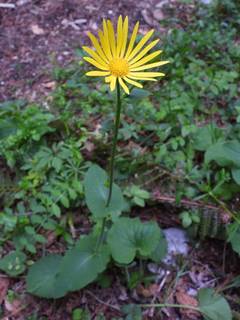
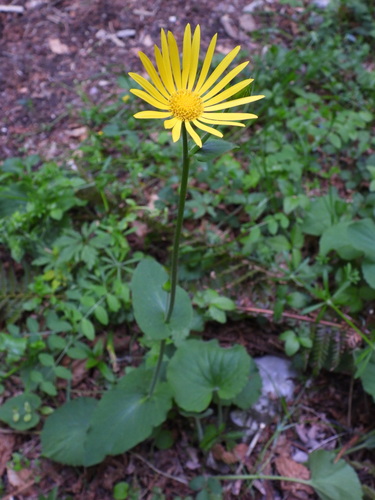
Doronicum spp. (leopard's bane) is a genus of about 35 clumping deciduous perennials in the family Asteraceae growing 8–40 inches (20–100 cm) tall and 12–18 inches (30–45 cm) wide depending on the species. The two species most commonly grown in temperate gardens are D. orientale (12–24 inches / 30–60 cm, clumping habit) and D. pardalianches (24–40 inches / 60–100 cm, spreads slowly by stolons). Leaves are simple, heart-shaped to ovate, 2–4 inches (5–10 cm) long, medium green, and slightly hairy on both surfaces; a low basal rosette emerges in early spring before the flowering stems develop. Golden-yellow daisy-like composite flowers 1.5–2.5 inches (4–6 cm) across open in April and May across a 5-week bloom period, borne singly or in groups of 2–3 per flowering stem, with narrow ray florets surrounding a darker yellow disk center. The flowers are among the few yellow daisy-type perennials that bloom in mid to late spring in partial shade, a niche that most yellow Asteraceae (Helianthus, Rudbeckia, Coreopsis, Inula) do not fill because they are summer-blooming and sun-loving rather than spring-blooming shade perennials. The common name leopard's bane comes from the historical use of the root of D. pardalianches as a poison for large predators, and the genus name Doronicum derives from an Arabic name for the plant recorded in medieval herbal texts. Limitation: the plant goes summer-dormant — the foliage yellows and dies back by midsummer regardless of watering or siting, and the planting position is empty of above-ground growth from June or July through the following spring. The summer dormancy creates a visible gap in border plantings and calls for companion plants that fill the space after the Doronicum foliage disappears: later-emerging shade perennials such as Hosta, Astilbe, and ferns establish their foliage during the Doronicum bloom period and cover the bare ground through the summer and fall. All parts of the plant contain sesquiterpene lactones and are toxic if ingested by pets or humans, and the genus is deer-browsed despite the toxicity.
Native Range
The genus Doronicum is native to Europe and Asia, with species distributed across the mountains of southern Europe from the Pyrenees through the Alps and Carpathians to the Balkans, and extending east through the Caucasus, Turkey, the Middle East, the mountains of central Asia, and into the western Himalayas. Most species grow in moist mountain meadows and woodland edges at middle to upper elevations above 3,000 feet (900 m). D. orientale is native to southeastern Europe and the Caucasus, and D. pardalianches is native to the mountains of western Europe from France through Germany and the Alps.Suggested Uses
Used in shaded perennial borders, woodland garden edges, spring bulb companion plantings, and containers of at least 3 gallons (11 L) at 12–18 inch (30–45 cm) spacing, with later-emerging companion plantings of Hosta, Astilbe, or ferns sited nearby to cover the bare ground during the summer dormancy period. The April-through-May golden-yellow daisy bloom supplies a partial-shade spring color niche that most other yellow Asteraceae do not fill, and the species are among the few yellow daisy-type perennials that flower in mid to late spring in partial shade rather than in summer in full sun. Sites with hot dry summer conditions, unamended heavy clay, and positions where the summer dormancy gap cannot be covered by companion plantings are unsuitable because the plant is not drought-tolerant and the extended dormant period leaves a visible bare spot in the bed.How to Identify
Appearance
Size & Dimensions
Height8" - 3'4"
Width/Spread1' - 1'6"
Bloom Information
Golden-yellow daisy-like composite flowers 1.5–2.5 inches (4–6 cm) across open in April and May across a 5-week bloom period, borne singly or in groups of 2–3 per flowering stem above the basal foliage rosette. The flowers carry narrow ray florets surrounding a darker yellow disk center and attract honeybees, butterflies, and early-season native bees for nectar and pollen. After bloom, the plant sets seed in May and June, and the foliage yellows and dies back through late spring and early summer as the plant enters summer dormancy.
Detailed Descriptions
Flower Description
golden-yellow daisy-like composite flowers 1.5-2.5 inches (4-6 cm) across with narrow ray florets surrounding a darker yellow disk center; borne singly or in groups of 2-3 per flowering stem in April and MayFoliage Description
medium green through the spring growing season; simple, heart-shaped to ovate, 2-4 inches (5-10 cm) long and slightly hairy on both surfaces; a low basal rosette is produced before flowering with smaller alternate leaves higher on the flowering stemsGrowing Conditions
Sun Requirements
Requires 2-6 hours of direct sunlight daily
• Full Sun: 6+ hours of direct sunlight
• Partial Shade: 3-6 hours of direct sunlight
• Full Shade: Less than 3 hours of direct sunlight
Care & Maintenance
Care Guide
Site in part sun to partial shade with 2–6 hours of direct sun per day in consistently moist soil with a pH of 5.5–7.0. The species in the genus are not drought-tolerant and call for supplemental irrigation during spring dry periods to hold the foliage and flowers through the bloom window, and summer soil moisture is less critical because the plant goes dormant in June or July. Summer dormancy is the main management consideration — the foliage disappears by midsummer and the planting position is empty of above-ground growth until the following spring, so companion plantings of later-emerging shade perennials such as Hosta, Astilbe, or ferns are sited nearby to fill the gap. Spent flower stalks are cut to the base after bloom, and dead foliage is removed when it withers through late spring and early summer. Clumps are divided every 2–3 years in early fall to hold vigor and bloom quality. All parts of the plant contain sesquiterpene lactones and are toxic if ingested by pets or humans. Hardy in USDA zones 4–8.Pruning
Spent flower stalks are cut to the base after the May bloom period to tidy the foliage rosette, and dead dormant foliage is removed as it withers through late spring and early summer when the plant enters summer dormancy. Clumps are divided every 2–3 years in early fall (September) to hold vigor and flower production; the divided crowns are replanted immediately with the basal growing point at the soil surface. No other pruning is needed because the species completes its above-ground growth cycle by midsummer and the dormant crown overwinters below the soil surface without any winter care.Pruning Schedule
Prune: May–June
late spring
Container Growing
Suitable for container growing
Minimum container size: 3 gallons