Doronicum, Genus, pardalianches, Species,
- Genus & species
Leopard's-bane
Overview
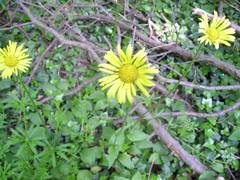
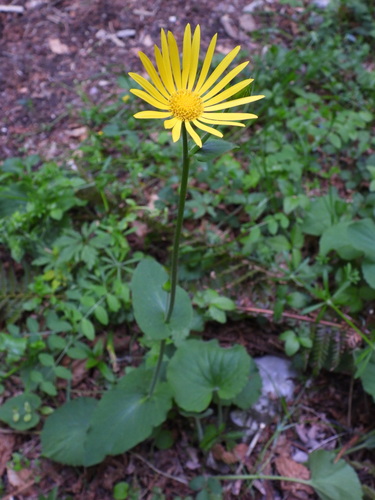
Doronicum pardalianches is a spreading herbaceous perennial 18-36 inches (45-90 cm) tall, growing from short, fleshy rhizomes that form expanding clumps. The soft, heart-shaped basal leaves are long-stalked and 2-4 inches (5-10 cm) long, while the upper stem leaves are smaller and clasp the stem with rounded lobes. Yellow daisy-like flowerheads 1.5-2.5 inches (4-6 cm) across, each with narrow ray florets around a yellow disc, open from April to June, earlier than most yellow daisies. It grows in damp woodland, shaded banks, hedgerows, and old gardens, often persisting and spreading where it has been planted. The rhizomes can spread widely, so it can crowd out smaller neighbours in moist, shaded ground. After flowering the foliage often dies back in summer heat.
Native Range
Native to western and central Europe, from France and Spain through to central Europe. It has long been grown in gardens and is now naturalised in Britain and other temperate regions, often in woodland and on shaded roadside banks.Suggested Uses
Grown in shaded and woodland gardens, on damp banks, and in the cool, moist parts of mixed borders for early colour. The spring flowerheads draw early bees and hoverflies. It also suits naturalised plantings under deciduous trees.How to Identify
Appearance
Size & Dimensions
Height1'6" - 3'
Width/Spread1'6" - 2'
Bloom Information
Yellow flowerheads open from April to June, early in the season for the daisy family. Each head lasts about two weeks, and a plant often produces several heads per stem, ripening into small seeds with a pappus.
Detailed Descriptions
Foliage Description
GreenGrowing Conditions
Sun Requirements
Requires 2-6 hours of direct sunlight daily
• Full Sun: 6+ hours of direct sunlight
• Partial Shade: 3-6 hours of direct sunlight
• Full Shade: Less than 3 hours of direct sunlight
Care & Maintenance
Care Guide
Doronicum pardalianches grows in part shade to full shade on moist, fertile, humus-rich soil at a soil pH of about 5.5-7.5. It suits cool, damp woodland conditions and tolerates heavy shade where many perennials thin out. Steady moisture in spring supports flowering, after which the foliage often dies back in summer, especially in dry sites. The rhizomes spread steadily and can be divided in autumn or early spring to control the clump. Hardy to about USDA zone 4, it withstands hard frost. It self-seeds and spreads by root, so it can colonise beyond where it was set.Pruning
Faded flower stems can be cut back after blooming to limit self-seeding. As the foliage dies down in summer it can be cleared away, and clumps can be lifted and divided in autumn to keep them in bounds.Container Growing
Suitable for container growing
Minimum container size: 2 gallons